深圳溯源
Couldn't load pickup availability
衣服尺寸:
胸围/腰围/臀围/衣长:90/76/92/103 厘米
细节描述:
一、 纹样解码:热带雨林与中式留白的交响
这件旗袍最引人入胜之处,在于其大胆而独特的“南洋植物纹样”设计。
不同于传统苏绣旗袍中常见的梅兰竹菊或牡丹凤凰,这件衣裳的图案呈现出一种浓郁的热带风情与西洋装饰艺术(Art Deco)的融合感。
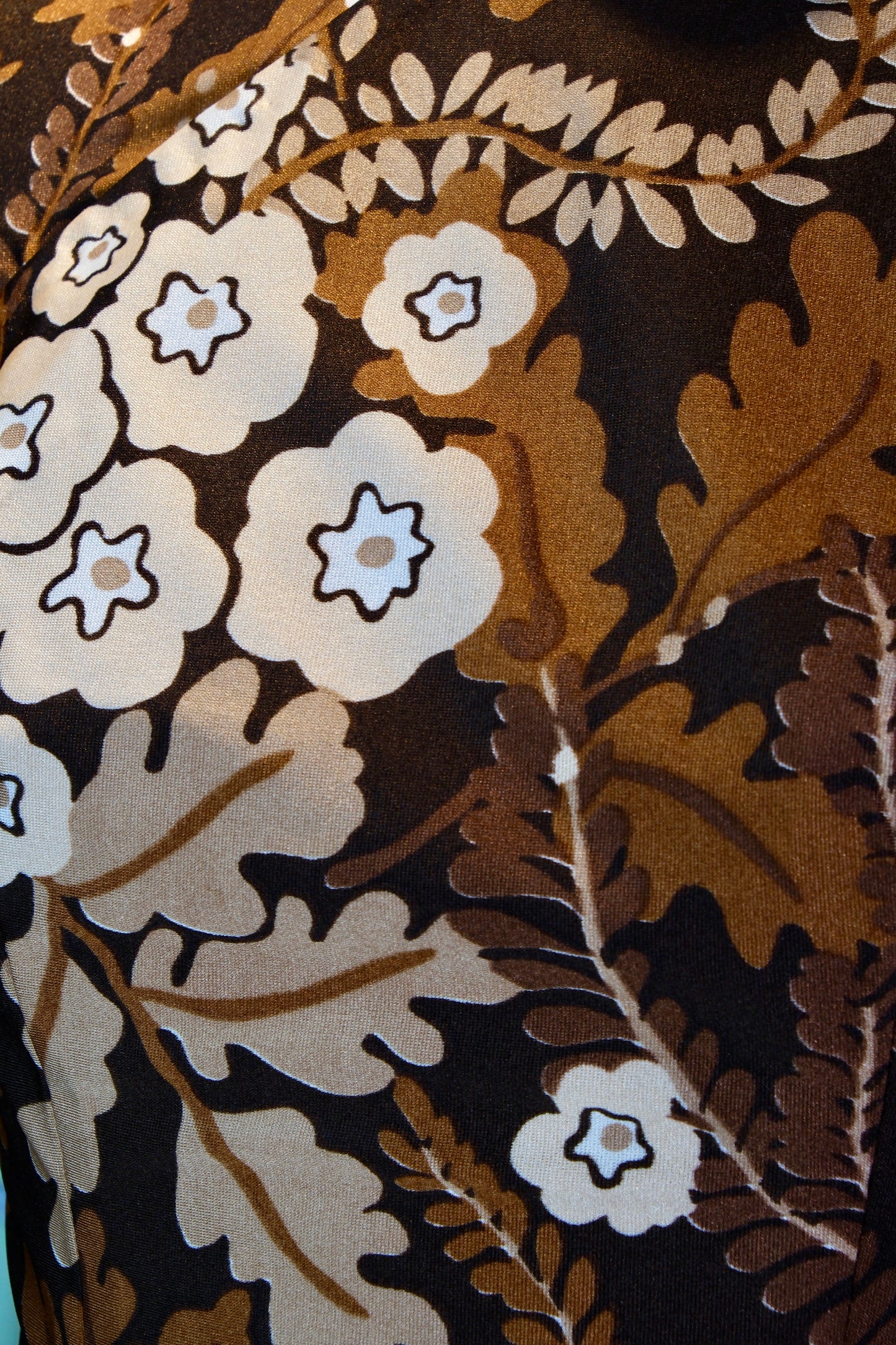
- 主色调:以深沉的咖啡色(Coffee Brown)与焦糖色(Caramel)为底色,间杂米白与浅杏色。这种大地色系的运用,既保留了东方女性的内敛沉稳,又呼应了南洋殖民地时期流行的复古色调,宛如一杯醇厚的南洋咖啡。
- 植物母题:面料上大面积铺陈着类似橡树叶(Oak Leaves)或蕨类植物的阔叶纹样,叶片边缘呈波浪状起伏,线条流畅而富有张力。其间点缀着抽象化的五瓣白花,花蕊处以深色勾勒,形态酷似南洋常见的鸡蛋花(Plumeria)或扶桑花的变体。
- 构图逻辑:枝叶蜿蜒缠绕,形成一种“S”形流动的视觉韵律。这种满底印花(All-over print)的布局,打破了传统旗袍留白的含蓄,展现出六十年代受西方现代主义影响的奔放与热烈。它不是静止的庭院花卉,而是肆意生长的热带丛林,充满了蓬勃的生命力。
二、 剪裁与工艺:海派遗韵与台式改良
从形制上看,这件旗袍完美继承了“海派旗袍”在四、五十年代的成熟技法,并在六十年代的台湾得到了精致的延续。
- 无袖设计:这一时期的台湾旗袍开始流行无袖或削肩设计,旨在展现女性手臂的柔美线条,这也是六十年代全球时尚趋向清凉、解放身体的缩影。
- 面料质感:细观微距图,面料呈现出细腻的织纹,极有可能是当时台湾纺织业引以为傲的人造丝(Rayon)或混纺提花棉。这种面料既有丝绸的光泽感,又比真丝挺括耐磨,非常适合南洋及台湾湿热的气候,是那个时代“实用美学”的最佳见证。
三、 历史语境:张爱玲笔下的“乱世繁华”
“各人住在各人的衣服里。” ——张爱玲《流言》
这件旗袍不仅仅是一件衣物,它是1960年代台湾社会风貌的切片。
彼时的台湾,正处于从农业社会向工业社会转型的前夜,同时也是中华文化在海外(包括港台及南洋华人圈)寻找身份认同的关键时期。
- 南洋风的由来:五六十年代,大量江浙沪移民迁台,同时也带来了与东南亚(南洋)紧密的贸易与文化交流。这种带有异域风情的花卉图案,正是当时“华侨审美”与“本土制造”结合的产物。它记录了那个时代女性对于“摩登”的独特理解——既要是东方的,又要是世界的;既是传统的,又是热带的。
- 穿着者的画像:想象一下,在那个没有空调的年代,一位受过良好教育的女性,身着此衣,或许是在台北的咖啡馆里小坐,或许是在参加一场侨界的晚宴。这身装扮宣告了她不随波逐流的品味——她不穿大红大绿,而是选择了一种更具知性、更耐人寻味的“高级灰”色调。
四、 稀缺性与艺术价值:不可复制的时光孤品
在古董衣收藏界,“印花旗袍”往往比素色旗袍更难保存,也更具收藏难度。
1. 印染工艺的断代:图中的花纹清晰度极高,色彩过渡自然,这属于早期的滚筒印花或丝网印花工艺。随着现代数码印花的普及,这种具有厚重油墨感和手工温度的老面料已难觅踪迹。
2. 品相的完美:历经六十载岁月,这件旗袍的色泽依然饱满,未见明显的褪色或脆化,尤其是腋下、领口等易损部位保持完好,实属“博物馆级”品相。
3. 文化的混血儿:它不是纯粹的清代旗装,也不是完全的西式连衣裙,它是中西文化在台湾海岛碰撞出的独特火花。这种“南洋风台式旗袍”在目前的古董市场上属于极小众且高门槛的品类,懂的人自然知其珍贵。
【结语】
这件旗袍,是一首用布料写成的散文诗。它以褐土为纸,以花叶为墨,记录了六十年代那个既怀旧又摩登的黄金时代。拥有它,不仅是拥有了一件美丽的衣裳,更是收藏了一段关于美、关于迁徙、关于时光的优雅记忆。
Measurements / Size Guide:
Bust / Waist / Hips / Total Length: 90/76/92/103 cm
Detailed Description:
The most captivating aspect of this qipao lies in its bold and distinctive "Nanyang botanical motif" design.
Unlike the traditional plum blossoms, orchids, bamboos, chrysanthemums, or peonies and phoenixes commonly found in classical Su-embroidered qipaos, the pattern on this garment presents a rich fusion of tropical exoticism and Western Art Deco aesthetics.
Color Palette: The base is rendered in deep coffee brown and caramel, interspersed with off-white and light apricot. This earth-tone palette retains the reserved composure of Eastern women while echoing the vintage color schemes popular during the colonial era in Southeast Asia, resembling a rich cup of Nanyang coffee.
Botanical Motifs: The fabric is broadly layered with broad-leaf patterns resembling oak leaves or ferns, featuring undulating, fluid, and energetic margins. Interspersed among them are abstract five-petaled white flowers with dark outlines, bearing a striking resemblance to variants of plumeria (frangipani) or hibiscus commonly seen in Nanyang.
Compositional Logic: The intertwining branches and leaves form a flowing, "S"-shaped visual rhythm. This all-over print layout breaks away from the subtle restraint of traditional negative space, showcasing the uninhibited boldness inspired by 1960s Western Modernism. It is not a static courtyard garden, but a wildly flourishing tropical jungle brimming with vibrant vitality.
In terms of silhouette, this qipao perfectly inherits the mature techniques of the "Haipai (Shanghai-style) qipao" from the 1940s and 1950s, refined and continued within 1960s Taiwan.
Sleeveless Design: Taiwanese qipaos of this period popularized sleeveless or cut-shoulder designs, intended to highlight the graceful lines of a woman's arms—a microcosm of the global 1960s shift toward breeziness and bodily liberation.
Fabric Texture: Under macro-observation, the fabric reveals a delicate weave, highly likely representing the rayon or blended jacquard cotton proudly produced by Taiwan's textile industry at the time. This textile combines the luminous sheen of silk with a crisper, more durable hand-feel than pure silk, making it ideally suited to the humid climates of Nanyang and Taiwan—a prime testament to the "practical aesthetics" of that era.
"Everyone lives within their own clothes."
— Eileen Chang, Rumors (流言)
This qipao is far more than a garment; it is a slice of 1960s Taiwanese social life.
During this period, Taiwan stood on the threshold of transitioning from an agrarian society to an industrial one, while navigating a crucial phase of seeking overseas Chinese cultural identity (spanning Taiwan, Hong Kong, and Southeast Asian Chinese communities).
Origins of the Nanyang Style: Throughout the 1950s and 1960s, a large influx of Jiangnan (Jiangsu-Zhejiang-Shanghai) immigrants moved to Taiwan, bringing with them tight trade and cultural connections to Southeast Asia (Nanyang). Such exotic floral patterns were the product of a synthesis between "overseas Chinese aesthetics" and "local manufacturing," documenting women's unique interpretation of "modernity"—simultaneously Eastern and global, traditional and tropical.
The Wearer's Persona: Picture an educated woman during an era preceding air conditioning, wearing this piece while sitting quietly in a Taipei café or attending an overseas Chinese banquet. Her attire announced a refusal to follow generic trends; instead of bright reds and greens, she chose an intellectual, deeply intriguing "cool grey" earth-tone palette.
In the world of antique garment collection, printed qipaos are often harder to preserve and require greater curation expertise than solid-colored pieces.
Obsolescence of Printing Techniques: The motifs exhibit exceptional clarity with natural color transitions, characteristic of early roller printing or silk-screen printing. With the rise of modern digital printing, such vintage fabrics carrying a heavy oil-ink texture and artisanal warmth are exceptionally rare.
Pristine Condition: Having weathered six decades, the qipao retains rich coloration without significant fading or fiber embrittlement. Vulnerable areas such as underarms and collars remain exceptionally well-preserved, qualifying it as a "museum-grade" specimen.
Cultural Hybridity: Neither a pure Qing dynastic robe nor a Western dress, it represents a unique spark generated by the collision of Eastern and Western cultures on the island of Taiwan. Such "Nanyang-style Taiwanese qipaos" constitute an extremely niche, high-threshold category in the current antique market.
This qipao is a prose poem written in cloth. Using brown earth as paper and foliage as ink, it records a golden era that was both nostalgic and modern. To own it is not merely to possess a beautiful garment, but to steward a preserved memory of beauty, migration, and time.