溯源
Couldn't load pickup availability
衣服尺寸:
胸围/腰围/臀围/衣长:100/90/98/102 厘米
细节描述:
在时尚史的长河中,有些衣物不仅仅是蔽体的布料,它们是凝固的时间,是无声的史诗。今日呈于眼前的,便是一件上世纪六十年代台湾制、采用意大利进口烧花丝绒的古董旗袍。它不仅是一件衣物,更是一段中西文化在太平洋上空交汇的绝唱。
一、 灼灼其华:暗纹里的文学意象
凝视这件旗袍的纹样,你会被一种“绚烂至极归于平淡”的高级感所吸引。
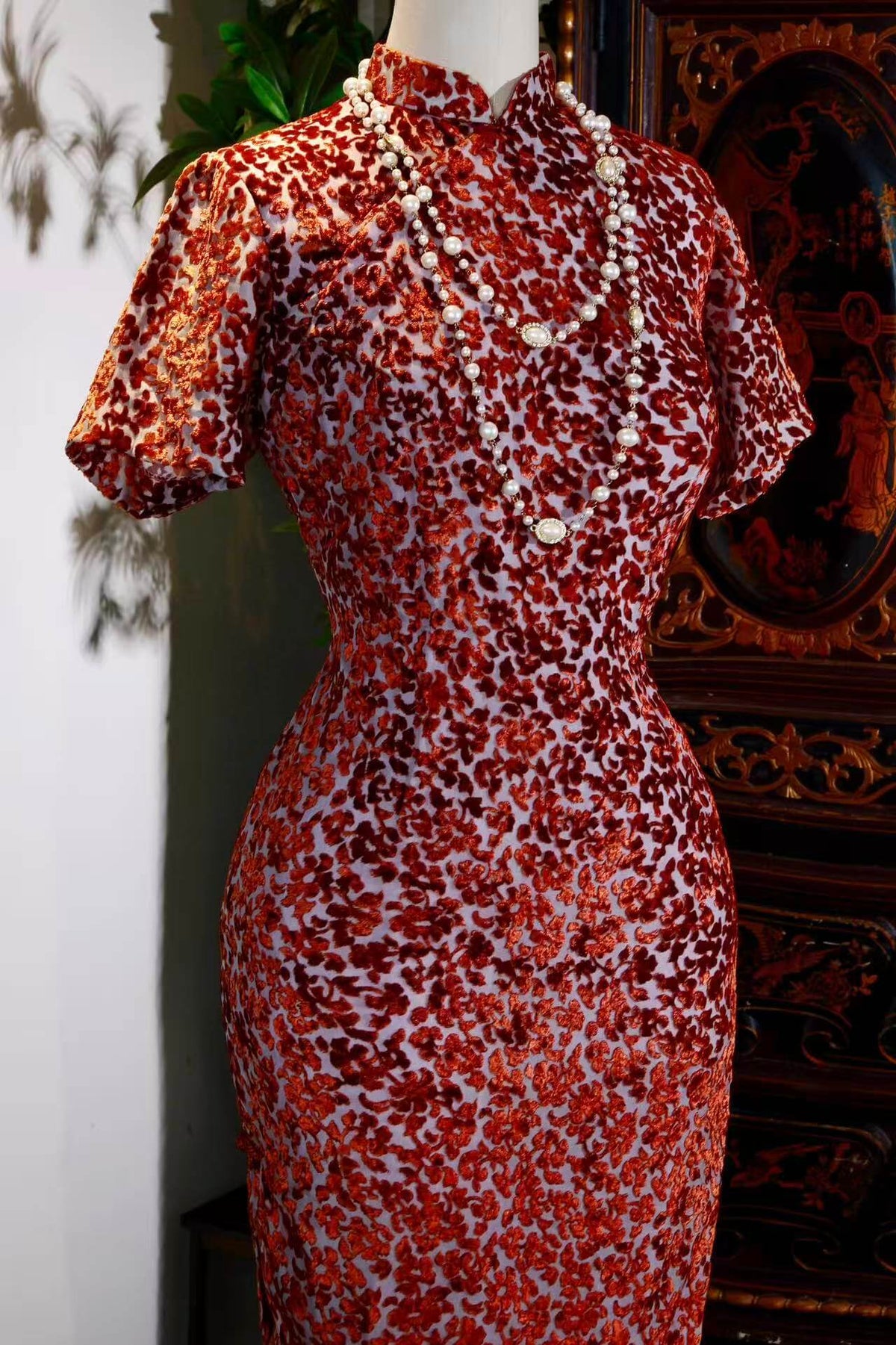
其面料采用了极为考究的“烧花(Burnout Velvet)”工艺。这是一种在丝绒底料上,通过化学腐蚀剂将局部绒毛“烧”去,从而形成明暗交织图案的高难度技术。在这件旗袍上,底衬是素雅的浅淡藕荷色,而表面则浮现出如朱砂般浓烈、又如枫叶般深沉的碎花图案。
这密集的、抽象的植物花卉纹样,宛如宋代词人笔下“红了樱桃,绿了芭蕉”的视觉延伸。它不是写实的具象花朵,而是一种“意写”的花影。在光线的流转下,丝绒的绒毛倒向不同,那些暗红的碎花便如在水中游动,波光粼粼。这种“虚实相生”的视觉效果,暗合了《道德经》中“大音希声,大象无形”的东方美学哲学——在最繁复的纹理中,隐藏着最克制的优雅。
二、 霓裳旧梦:黄金年代的全球化缩影
这件旗袍诞生于上世纪六十年代,那是一个极具张力的年代。
在服装史的宏大叙事中,六十年代的台湾是亚洲时尚的枢纽。彼时,台湾作为世界丝绸与丝绒的制造中心,汇聚了当时世界上最顶尖的纺织工艺。这件旗袍的面料产自意大利——六十年代的意大利正处于战后经济奇迹(Miracolo economico)的巅峰,其丝绒纺织业独步天下。
意大利的奢华丝绒漂洋过海来到台湾,在台北的老裁缝手中,化作贴合东方女性曲线的立领盘扣。这是一种奇妙的“文化混血”:西方的面料科技与东方的传统形制,在这一刻达成了完美的和解。它见证了那个时代名媛淑媛们,在十里洋场或深宅大院中,如何用一身丝绒旗袍,撑起一个家族的门面与体面。
三、 孤品难求:不可复制的时光绝唱
从稀缺性的角度来看,这件旗袍堪称“博物馆级”藏品。
首先,意大利产烧花丝绒在六十年代极为珍贵,产量极低,且保存难度极大。丝绒面料娇贵,历经六十载寒暑,能够保持如此完好的绒毛质感、色彩未褪、未遭虫蛀,实乃万中无一的幸事。
其次,其剪裁工艺展现了当时台湾“海派旗袍”与“港式旗袍”融合的极高水准。立领高度适中,既保留了传统礼教的端庄,又通过极度收腰的设计,勾勒出女性成熟、妩媚的腰臀曲线。短袖的处理干净利落,露出女性最纤细的手臂线条,与胸前点缀的复古多层珍珠项链相映成趣,尽显“云鬓花颜金步摇”的盛世遗韵。
结语:
穿上这件旗袍,你穿的不仅是意大利的奢华与台湾的精工,更是一段被时间封存的黄金岁月。它适合在最隆重的场合,在灯光最璀璨的瞬间,静静地向世人诉说何为“岁月不败美人”。
Measurements / Size Guide:
Bust / Waist / Hips / Total Length: 100/90/98/102 cm
Detailed Description:
In the long river of fashion history, some garments are far more than mere cloth to cover the body; they are frozen time, silent epics. Presented before us today is a vintage cheongsam crafted in 1960s Taiwan from imported Italian burnout velvet. It is not merely a garment, but a peerless masterpiece of Eastern and Western cultural convergence across the Pacific.
I. Brilliantly Radiant: Literary Imagery in Dark Motifs
Gazing upon the patterns of this cheongsam, one is captivated by an elevated sensibility where "transcendent splendor returns to composure."
Its fabric utilizes the extraordinarily sophisticated "burnout velvet" (Devoré) technique. This is a high-difficulty method wherein chemical agents burn away localized velvet pile from a silk backing, creating a pattern woven of light and shadow. On this cheongsam, the base lining is a understated, pale lotus-mauve tone, while the surface reveals dense floral motifs as vivid as cinnabar yet as deep as maple leaves.
These dense, abstract botanical motifs resemble a visual extension of the Song Dynasty poet’s verse: "Cherries turn red, plantains turn green." They are not realistic, concrete flowers, but rather "impressionistic" floral shadows. Under shifting light, as the velvet pile tilts in different directions, those dark red petals seem to swim through water, shimmering like rippling light. This visual effect of "interplay between reality and illusion" subtly aligns with the Eastern aesthetic philosophy in the Tao Te Ching: "Great music is faint in sound, great form is subtle in shape"—where the most restrained elegance hides within the most intricate textures.
II. Old Dreams of Fine Garments: A Miniature of Globalization in a Golden Era
This cheongsam was born in the 1960s, a decade charged with immense tension.
In the grand narrative of garment history, 1960s Taiwan stood as a pivotal fashion hub in Asia. At that time, Taiwan served as a center for textile synthesis and luxury tailoring, gathering world-class techniques. The fabric of this cheongsam originated in Italy—1960s Italy sat at the peak of its post-war economic miracle (Miracolo economico), with its velvet weaving industry standing unrivaled worldwide.
Italian luxury velvet crossed vast oceans to arrive in Taiwan, where it was transformed by master tailors in Taipei into mandarin collars and frog buttons contouring the curves of Eastern women. This is a marvelous "cultural hybridity": Western fabric technology and Eastern traditional silhouettes achieved perfect reconciliation in this moment. It stands as witness to how socialites and noble ladies of that era, whether in cosmopolitan salons or grand private estates, used a velvet cheongsam to uphold a family's prestige and dignity.
III. Unobtainable One-of-a-Kind Piece: An Irreplaceable Swan Song of Time
From the perspective of rarity, this cheongsam easily qualifies as a "museum-grade" collectible.
First, 1960s Italian-imported burnout velvet was exceedingly precious, produced in extremely low quantities, and notoriously difficult to preserve. Velvet fabric is delicate; surviving six decades of changing seasons while retaining such pristine pile texture, unfaded colors, and complete freedom from moth damage is a one-in-a-ten-thousand stroke of fortune.
Second, its tailoring demonstrates the pinnacle of fusion between "Shanghai-style" and "Hong Kong-style" cheongsam techniques in Taiwan at the time. The standing collar sits at a moderate height, preserving the dignity of traditional decorum while sculpting a mature, alluring hourglass silhouette through intensely tapered waistline construction. The clean, crisp short sleeves expose the slimmest lines of the arms, echoing the vintage multi-strand pearl necklace draped across the bust—fully manifesting the grand heritage of "cloud-like hair, flower-like face, and shimmering golden hairpins."
Epilogue:
Putting on this cheongsam, you wear not only Italian luxury and Taiwanese master tailoring, but a golden era sealed away by time. It is suited for the grandest occasions, quietly telling the world beneath the brightest lights what it truly means when they say "time never defeats a true beauty."