深圳溯源
Couldn't load pickup availability
衣服尺寸:
胸围/腰围/臀围/衣长:92/80/96/108 厘米
细节描述:
【器型与断代】
此件旗袍断代为20世纪60年代。彼时,旗袍已从传统的平面剪裁彻底转向西式立体剪裁(Darts & Seams)。观察其廓形,胸省与腰省的运用极为精准,贴合人体工学,呈现出那个时代特有的“S”型流线美感。这种修身而不紧绷的克制,正是海派旗袍黄金余晖与台湾精工技艺结合的典范。
【纹样与意境:当莫奈遇见张大千】
这件衣服最引人入胜之处,在于其面料的“混血”基因。
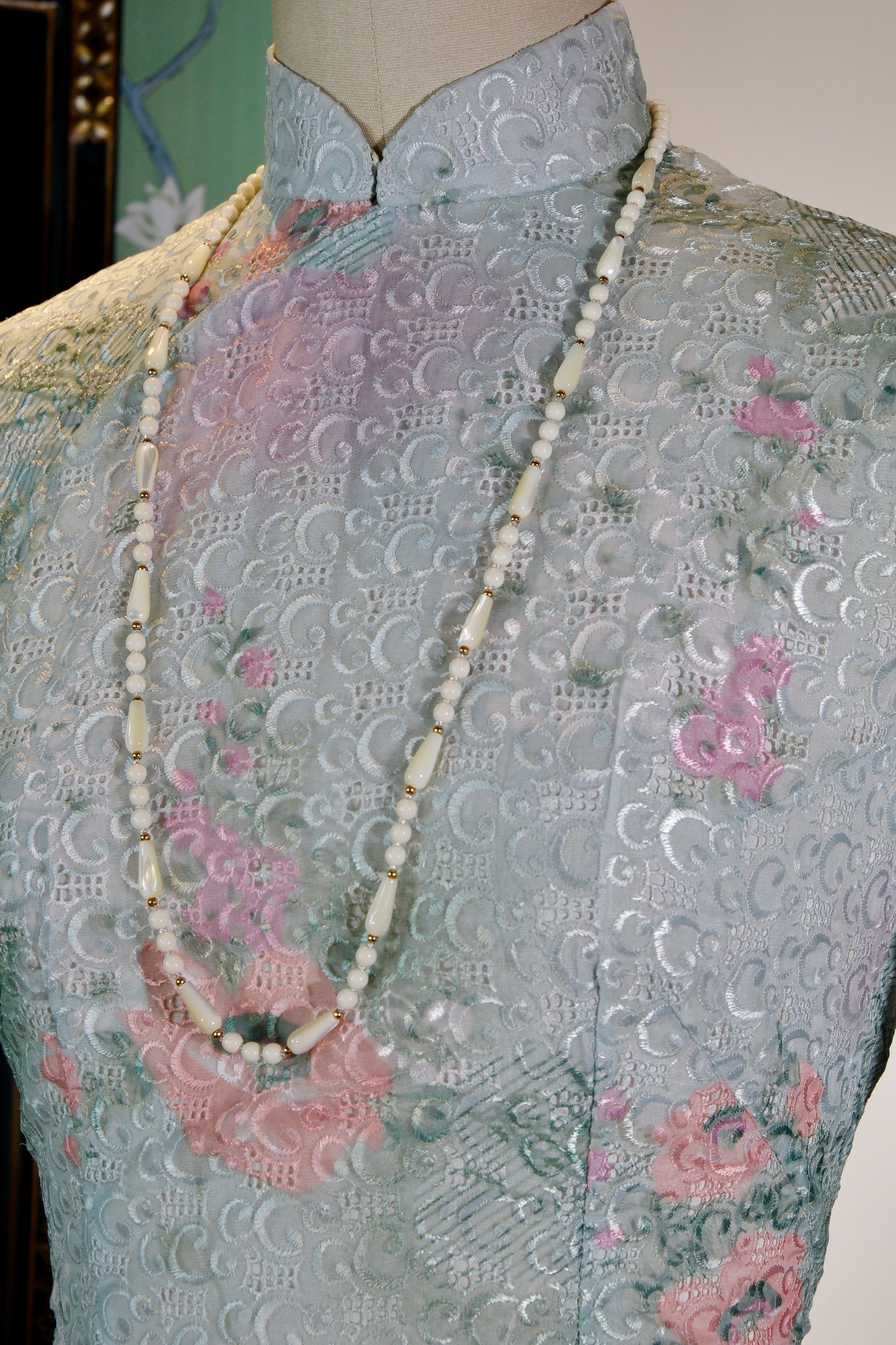
* 底色与肌理: 面料并非普通的丝绸,而是采用了当时昂贵的法国进口刺绣蕾丝(French Embroidered Lace)。请细看那满布的卷草纹与几何镂空,这是典型的欧式宫廷装饰艺术风格,光影透过蕾丝的孔隙,赋予了衣物一种呼吸感与朦胧的层次。
* 色彩与图案: 在这西式的骨架之上,工匠们运用了极具东方神韵的“水墨晕染”技法。淡青色的底子上,粉色的牡丹与紫色的祥云如烟雾般化开。这种色彩处理不讲究西方油画的焦点透视,而讲究中国画的“气韵生动”。粉色花朵并非生硬印染,而是顺着蕾丝的纹理自然渗透,宛如雨后初晴,花瓣上挂着露珠,既有宋画《出水芙蓉图》的清丽,又带着印象派的光影变幻。
【工艺与稀缺性:不可复制的时代标本】
在服装史上,60年代的台湾是高级定制的重要枢纽。这件旗袍极有可能是当年台湾顶尖裁缝店(如鸿翔或类似名店)利用进口的欧洲顶级面料,为特定客户量身打造的孤品。
* 中西合璧的极致: 将娇贵的法国蕾丝与中国传统的水墨印花结合,工艺难度极高。蕾丝易变形,晕染易透背,能保留至今且色泽如初,实属凤毛麟角。
* 配饰的呼应: 颈间搭配的长串玉石/珍珠项链,打破了高领的沉闷,拉长了颈部线条,符合60年代追求优雅修长的审美风尚。
【结语】
张爱玲曾言:“对于不会说话的人,衣服是一种语言。”
这件旗袍,讲述的是一个关于“流动”的故事。法国的丝线跨越重洋来到宝岛,东方的水墨在西式的剪裁上晕染开来。它不仅仅是一件古董衣,它是那个摩登时代的证物,见证了女性身体意识的觉醒,也见证了东西方美学在针线间最温柔的一次拥抱。
收藏建议: 此类“法式蕾丝+水墨印染”的组合在目前的古董衣市场上属于博物馆级的稀缺品类。它适合在重要的艺术场合穿着,或作为近代服饰史的实物研究样本珍藏。
Measurements / Size Guide:
Bust / Waist / Hips / Total Length: 92/80/96/108 cm
Detailed Description:
This qipao is reliably dated to the 1960s. During this pivotal era, the construction of the qipao had transitioned entirely from traditional two-dimensional flat-pattern drafting to Western three-dimensional tailoring characterized by precision darts and seams. Observing its contour, the implementation of bust and waist darts is exceptionally accurate and anatomically minded, sculpting the body into the signature, fluid "S-curve" silhouette characteristic of the decade. This specific fit—tailored and contouring without being restrictive or tight—stands as a prime textbook exemplar of the Shanghai style’s golden twilight merging with the pinnacle of Taiwanese master tailoring.
The most captivating allure of this garment resides in the cross-cultural "hybrid" genetic makeup of its fabric.
Background and Texture: The primary substrate is not a conventional silk weave, but highly prestigious, expensive imported French Embroidered Lace. Close observation reveals a dense overlay of scrolling foliage and geometric openwork. This is a classic European court decorative art style, where light filtering through the open mesh structure endows the garment with a breathing quality and a hazy, multi-dimensional depth.
Color and Pattern: Upon this Western framework, artisans implemented a "water-ink wash" (shuimo yunran) aesthetic radiating profound Eastern charm. Atop a pale cyan background base, soft pink peonies and lavender-hued auspicious clouds dissolve and bleed like drifting mist. This color treatment completely discards the Western oil painting conventions of focal perspective, choosing instead to channel the "lifelike spiritual resonance" (qiyun shendong) of traditional Chinese scroll painting. The pink blossoms are not harshly stamped onto the textile; instead, the pigments naturally seeped along the structural fibers of the lace, mimicking a fresh morning blossom glistening with dew after rain. It simultaneously captures the clear elegance of the Song Dynasty masterwork Water-born Hibiscus and the fleeting, light-dissolving quality of Impressionist painting.
In the chronicles of dress history, 1960s Taiwan operated as a highly critical hub for bespoke haute couture. This qipao is highly likely a custom piece commissioned from an elite Taiwanese tailoring salon of the era (such as Hong Xiang or similar master workshops), crafted for a highly specific, elite clientele using top-tier imported European yardage.
The Ultimate Fusion of East and West: Merging delicate, structurally unstable French lace with traditional Chinese ink-wash printing presented an extraordinary technical hurdle. Lace is highly prone to warping and distortion during processing, and ink pigments easily bleed through the mesh layers. That this garment has survived to the present day with its original structural integrity intact and its coloration beautifully preserved makes it an absolute anomaly.
Stylistic Cohesion of Accessories: The styling choice of a long, draped jade or pearl necklace draped over the neckline beautifully breaks up the severity of the high standing collar. This visual line serves to elongate the neck, perfectly harmonizing with the 1960s sartorial zeitgeist that prioritized long, elegant, and slender proportions.
Eileen Chang famously observed in Reflections on Clothing: "For those who cannot speak, clothes are a language."
This qipao speaks of a grand journey of "flow." Delicate French threads crossed the vast oceans to arrive on the island, where Eastern ink dissolved and bloomed across the lines of Western tailoring. It transcends its material identity as an antique garment to stand as primary evidence of a highly cosmopolitan, modern epoch—documenting the awakening of female body consciousness and capturing the gentlest embrace between Eastern and Western aesthetics ever stitched by hand.
Curation and Collecting Advice: Pieces showcasing the highly specific synthesis of "French lace and ink-wash printing" represent museum-grade archival rarities in the contemporary antique textile market. It is exceptionally well-suited for exhibition in prominent art events or as a primary physical research specimen in modern dress history archives.