深圳溯源
Couldn't load pickup availability
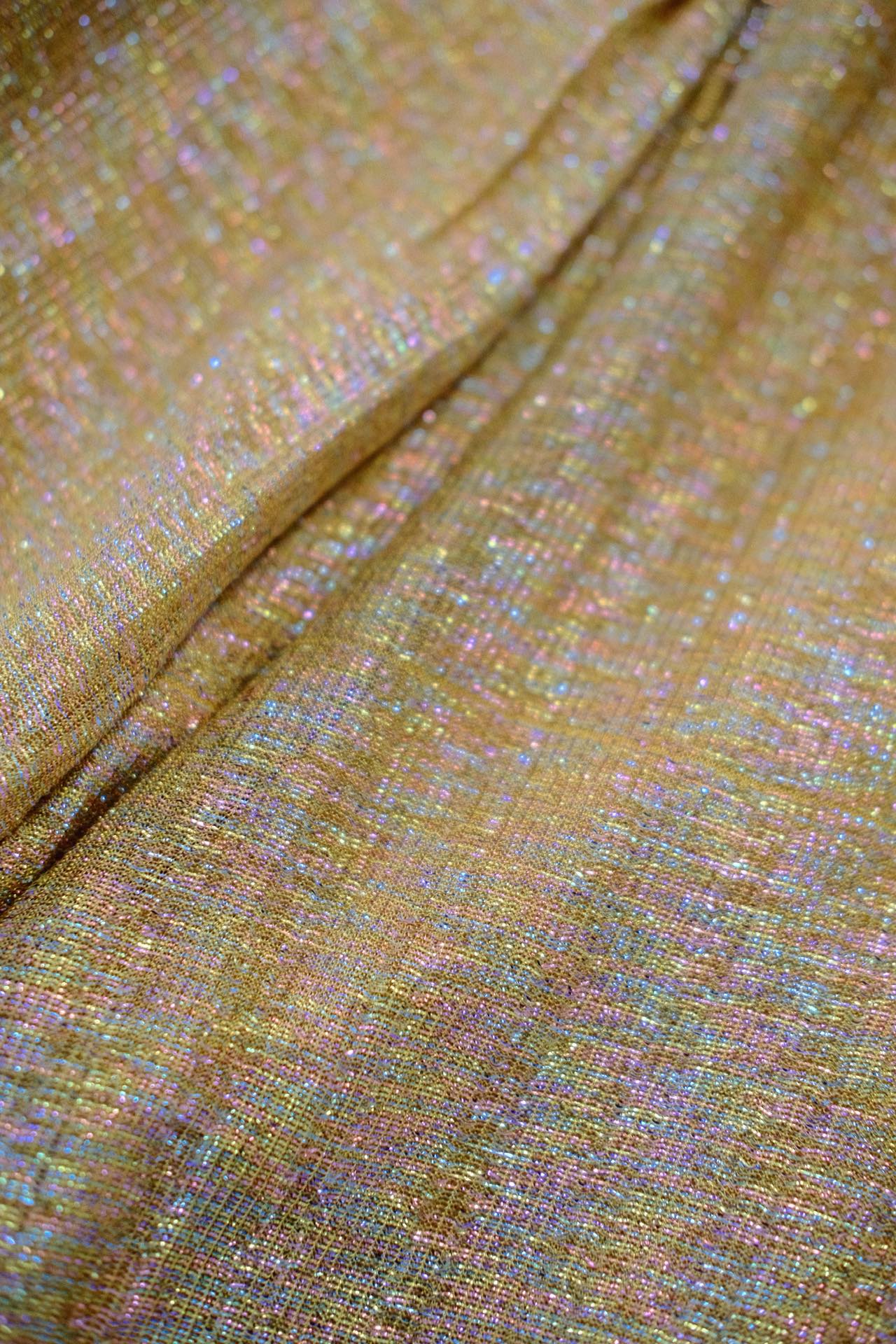
The structural foundation of this evening gown resides in a rare, premium iridescent gold-weft fabric imported from Italy during the 1960s. Diverging sharply from the flat, heavy reflectivity of standard metallic textiles, this material yields an ever-shifting, multi-dimensional color interplay governed entirely by the angle of light and the movement of the wearer:
The Iridescent Chromatic Phenomenon: Under light, the textile matrix refracts an ethereal spectrum of aurora-like soft violet, pale blue, and crisp emerald-green undertones. These shifting prismatic highlights bleed into the rich golden base, creating a dreamlike visual effect. Executing this specific weave required extraordinary mechanical complexity: the production process interlaced multi-colored metallic filaments with fine silk threads, establishing this yardage as an absolute zenith of mid-century European industrial textile engineering.
Textural Structural Integrity: The heavy, dense gauge of the gold-weft fabric gives the gown an innate architectural crispness. It effortlessly commands its own spatial layout—holding a proud, stable contour that naturally suspends the flare of the skirt to showcase elegant curves. This specific fabric stood as an exceptionally precious material choice within 1960s European haute couture, operating as a definitive symbol of wealth and social status.
The silhouette of the gown relies on a classic 1960s Western eveningwear framework—a clean, sleeveless scoop-neck A-line architecture—yet hides meticulous design ingenuity within its structural details:
The Volumetric Flare: The A-line skirt sweeps outward naturally from the waist with absolute geometric fluidity. This structural choice infuses the silhouette with a definitive sense of ceremony and formal weight, while simultaneously gifting the wearer complete kinetic freedom. This specific silhouette rule stood as the premier choice among elite European circles for attending formal presentations.
The Minimalist Facade: The sleeveless architecture exposes the natural line of the shoulders, introducing a subtle hint of allure while establishing a sophisticated visual counterbalance against the rounded symmetry of the collar. This deliberate pairing—juxtaposing an absolute minimalist framework with an operatic, sumptuous textile—serves as the perfect material metaphor for the mid-century interception of global design cultures: balancing a structured, understated Eastern composure with unapologetic Western openness.
The custodian of this artifact, Ms. Woo, operated not merely as a co-director of a major Canadian enterprise, but as a definitive visionary within the early network of global luxury textile procurement:
During the 1960s, elite international Chinese merchants made regular, calculated sourcing journeys across Europe (specifically targeting Italy and France) to secure advanced fabric volumes. These precious materials were subsequently routed back to Hong Kong, where master tailors transformed the raw textiles into bespoke, custom silhouettes.
This evening gown stands as an absolute historical marker of that exact transoceanic lifestyle: the iridescent Italian gold-weft records the pinnacle of European material luxury; the precision-engineered construction tracks the absolute mastery of Hong Kong's artisan tailoring traditions; and its ultimate presentation within the executive landscapes of Canada highlights a profound narrative of identity. As the fashion historian Anne Hollander noted, "Dress is an extension of the body." Ms. Woo’s selection functions beautifully as a material expression of personal refinement and a concrete manifestation of cultural authority.
The modern rarity of this evening gown extends far beyond its raw material worth or its complex optical performance; it stands as a pristine archive of a highly specialized, completely vanished sartorial ecosystem:
During the 1960s, Hong Kong’s custom apparel trade thrived across hundreds of master tailors who engineered garments based on a strict "one person, one pattern" blueprint philosophy, where senior artisans meticulously draped rare European imported fabrics to match individual anatomical requirements.
With the rapid global ascension of mass-market, mechanized ready-to-wear production scales, this resource-heavy, time-intensive synthesis of European textile technology and custom Hong Kong craftsmanship permanently dissolved. The few surviving specimens left in existence operate now as precious historical monuments, recording the romance, industry, and uncompromising artistry of a golden era.