深圳溯源
Couldn't load pickup availability
衣服尺寸:
胸围/腰围/臀围:86/78/97 厘米
衣长:109 厘米
细节描述:
一、图案描述
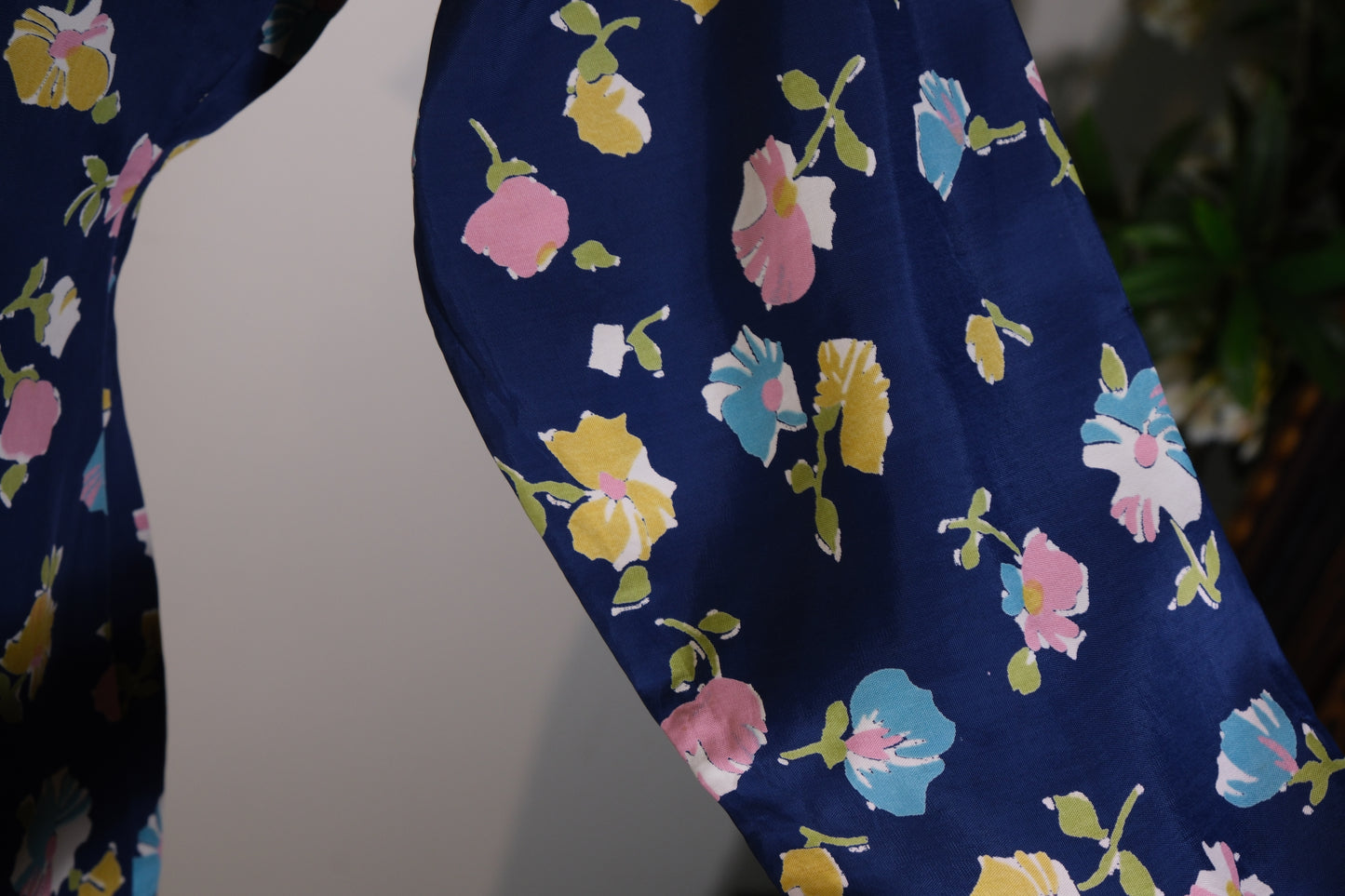
这件旗袍以深蓝色为底色,其上缀满粉、黄、浅蓝交织的碎花。花朵形态娇小灵动,或含苞待放,或舒展绽放,花瓣边缘晕染着自然的渐变色泽;枝叶则以嫩绿点缀其间,线条纤细却不失生机。整体印花风格兼具写意与细腻——既保留了传统工笔花卉的雅致韵味,又融入了现代印染工艺的鲜活感,在深蓝底色的衬托下,碎花如星子散落夜空,既显沉静端庄,又不失少女般的俏皮灵动。
二、古董衣的故事
上世纪四十年代的大陆,旗袍早已褪去清代的繁复桎梏,在“中西交融”的时代浪潮中完成蜕变。彼时,上海、天津等都市的裁缝铺里,匠人们将西式立体剪裁与传统旗袍元素巧妙糅合,让旗袍从“身份符号”变为“日常美学”。
这件旗袍的诞生,或许藏着一段被时光掩埋的往事:它可能出自某位名媛的衣橱,见证过百乐门的霓虹与咖啡馆的低语;也可能是一位知识女性的日常着装,陪她走过图书馆的书页与街头的风潮。更关键的是,四十年代的旗袍面料多以棉、麻为主,历经近百年岁月仍能保存完好,足见当年主人对它的珍视——或许是特殊年代的隐秘珍藏,或许是家族传承的情感载体。如今,它不仅是衣物,更是“流动的博物馆”,承载着那个时代女性对美的觉醒与坚守。
三、艺术风格与稀缺性(引经据典)
从艺术史视角看,这件旗袍是“海派文化”的微观缩影。张爱玲在《更衣记》中写道:“各人住在各人的衣服里。”四十年代的旗袍,恰是女性“自我表达”的载体:深蓝底色暗合传统“尚青”审美(《礼记·玉藻》有“衣正色,裳间色”之说),而碎花图案则呼应了当时“摩登生活”中对自然、浪漫的追求——这种“传统与现代的对话”,正是民国服饰最迷人的张力。
其稀缺性更体现在工艺与时代的不可复制性:一方面,四十年代的印染技术受限于物资条件,手工调色、分段印花的细节里藏着匠人的温度;另一方面,战乱与动荡让大量同时期服饰损毁,能完整留存至今的“大陆产古董旗袍”凤毛麟角。正如沈从文在《中国古代服饰研究》中所言:“服饰是历史的镜子。”这件旗袍不仅照见了四十年代的审美风尚,更成为研究近代社会变迁、女性意识觉醒的“活化石”。
结语
当指尖抚过这抹深蓝与碎花,仿佛能触摸到民国岁月的呼吸——它是衣橱里的诗,是时光中的画,更是属于中国女性的、永不褪色的风华绝代。
Measurements / Size Guide:
Bust / Waist / Hips: 86/78/97 cm
Total Length: 109 cm
Detailed Description:
This qipao utilizes a deep blue as its grounding base color, densely adorned across its frame with micro-florals woven from an interlacing of pink, yellow, and pale blue. The floral forms are petite and dynamic—either hugging the bud awaiting release or fully spreading into bloom, with the petal boundaries displaying a natural, washed gradient of coloration. The foliage is punctuated with a tender green interspersed throughout, utilizing lines that are slender yet completely burst with raw vitality. The overall print layout strikes a balance between freehand expressionism (Xieyi) and meticulous detailing—simultaneously preserving the elegant refinement of traditional Gongbi flower draftsmanship while infusing the crisp freshness of modern printing and dyeing techniques. Under the structural framing of the deep blue background, the micro-florals scatter like stars across a midnight sky, projecting a presence that is deeply tranquil and dignified without losing the playful, spirited grace of youth.
Across the Chinese mainland during the 1940s of the last century, the qipao had long shed the complex structural imprisonment of the Qing Dynasty, executing its definitive metamorphosis amidst the epochal surge of East-West cultural fusion. During that timeline, within the tailor shops of metropolitan hubs like Shanghai and Tianjin, master craftsmen masterfully spliced Western three-dimensional pattern drafting with traditional qipao components, shifting the garment from a rigid "status symbol" into an expression of "everyday aesthetics."
The materialization of this specific qipao likely conceals a narrative buried by the sands of time: it may have originated within the wardrobe of an elite socialite, standing as a material witness to the neon lights of the Paramount ballroom and the low whispers of cosmopolitan cafes; alternatively, it may have served as the everyday attire of an intellectual woman, accompanying her past the library pages and the moving trends of the city streets. Crucially, 1940s qipao fabric matrices relied heavily on cotton and linen; for this piece to cross nearly a century of timeline while remaining flawlessly preserved stands as a direct testament to the deep treasure and care bestowed by its original custodian—perhaps acting as a hidden archive through tumultuous decades, or serving as an emotional vessel for family lineage. Today, it operates far beyond its utility as a basic garment to function as a "living, flowing museum," carrying that generation of women's awakening and unyielding stance toward beauty.
Viewed through the prism of art history, this qipao operates as a microscopic epitome of "Shanghai-style culture" (Haipai). The celebrated author Eileen Chang penned in her essay Chronicle of Changing Clothes: "Each of us lives within their own garments." The qipao of the 1940s functioned precisely as the ultimate vessel for a woman’s "self-expression." The deep blue base color subtly aligns with the historical heritage aesthetic of "reverence for blue-cyan" (as the ancient text The Book of Rites · Yuzao notes: "The upper garment utilizes the primary color, while the lower skirt utilizes the intermediate color"). Conversely, the micro-floral motifs directly echo the pursuit of nature and romance driving contemporary "modern lifestyles"—this exact "dialogue between the traditional and the modern" generates the most intoxicating aesthetic tension within Republic-era costume history.
Its absolute scarcity is further anchored by the total irreproducibility of its craftsmanship and era: on one hand, the printing and dyeing methodologies of the 1940s were physically constrained by material and supply conditions, meaning the nuances of manual color blending and segmented textile printing preserve the direct warmth of the artisan's hand; on the other hand, wartime chaos and massive societal upheavals caused the destruction of the vast majority of contemporary apparel, leaving surviving examples of "Mainland-Produced Antique Qipaos" exceptionally rare—true phoenix feathers and unicorn horns. As the scholar Shen Congwen insightfully observed in Researches on Ancient Chinese Costumes: "Apparel functions as the mirror of history." This qipao not only reflects the fashion and aesthetic movements of the 1940s, but stands as a genuine "living fossil" for researching近代 societal transformations and the awakening of female consciousness.
As one's fingertips brush past this stroke of deep blue and teeming blossoms, one can almost touch the physical respiration of the Republic era—it is a poem nestled within the wardrobe, a painting frozen in time, and above all, a peerless, eternal grace belonging uniquely to Chinese women.