深圳溯源
Couldn't load pickup availability
衣服尺寸:
胸围/腰围/臀围:76/60/88 厘米
衣长:140 厘米
细节描述:
一、纹样考释:繁花似锦的东方隐喻
观此衣,首先映入眼帘的是其通体铺陈的繁复纹样。这并非普通的印染,而是典型的“织锦缎提花”工艺。在六十年代的香港纺织业黄金期,这种面料是奢华与身份的代名词。
细审其图案,主纹样为缠枝莲与菊花的变体交织。
- 菊花: 在中国传统文化中,菊乃“花中四君子”之一,象征着隐逸与高洁。《礼记·月令》云:“季秋之月,鞠有黄华。”此处的菊花纹样并非孤立的写实,而是经过了艺术化的抽象处理,花瓣层叠,呈现出一种放射状的张力,寓意“长长久久”与生命力。
- 缠枝纹: 藤蔓卷草连绵不断,穿插于花叶之间,构成了画面的骨架。这种“生生不息”的构图方式,源自唐代以来的装饰传统,但在六十年代的审美下,被处理得更加轻盈、流动,打破了传统织锦的厚重感,赋予了衣物一种呼吸的节奏。
底纹中隐约可见的几何回纹与云雷纹,则起到了极好的衬托作用,使得整件衣服在光影流转间,既有古典的庄重,又不失现代的摩登感。
二、剪裁与工艺:西风东渐下的海派余韵
这件旗袍是六十年代香港裁缝技艺的集大成者。那个时代的香港,正处于东西方文化剧烈碰撞与融合的熔炉之中。
- 立体剪裁的引入: 不同于清末民初平面剪裁的宽松,这件旗袍明显采用了西式省道(Darts)技术。请注意腰部的收省与臀部的贴合度,它精准地勾勒出了女性的S型曲线。这是张爱玲笔下“各各都是紧身俏皮的”那种审美体现,也是当时好莱坞电影明星如格蕾丝·凯利(Grace Kelly)风格对东方服饰的影响——追求极致的合身与优雅。
- 精工盘扣: 领口至腋下的琵琶扣(或称花扣),是整件衣服的点睛之笔。工匠利用同色系的织锦缎面料,通过推、拉、扭、结等复杂手法,制作出立体的花卉造型。这不仅起到了固定的功能作用,更是一件微缩的雕塑艺术品,展现了“慢工出细活”的匠人精神。
三、历史回响:流金岁月的见证
若要为这件古董衣讲述一个故事,那必然是关于“漂泊与重塑”的故事。
上世纪六十年代,大批来自上海的裁缝师傅南下香港,将精湛的“海派旗袍”技艺带到了香江。他们保留了苏杭丝绸的细腻,又吸纳了西方的立体剪裁理念,创造出了独属于香港的“港式旗袍”。
这件粉色织锦缎旗袍,或许曾属于一位在那段激情燃烧岁月中奋斗的女性。她可能穿着它出席过中环的晚宴,也可能穿着它在尖沙咀的百货公司里挑选最新的唱片。那抹娇嫩的粉色,在那个保守与开放并存的年代,是一种无声的宣言——它代表着女性意识的觉醒,代表着对生活品质的不妥协。
正如《诗经·卫风·硕人》所描绘的“衣锦褧衣”,古人以锦衣为贵。而这件六十年代的织锦缎,虽历经半个多世纪的岁月洗礼,光泽依旧温润如玉。它不仅是一件御寒遮体的衣物,更是一段被封存的历史记忆,是那个“花样年华”里最生动的注脚。
四、收藏价值:不可复制的绝版芳华
在当今的服装史研究与收藏界,六十年代的原装古董旗袍因其稀缺性而备受推崇。
- 面料的断代: 随着工业化进程的加速,这种高密度、手工感极强的老式织锦缎面料已近乎绝迹。现代机器生产的提花往往显得生硬呆板,唯有老料才能呈现出这种如水波般流动的质感。
- 工艺的失传: 全手工制作的立体盘扣和复杂的归拔工艺,在现代成衣工业中已难觅踪影。每一件保存完好的古董旗袍,都是孤品。
拥有一件这样的旗袍,不仅是拥有了一件美丽的衣裳,更是收藏了一段无法复刻的东方美学史。它静静地伫立在那里,便是一首无声的诗,诉说着关于时间、关于美、关于传承的永恒话题。
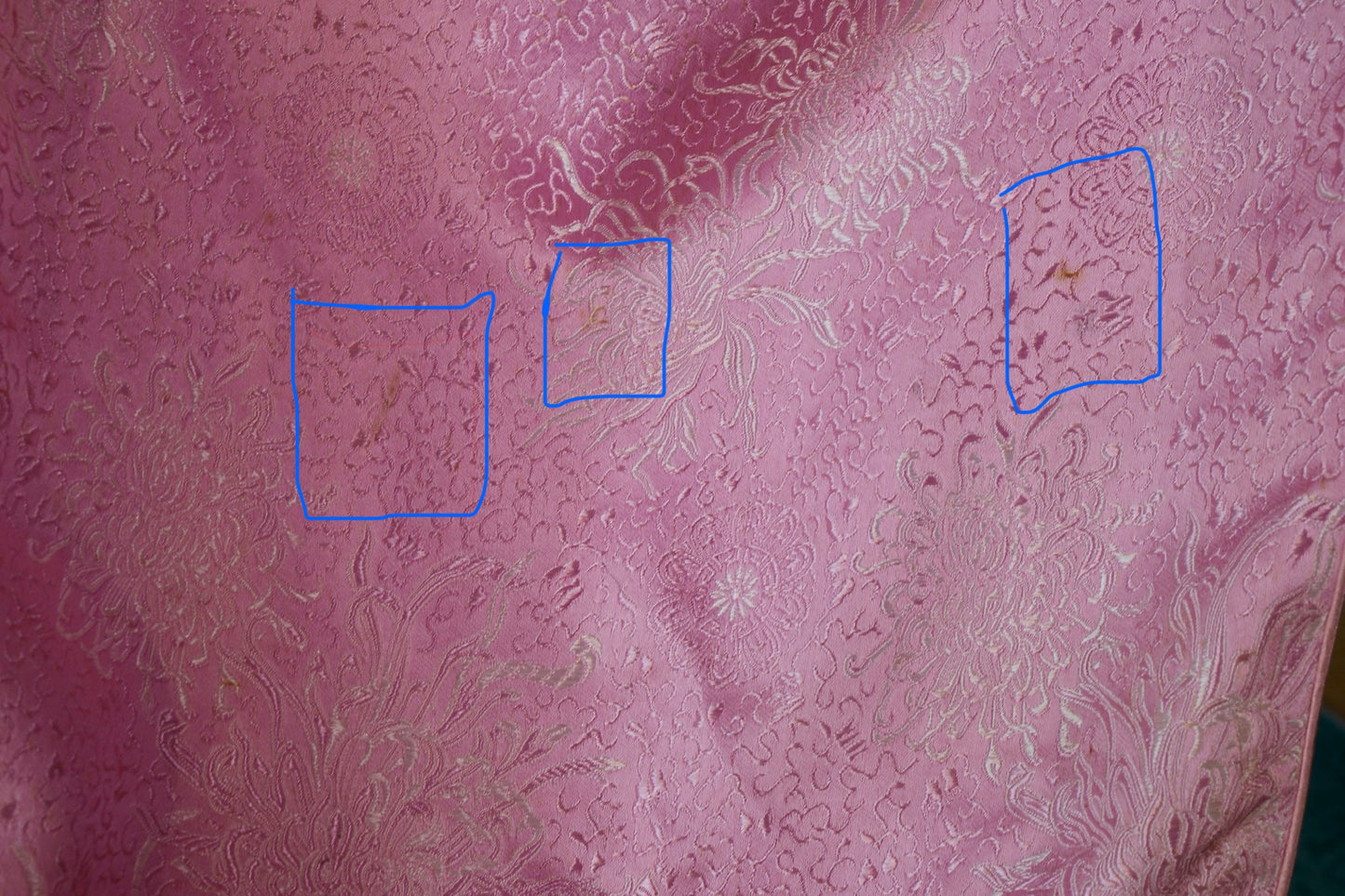
注:瑕疵特价
Measurements / Size Guide:
Bust / Waist / Hips: 76/60/88 cm
Total Length: 140 cm
Detailed Description:
To look upon this garment is to be immediately enveloped by the intricate complexity of its all-over ornamentation. This surface depth is not achieved through superficial dye printing, but via the structural density of the traditional Brocade Jacquard methodology (Zhijin Duan Tihua). During the golden age of the Hong Kong textile manufacturing industry in the 1960s, this high-density textile chassis stood as the definitive material signifier of metropolitan luxury, high social standing, and sartorial authority.
A microscopic examination of the textile matrix reveals a highly sophisticated, interlocking layout featuring stylized variants of intertwined lotuses (Chan Zhi Lian) and chrysanthemums.
The Chrysanthemum Iconography: Within classical Chinese visual culture, the chrysanthemum occupies an elite rank among the "Four Gentlemen" (Si Junzi), serving as a potent emblem of noble reclusion, moral purity, and intellectual integrity. As noted in the ancient Book of Rites (Liji · Yueling): "In the final month of autumn, the chrysanthemums burst forth in yellow splendor." The chrysanthemums woven into this chassis consciously reject literal, flat naturalism in favor of an artistic, high-relief abstraction. The petals are engineered in dense, overlapping radial configurations that generate a dynamic outward tension, serving as a visual metaphor for enduring longevity (Changchang Jiujiu) and unyielding biological vitality.
The Intertwined Tendril Topology (Chanzhiwen): Sinuous, undulating vines and scrolling foliage wind seamlessly across the textile expanse, darting beneath petals and leaves to form the structural skeleton of the pattern design. This specific compositional methodology—symbolizing the philosophical concept of endless cyclical generation (Shengsheng Buxiu)—directly inherits a decorative lineage stretching back to the Tang Dynasty. However, under the distinct mid-century aesthetic currents of the 1960s, the tendrils have been recalibrated to achieve a lighter, more fluid kinetic weight. This design intervention successfully dissolves the oppressive gravity traditionally associated with antique brocades, gifting the overall textile with an organic, breathing cadence.
Furthermore, the secondary background canvas reveals faint, low-profile geometric fret patterns (meander motifs) and cloud-thunder designs (Yunleiwen). These historic markings provide an exceptional architectural anchor to the surface drama. They ensure that as light glances across the wearer's movements, the garment effortlessly balances monumental classical solemnity with a sharp, mid-century cosmopolitan modernity.
This artifact stands as an absolute monument to the technical apex of the 1960s Hong Kong tailoring guilds, capturing a historical moment when the colony functioned as a high-velocity crucible for the collision and synthesis of Eastern and Western design systems.
The Integration of Three-Dimensional Pattern-Drafting: Breaking decisively with the flat, loose, two-dimensional construction typifying the late Qing and early Republican eras, this qipao explicitly implements Western-style architectural darting technology (Shengdao). The rigorous calculation of the high-precision waist-contouring darts and hip-shaping darts forces the textile plane to trace the anatomical "S-curve" of the female silhouette with mathematical accuracy. This silhouette is the physical manifestation of the aesthetic Eileen Chang described as "every single one of them fitted so tightly, radiating a sharp, playful wit." It also indexes the profound global influence of mid-century Hollywood costuming—exemplified by icons like Grace Kelly—upon traditional Eastern dress, pursuing an absolute tier of custom fit and unyielding elegance.
The Engineering of Fine Frog Closures (Pankou): Running from the high collar down to the right axilla, the pipa buttons (or stylized floral frog closures, Huakou) function as the structural jewels of the entire composition. Utilizing matching brocade face-fabrics, master artisans applied a complex sequence of structural manipulation—pushing, pulling, twisting, and knotting—to sculpt fully three-dimensional botanical forms. These components transcend their utilitarian fastening mechanics to operate as miniature works of high sculpture, preserving the uncompromising "slow-craft" ethos of heritage master tailors.
If this antique garment were to narrate its own history, it would unfold as a sweeping epic of dislocation, cultural migration, and creative rebirth.
During the 1960s, a monumental wave of master tailors migrated south from Shanghai to Hong Kong, transplanting the highly refined technical discipline of the Shanghai-Style Qipao (Haipai Qipao) directly onto the shores of the Fragrant River. These artisans preserved the hyper-delicate textile sensitivities of the Suzhou and Hangzhou silk industries while aggressively absorbing Western haute couture methodologies. This unique cultural synthesis birthed a distinct, elite design language: the Hong Kong-Style Qipao (Gangshi Qipao).
The tender, luminous pink hue of this particular brocade tells a profound sociological story. It likely enveloped a woman navigating the high-stakes, electrified landscape of Hong Kong's post-war economic miracle. One can envision her wearing this architecture to elite banquets in Central, or stepping through the luxury department stores of Tsim Sha Tsui to select the latest vinyl records. In an era caught in a tense tug-of-war between traditional conservatism and rapid social liberation, that particular choice of delicate, youthful pink operates as a silent, powerful manifesto—a material declaration of awakening female autonomy and an absolute refusal to compromise on the poetic quality of daily life.
As the ancient Classic of Poetry (Shijing · Weifeng · Shuoren) commemorates: "She wears her rich brocades, cloaked in a fine linen wrap," elite historical societies have universally recognized premium brocade as the apex of luxury. Though this 1960s specimen has traveled through more than half a century of environmental timelines, its surface reflectivity remains incredibly soft, warm, and jade-like. It has ceased to be a mere garment designed for thermal utility; it is a sealed vault of historical memory—the most vivid, breathing footnote to a real-world "In the Mood for Love" era.
Within the contemporary landscape of costume history research and elite textile collection, authentic, unaltered 1960s antique qipaos command immense prestige due to their absolute, absolute scarcity.
Chronological Authentication of the Textile Matrix: With the rapid acceleration of high-velocity industrial manufacturing, this specific breed of high-density, heavily textured, old-world brocade jacquard has entered absolute extinction. Contemporary machine-loomed jacquards almost universally display a rigid, static, and flat appearance. In stark contrast, these mid-century heritage materials possess an irreplaceable tactile fluidity, catching the light with a variable, liquid-like depth that mimics undulating water currents.
The Loss of Artisanal Lineage: The complex manual mechanics required to execute fully hand-sculpted, three-dimensional frog closures and the grueling three-dimensional iron-shaping techniques (Gui-Ba processing, used to shrink and stretch heavy silks into anatomical curves) have almost entirely vanished from modern garment industries. Every single pristine, well-preserved antique qipao from this decade is, by definition, a non-reproducible pièce unique.
To curate and hold a piece of this caliber is to look far beyond the ownership of a beautiful dress. It represents the archiving of an unrepeatable chapter in the history of Eastern design aesthetics. Standing in quiet, monumental repose, the garment reads as a silent poem—an elegant cross-temporal testament to the eternal dialogue between time, beauty, and the preservation of heritage craft.
Note: As-Is Special Offer