溯源
Couldn't load pickup availability
衣服尺寸:
胸围/腰围/臀围/衣长:84/74/92/110 厘米
细节描述:
【图案描绘:笔墨间的写意与风骨】
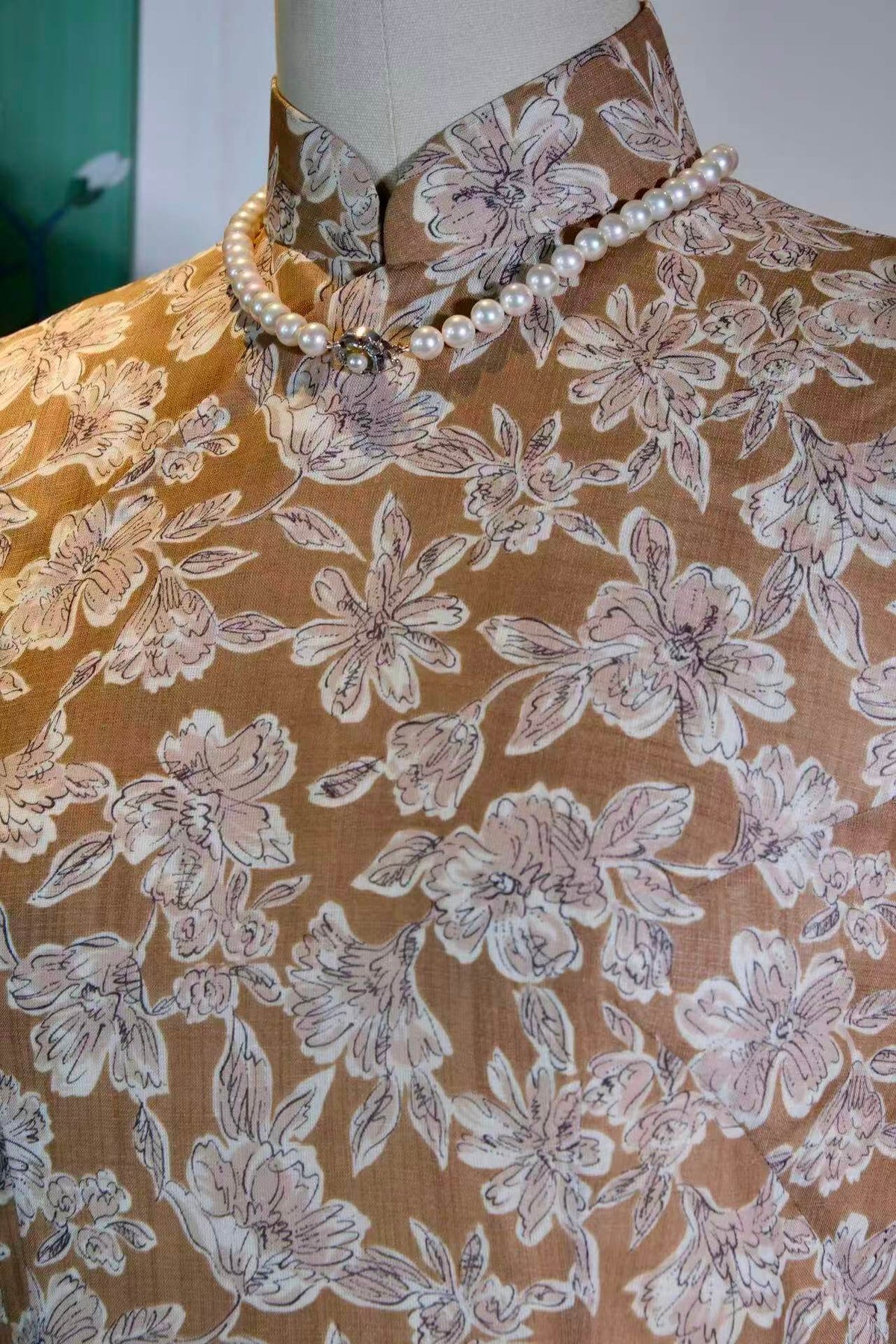
观此衣,如展一幅泛黄的旧宣纸。其面料选用极具透气性的棉麻混纺,底色呈现出一种经过岁月沉淀的暖褐色调,宛如陈年普洱的汤色,温润而内敛。
衣身遍布的花卉纹样,并非传统工笔的细腻勾勒,而是采用了“没骨”与“白描”相结合的抽象技法。花叶轮廓以流畅的线条游走,似断非断,笔触间带着一种速写般的洒脱与灵动。花朵形态饱满却不艳俗,枝叶舒展而富有张力,仿佛是在微风中轻轻摇曳。这种印花工艺在五十年代极为考究,既保留了植物自然的生机,又融入了文人画的雅致意趣。在光影流转间,那些白色的线条如同浮雕般跃然布上,既有东方的水墨神韵,又隐约透着一丝当时受西方现代主义影响的装饰艺术风格。
【古董叙事:大时代下的海派余韵与香江新生】
这件旗袍诞生于上世纪五十年代的香港,那是一个风云际会、文化交融的特殊年代。彼时,大量上海裁缝与名媛南下香江,将海派旗袍的精髓与岭南的务实精神完美融合,造就了独一无二的“港式旗袍”风格。
这不仅仅是一件衣服,它是那个时代女性独立与优雅的见证。五十年代的香港,正处于从转口港向工业化城市转型的前夜,社会风气虽渐趋开放,但传统礼教依然深植人心。这件旗袍的剪裁,保留了传统的高领与右衽大襟,象征着对传统的坚守;但其收腰的弧度更加贴合人体工学,袖口缩短至手肘上方,裙长适中,不仅便于行动,更展现了当时新女性追求自由、干练的精神风貌。
想象一下,半个多世纪前,或许有一位温婉的女子,身着此衣,穿梭于中环的石板路或半山区的洋房之间。她或许刚在写字楼里处理完英文信件,转身便去赴一场粤剧晚宴。棉麻的质朴消解了丝绸的娇贵,却增添了一份生活的烟火气与坚韧感。它是那个流金岁月里,普通中产阶层女性对生活美学最真实的追求。
【引经据典与艺术稀缺性:衣以载道,物以稀为贵】
《诗经·郑风》有云:“青青子佩,悠悠我思。”古人常以衣物寄托情思,而这件旗袍,寄托的是一段回不去的旧时光。张爱玲曾在《更衣记》中写道:“对于不会说话的人,衣服是一种语言,随身带着的是袖珍戏剧。”这件旗袍,便是一出无声的折子戏。
从艺术风格上看,它体现了“中西合璧,雅俗共赏”的美学高度。其抽象线条花卉的设计,打破了传统旗袍纹样(如龙凤、牡丹)的刻板印象,具有极高的艺术鉴赏价值。这种特定的印花版型和棉麻材质,在当时的量产成衣中属于高档定制品类,且由于棉麻材质难以保存,易褪色、易破损,能历经七十载岁月而品相如此完整、色泽依然温润者,实属凤毛麟角。
它不仅是一件古董衣,更是一件可穿戴的文物。它记录了纺织工艺的变迁,见证了香江文化的崛起,更承载了东方女性独有的含蓄与风情。在这个快时尚泛滥的年代,这样一件凝结了时光、技艺与故事的孤品,其稀缺性不言而喻,值得每一位懂衣、爱史之人珍藏。
Measurements / Size Guide:
Bust / Waist / Hips / Total Length: 84/74/92/110 cm
Detailed Description:
[Pattern Description: Impressionistic Brushwork and Character]
Observing this garment is like unfurling an aged sheet of yellowed Xuan paper. Its fabric features a highly breathable cotton-linen blend, with a base tone presenting a warm brown hue settled through time—reminiscent of the soup-like clarity of aged Pu'er tea, warm, moist, and introspective.
The floral motifs scattered across the body avoid the meticulous outlining of traditional fine-brush work, opting instead for an abstract technique combining the "mogu" (boneless) and "baimiao" (line-drawing) styles. The contours of flowers and leaves range with fluid lines, seemingly connected yet breaking off, carrying a sketch-like freedom and dynamism within their brushstrokes. The floral forms are full without being garish, while the branches and leaves stretch outward with inherent tension, as if swaying gently in a light breeze. This printing craft was remarkably refined in the 1950s: it preserved the natural vigor of plants while incorporating the elegant aesthetic interest of literati painting. As light and shadow flow across it, those white lines leap from the cloth like reliefs, harboring both Eastern ink-and-wash charm and subtly reflecting a decorative art style influenced by Western modernism at the time.
[Antique Narrative: Shanghainese Legacy and Hong Kong Rebirth in a Changing Era]
This cheongsam was born in 1950s Hong Kong—a special era marked by momentous meetings and cultural fusion. At that time, a large number of Shanghai tailors and socialites migrated south to Hong Kong, flawlessly blending the essence of Shanghainese cheongsams with the pragmatic spirit of Lingnan, creating the unique "Hong Kong-style cheongsam."
More than just a garment, this is a witness to the independence and elegance of women from that time. 1950s Hong Kong sat on the eve of transforming from an entrepôt port into an industrialized city. Although social customs grew increasingly open, traditional propriety remained deeply rooted in people's hearts. The tailoring of this cheongsam preserves the traditional high collar and right-side overlapping placket, symbolizing a steadfast adherence to tradition; yet its cinched waist contours adhere more closely to ergonomics, its sleeves are shortened above the elbows, and its hemline sits at a moderate length—making movement convenient while showcasing the spirited, free-thinking mental outlook of new women of that era.
Picture a gentle woman more than half a century ago, dressed in this garment, weaving through the cobblestone paths of Central or the mid-level residences of the Peak. She might have just finished drafting an English letter in an office building, turning around to attend an evening Cantonese opera banquet. The rustic simplicity of cotton-linen dissolved the fragile luxury of silk, adding a touch of everyday life and resilience. It represented the most genuine pursuit of lifestyle aesthetics among ordinary middle-class women during those golden years.
[Literary Allusions & Artistic Rarity: Clothing as a Conduit, Value in Scarcity]
The Book of Songs (Classic of Poetry) says: "Warm is your blue collar, long is my longing thought." Ancients often placed emotional yearning into garments, and this cheongsam harbors an irreplaceable slice of bygone time. Eileen Chang once wrote in A Record of Changing Clothes: "To those who cannot speak, clothes are a language, carrying with them a pocket-sized drama wherever they go." This cheongsam is precisely a silent excerpt of a dramatic play.
From an artistic style perspective, it embodies a high aesthetic standard of "blending East and West, appealing to refined and popular tastes alike." Its design of abstract floral lines breaks away from the stereotyped impressions of traditional cheongsam motifs (such as dragons, phoenixes, or peonies), possessing immense artistic appreciation value. This specific printed template and cotton-linen material belonged to the high-end custom category among mass-produced ready-to-wear garments back then. Furthermore, because cotton-linen fabrics are difficult to preserve—prone to fading and damage—it is truly a rare gem to find a piece that has survived seventy years with its condition so pristine and its colors remaining so warm and gentle.
This is not merely a vintage garment, but a wearable artifact. It records the shifts in textile craftsmanship, witnesses the rise of Hong Kong culture, and carries the unique subtlety and charm of Eastern women. In an era flooded with fast fashion, such a one-of-a-kind piece that condenses time, skill, and stories possesses self-evident rarity, making it worthy of collection by anyone who understands fine clothing and loves history.