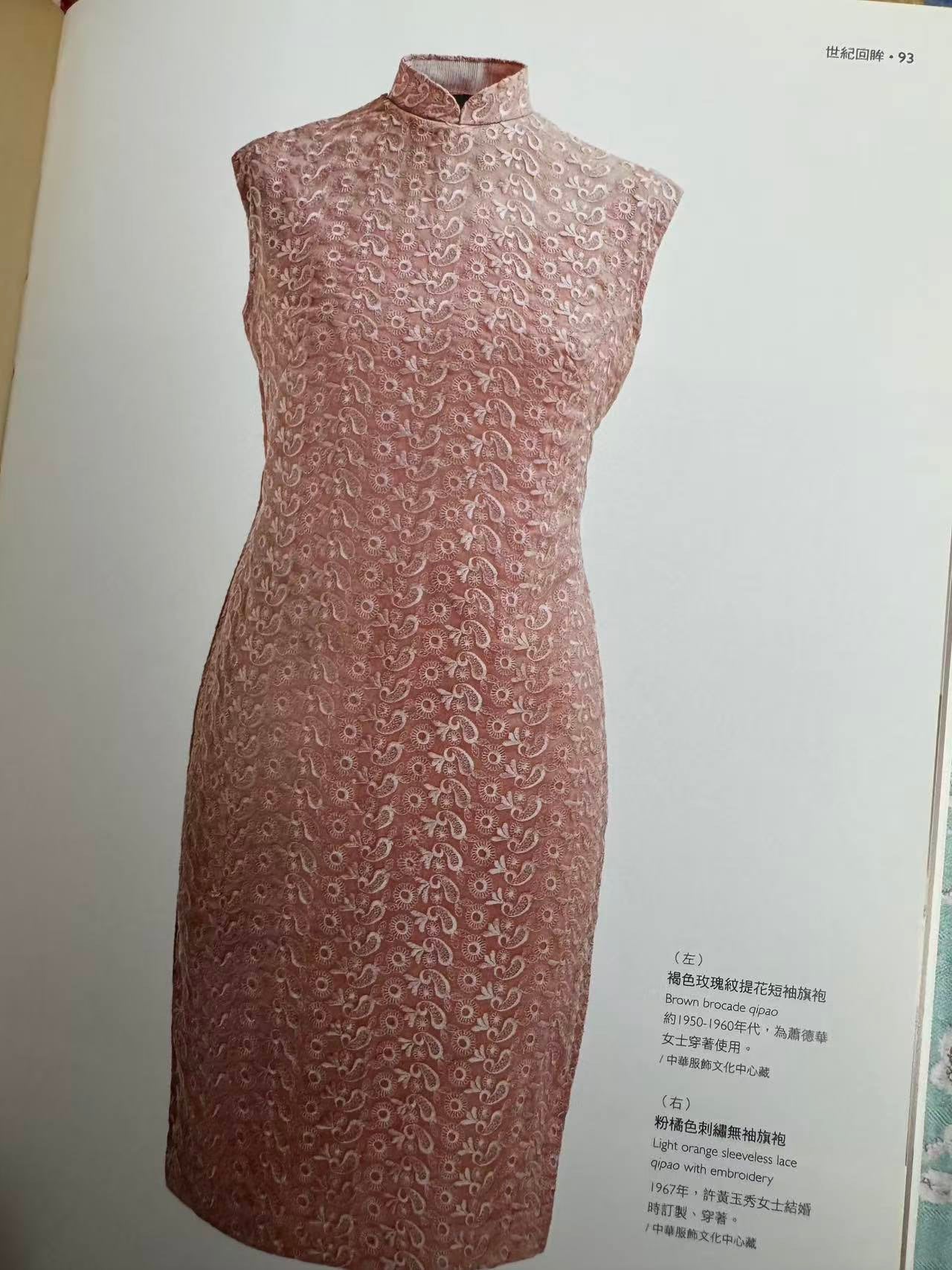
分享一件上世纪五十年代满机绣青瓷地嵌丝硬花扣古董港式旗袍。
青瓷绿绸为底,银白刺绣花卉如春日晨露,在经纬间绽放开来。这抹青瓷绿,恰似《饮茶歌诮崔石使君》中“越瓷青色胜霜雪”的温润,又藏着《本草纲目》“松花如海”的生机。短袖微卷,立领挺括,收腰处曲线玲珑,仿佛将五十年代上海弄堂的婉约与香港摩登的风韵,都绣进了这一寸一针里。
衣身满布机绣花卉:花瓣舒展如《宣和画谱》“写生折枝,俱得天真”,针脚细密处,可见50年代机绣工艺的巅峰。银白绣线勾勒花蕊,如《捣练子》“金线飘千缕”,在青瓷绿底上泛起涟漪;花叶交错间,暗藏“连枝同心”的吉祥寓意,恰合《古诗十九首》“同心而离居,忧伤以终老”的情思。
机绣工艺的精妙,源于其历史沉淀与技术创新——十九世纪初,法国棉纺织家J.海尔曼发明刺绣缝纫机,开启刺绣机械化先河;二十世纪三十年代,机绣技艺传入中国,上海、青岛等地率先引入,以缝纫机替代手工刺绣,效率倍增却仍保有细腻针法。五十年代正值中国机绣工艺成熟期,此袍所用机绣技术已突破早期单一针法,融合“包梗绣”等传统技艺,绣线穿梭如飞,每分钟可达百余针次,却仍能精准勾勒花卉形态,堪称“机械与手工的完美交融”。
古董机绣旗袍的稀缺性,不仅在于其物质材料的珍贵,更在于它记录了五十年代中国纺织工业的黄金时代——当西方技术涌入东方,匠人以智慧将机械的冰冷转化为艺术的温情,在旗袍的方寸之间,镌刻下传统与现代交织的独特印记。斜襟处两枚手工花扣,形如海棠,与衣身花卉呼应。花扣需手工盘绕铁丝,每一枚耗时半小时,堪称“指尖上的雕琢”。
当刺绣的细腻遇见青瓷绿的温婉,当花扣的精巧撞上花卉的烂漫,这件旗袍早已超越衣物本身,成为五十年代东方美学的活化石——既有宋锦的雅致,又有摩登的灵动,在时间的洪流中,永远绽放着独一无二的春日光芒。
🌸 The Celadon Dream: A Vintage 1950s Hong Kong Cheongsam with Full Machine Embroidery and Fitted Hard Buttons
Set on a base of celadon green silk (青瓷绿绸), the silver-white embroidered flowers bloom like spring morning dew within the interwoven threads. This celadon green hue is reminiscent of the "celadon from Yue, whose color surpasses frost and snow" from the Drinking Tea Song to Governor Cui Shi, yet it also holds the vitality of "pine flowers vast as the sea" described in the Compendium of Materia Medica. The short sleeves are slightly rolled, the stand collar is crisp, and the waistline is gracefully curved, seemingly stitching the elegance of 1950s Shanghai longtangs (alleys) and the stylish charm of Hong Kong's modernity into every inch and every stitch.
The body of the robe is entirely covered with machine-embroidered flowers: the petals are unfurled like the "life-like sketches of folded branches, all attaining natural vitality" found in the Xuanhe Huapu (宣和画谱); in the minute density of the stitches, one can see the pinnacle of 1950s machine embroidery craftsmanship. Silver-white embroidery threads outline the stamens, like the "thousand strands of golden thread floating" in the Daolianzi (捣练子), creating ripples on the celadon green base. Intertwined among the flowers and leaves is the auspicious hidden meaning of "joined branches, united hearts" (连枝同心), which resonates with the sentiment of "though united in heart, separated by distance, sorrow lasts until old age" from the Nineteen Old Poems.
The brilliance of the machine embroidery technique stems from its historical accumulation and technological innovation: in the early 19th century, the French cotton manufacturer J. Heilmann invented the embroidery sewing machine, pioneering the mechanization of embroidery. By the 1930s, the technique was introduced to China, with Shanghai and Qingdao being among the first cities to adopt it, replacing manual work with sewing machines. This exponentially increased efficiency while retaining the fine needlework. The 1950s marked the maturity of Chinese machine embroidery. The technique used on this cheongsam had already broken through early single-stitch limitations, integrating traditional skills like "stuffed embroidery" (包梗绣). The threads flew like shuttles, reaching over a hundred stitches per minute, yet could still precisely outline the floral forms—a perfect fusion of machinery and handicraft.
The scarcity of vintage machine-embroidered cheongsams lies not only in the preciousness of their material but also in the fact that they record the golden age of China's textile industry in the 1950s—when Western technology flowed into the East, artisans ingeniously transformed the coldness of machinery into the warmth of art, engraving a unique imprint of tradition interwoven with modernity onto the small space of the cheongsam. Two handmade floral buttons (硬花扣), shaped like crabapples (海棠), are set on the diagonal closure, echoing the flowers on the body. These buttons required hand-wrapping iron wire, with each one taking half an hour to complete, truly a "sculpture on the fingertip."
When the delicacy of the embroidery meets the gentleness of the celadon green, and the exquisite floral buttons collide with the luxuriance of the flowers, this cheongsam transcends mere clothing. It becomes a living fossil of 1950s Oriental aesthetics—possessing both the elegance of Song brocade and the vibrancy of the modern era, forever radiating a unique spring brilliance in the torrent of time.