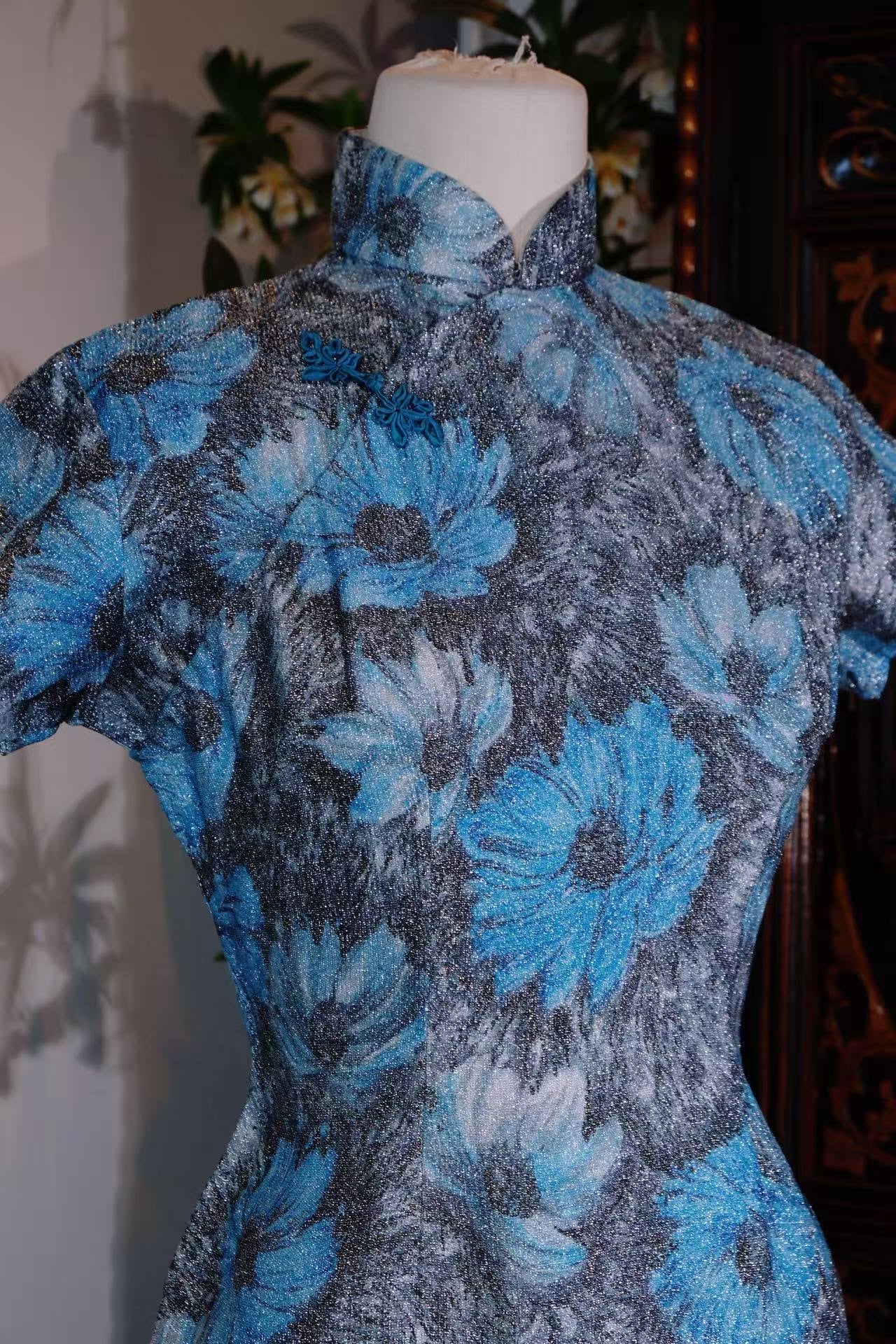
银蓝幻彩,香江遗韵——五十年代香港印花织银旗袍
这件五十年代中期的香港古董旗袍,以靛蓝与银灰为主调,呈现出如水墨晕染般的抽象花卉图案。蓝色花朵似青花瓷般清雅,灰色底纹如宣纸泼墨,虚实相生间尽显东方写意美学。面料中巧妙织入银线,在光线下流转着星芒般的微光,既保留了旗袍的典雅,又暗合了香港作为“东方之珠”的都市灵韵。手工盘制的蓝色花扣,形似海棠或梅花,与衣身的花卉图案遥相呼应,细节处尽显匠人巧思。
上世纪五十年代,香港正处于战后经济复苏与文化融合的关键期。此时的旗袍设计既承袭了上海旗袍的剪裁精髓,又融入了岭南文化的活泼气息。这件旗袍的印花工艺与织银技法,正是当时香港纺织业“中西合璧”的缩影:一方面借鉴西方抽象艺术的色彩表达,另一方面坚守中国传统服饰的纹样寓意。它不仅是女性的日常衣装,更是香港从渔村迈向国际都市过程中,文化身份认同的物质载体。
在工业化尚未普及的五十年代,织银面料需经数十道手工工序方可成型,每一寸布料都凝结着织工的心血。历经七十余载岁月,这件旗袍的银线依旧熠熠生辉,印花未见明显褪色,实属难得。据《香港纺织史》记载,此类织银旗袍多为当时富裕阶层定制,现存世量极少,堪称“穿在身上的历史文物”。其面料的纤维结构与印染工艺,更为研究 mid-century 香港纺织技术提供了珍贵样本。
古人云:“衣不如新,人不如故。”这件旗袍的花卉图案虽无具象的梅兰竹菊,却以写意之笔,暗合了中国传统文人对“花中隐者”的精神追摹。银线的加入,则赋予其“海上生明月”的浪漫意境——恰如五十年代的香港,在东西方文明的碰撞中,绽放出独特的文化光华。它不仅是一件服饰,更是一段关于香江浮世绘的记忆,承载着那个时代女性的优雅与坚韧。
当指尖抚过这缕银蓝交织的布料,仿佛能听见五十年代香港街头的电车叮当,看见维多利亚港的灯火与旗袍上的银辉交相辉映。它不仅是时尚的标本,更是历史的注脚。收藏这件旗袍,便是收藏了一段关于东方美学与都市记忆的双重传奇。
Silver-Blue Illusory Radiance: A 1950s Hong Kong Printed and Silver-Woven Cheongsam
The Ink-Wash Aesthetic of Indigo and Silver This mid-1950s Hong Kong antique cheongsam features a palette of indigo and silver-gray, presenting abstract floral patterns that resemble ink-wash paintings. The indigo blooms possess the refined purity of blue-and-white porcelain, while the gray undercurrents evoke the spontaneous splash of ink on Xuan paper—a perfect manifestation of Oriental Xieyi (expressive) aesthetics. Silver threads are masterfully interwoven into the fabric, flowing with a starlight-like glimmer that preserves the garment’s classical elegance while echoing the urban vibrancy of the "Pearl of the Orient." Hand-crafted indigo floral frog buttons (Pankou), shaped like begonia or plum blossoms, mirror the floral motifs of the gown, showcasing the meticulous ingenuity of the artisan.
A Microcosm of Cultural Convergence In the 1950s, Hong Kong was at a pivotal junction of post-war recovery and cultural fusion. The cheongsam designs of this era inherited the precision of Shanghai tailoring while embracing the spirited temperament of Lingnan culture. The printing and silver-weaving techniques seen here are a microcosm of the "East meets West" philosophy within Hong Kong’s textile industry: they borrow the chromatic expression of Western abstract art while upholding the symbolic meanings of traditional Chinese patterns. This piece was more than daily attire; it was a material vessel for cultural identity during Hong Kong’s transition from a fishing village to an international metropolis.
A Wearable Historical Specimen In the pre-industrialized 1950s, silver-woven fabrics required dozens of manual steps, with every inch of cloth condensing the weaver's soul. Remarkable after seven decades, the silver threads remain lustrous and the prints show no significant fading. According to the History of Hong Kong Textiles, such silver-woven cheongsams were typically bespoke commissions for the wealthy and are exceedingly rare today. They are truly "wearable historical relics." The fiber structure and dyeing techniques of this fabric provide precious samples for studying mid-century Hong Kong textile technology.
The Romance of the "Hidden Hermit" There is an old saying: "Clothes are best when new, but friends are best when old." Though its floral patterns are abstract rather than literal depictions of plum or orchid, they align with the literati’s spiritual pursuit of the "hidden hermit among flowers." The addition of silver thread evokes the romantic imagery of "The bright moon rising over the sea"—much like 1950s Hong Kong itself, blossoming with unique cultural brilliance amidst the collision of Eastern and Western civilizations. It is a memory of the "Floating World" of the Fragrant River, carrying the grace and resilience of the women of that era.
A Dual Legend of Memory and Art To touch this silver-blue interwoven fabric is to hear the "ding-ding" of 1950s trams and see the lights of Victoria Harbour reflecting off the silver shimmer of the gown. It is both a specimen of fashion and a footnote to history. To collect this cheongsam is to preserve a dual legend of Oriental aesthetics and urban memory.