深圳溯源
Couldn't load pickup availability
五十年代织金双宫真丝旗袍:香江霓裳的时光密码
此件藏品为上世纪五十年代末期香港制旗袍,
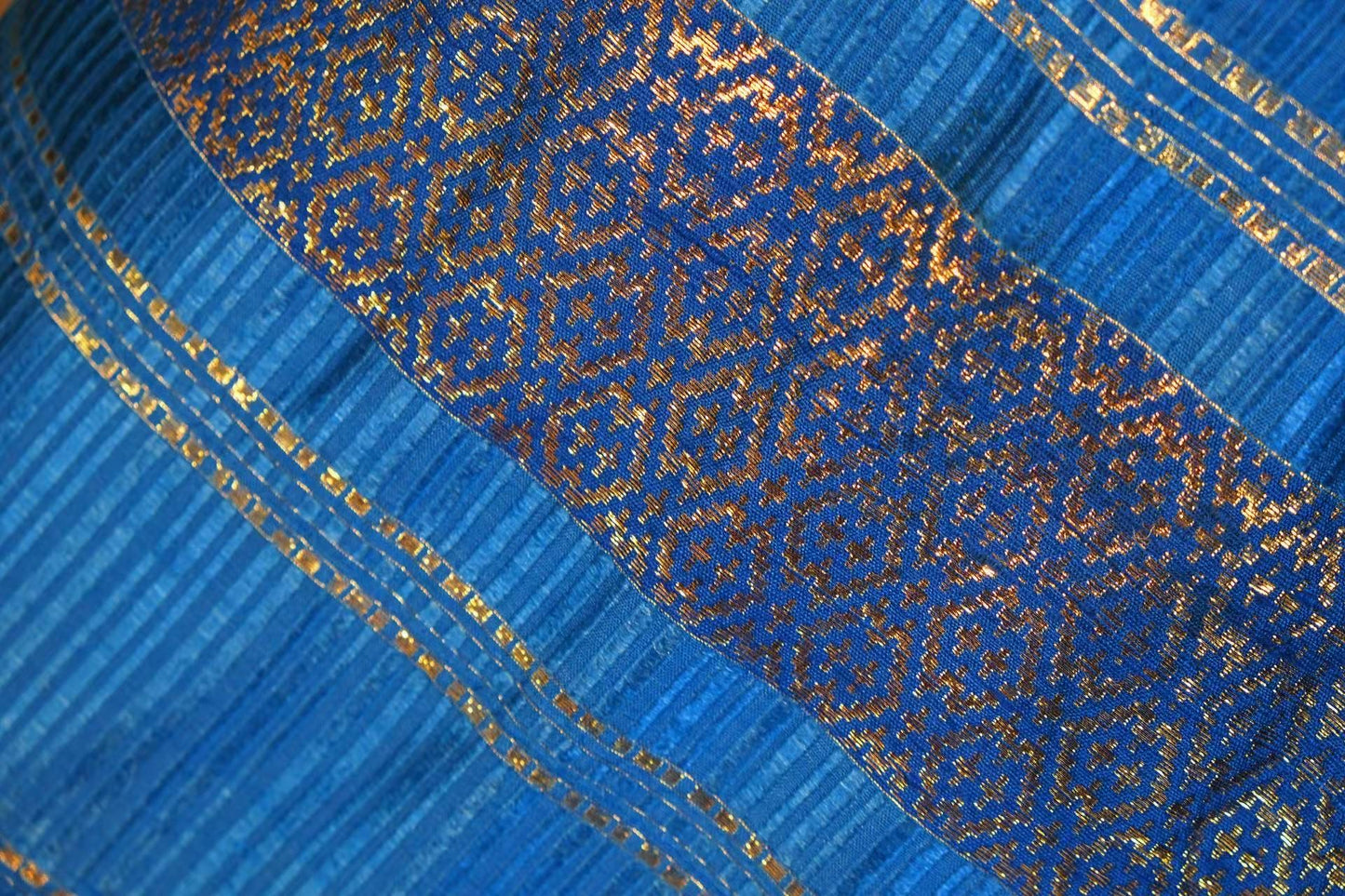
“织金”古称“緙金”,乃以金线为纬,与丝线交织于织机之上。
面料选用双宫丝(Tussah Silk),以柞蚕丝为经,桑蚕丝为纬,兼具粗犷与柔滑之质感。
旗袍下摆的几何纹,原型为商周青铜器上的“雷纹”,象征“
金线织就的回纹,源自新石器时代的彩陶纹样,寓意“生生不息”。
袍身主色为“青金石蓝”,
这件织金双宫真丝旗袍,不仅是一件衣物,
[I. Silhouette: The Essence of Mid-Century Grace] This piece, tailored in Hong Kong during the late 1950s, inherits the quintessential body-conscious tailoring of the Republican era while integrating contemporary aesthetics into its details. The Mandarin collar stands at approximately 5cm, elegantly veiling the collarbone; the sleeveless design showcases the arms, reflecting the liberating spirit of the age. With natural waist darting and a fluid hip silhouette, it preserves the traditional reserved contour of the Qipao while subtly aligning with the late-1950s tide of female empowerment.
[II. Craftsmanship: The Art of Gold-Weaving] "Gold-weaving" (historically known as Kejin) involves interlacing gold threads as the weft with silk threads on a loom. This gown utilizes "Flat Gold Thread" (gold foil sliced into delicate filaments) interwoven with double-cousin silk. The density of the gold thread reaches 8 strands per centimeter, far exceeding the gold consumption of contemporary Suzhou-embroidered Qipaos. The gold-woven sections feature alternating "Geometric" and "Meander" (Fret) patterns; the lines are as fine as hair, with a subtle, restrained luster that embodies the nobility of "Gilded Garments" recorded in the Ming Dynasty archives (Tianshui Bingshan Lu).
[III. Fabric: The Textural Contrast of Double-Cousin Silk] The fabric selected is Double-Cousin Silk (a variety of Shantung/Dupioni silk), using wild tussah silk for the warp and mulberry silk for the weft to achieve a texture that is simultaneously rugged and smooth. The garment features natural "slubs" (nubby textures) that contrast with the smoothness of the gold-woven patterns. This juxtaposition of "coarse and slick" is a hallmark characteristic of 1950s Hong Kong Qipaos.
[IV. Motifs: Geometric Rhythms and Philosophical Order] The geometric patterns at the hem originate from the "Thunder Motif" (Leiwen) found on Shang and Zhou dynasty bronzewares, symbolizing "Universal Order." The gold-weaving reconstructs this into continuous diamonds, echoing the philosophy of "Heaven and Earth are Set" from the I Ching. Each diamond set is composed of 8 smaller rhombs; the number "8" (Ba) phonetically rhymes with "Prosperity" (Fa) in Cantonese, reflecting the aspirations of Hong Kong merchants for a flourishing future.
[V. Symbolism: The Eternal Return of the Meander] The gold-woven meander patterns (Fret motifs) trace back to Neolithic painted pottery, symbolizing "endless vitality." 1950s Hong Kong artisans combined the meander with geometric shapes to create a unique "nested" composition. This preserves the auspicious connotations of traditional patterns while using varied density to create a visual effect of "motion within stillness."
[VI. Palette: Lapis Blue and Gilded Brilliance] The primary color of the gown is "Lapis Lazuli Blue." This hue requires 12 cycles of indigo immersion to achieve, sharing its origin with the lapis lazuli pigments found in the Dunhuang murals, symbolizing "Nobility and Eternity." The warm tone of the gold threads contrasts with the cool blue, adhering to the color principle in the Artificers' Record (Kao Gong Ji): "When blue and gold wrestle, brilliance emerges."
[VII. Conclusion: A Cultural History in Silk] This gold-woven double-cousin silk Qipao is not merely a garment, but a condensed history of Hong Kong culture. Using gold as the brush and silk as the paper, it records the aesthetic pursuits and cultural confidence of Hong Kong’s people in the late 1950s. As Eileen Chang wrote in Chronicle of Changing Clothes: "The robe is a woman's armor." This Qipao stands as the ultimate testament to the independence and elegance of the women of that era.