深圳溯源
Couldn't load pickup availability
衣服尺寸:
胸围/腰围/臀围:92/80/106 厘米
衣长:106 厘米
细节描述:
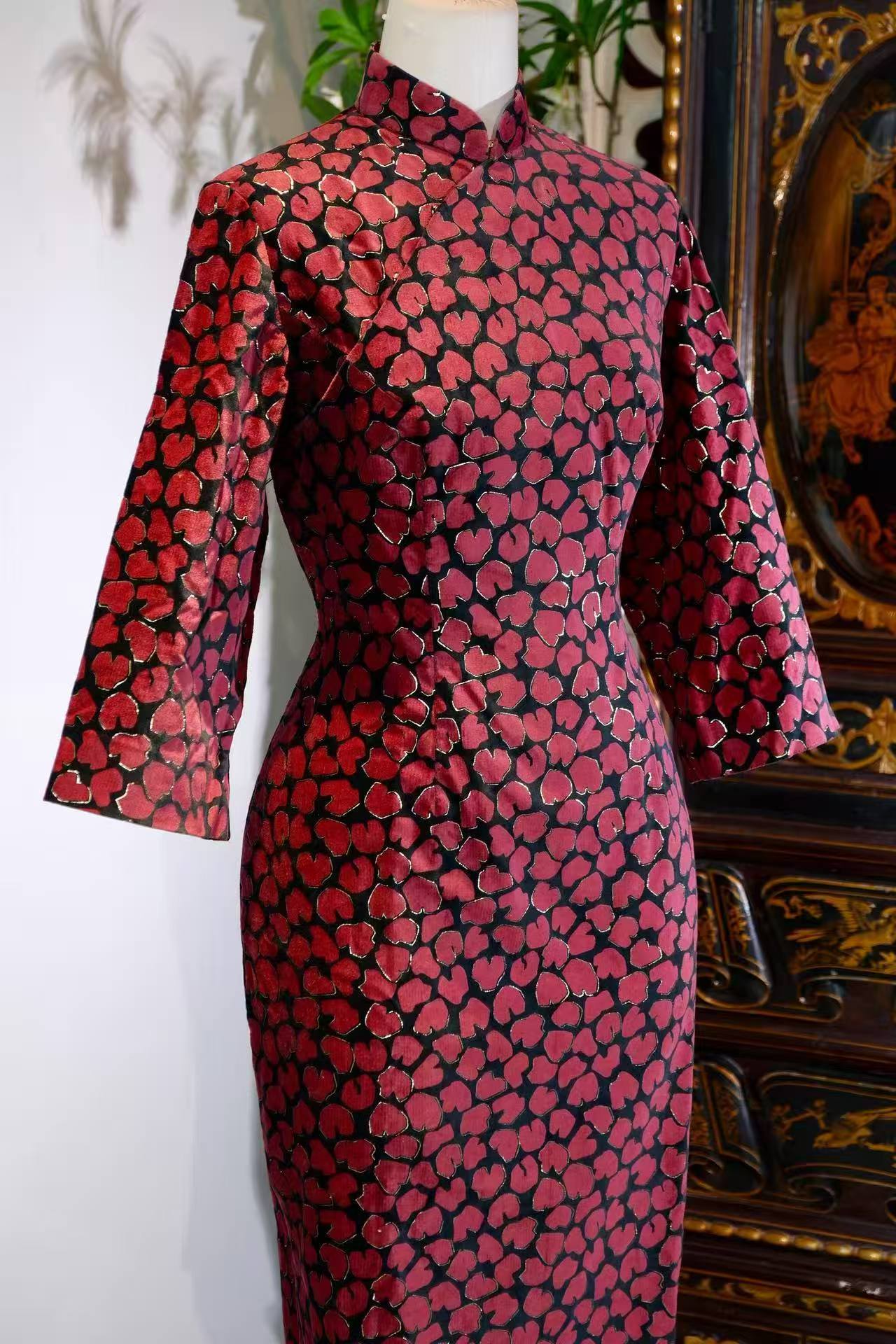
图案描述:抽象豹纹与描金工艺的交响
此件旗袍最摄人心魄之处,在于其面料纹样的设计。它并非传统的梅兰竹菊或龙凤呈祥,而是采用了极具现代主义色彩的抽象豹纹图案。
- 形态解构:图案由无数不规则的深红色斑块组成,散落在黑色底料之上。这些斑块边缘圆润却走势凌厉,既有野兽皮毛的原始张力,又经过艺术化的抽象处理,显得摩登而克制。
- 描金点睛:最为精妙的是,每一个红色斑块的边缘,皆以极细的金线勾勒轮廓。这种“描金”工艺在灯光下会产生“浮光跃金”的视觉效果,使得原本沉静的黑红配色瞬间灵动起来,宛如夜行猎豹眼角的流光,既贵气逼人,又暗藏锋芒。
古董衣的故事:海岛往事与六十年代的黄金剪影
这件旗袍诞生于上世纪六十年代的台湾。那是一个新旧交替、中西交融的特殊年代。
彼时,随着大量纺织技术与资金迁入台湾,台湾纺织业迎来了“黄金时代”。这件旗袍正是那个时代的缩影——它保留了中国传统旗袍的立领、右衽等经典元素,但在剪裁上更加贴合人体曲线,强调腰线与臀部的起伏,这是受西方立体剪裁影响后的改良成果。
想象一下,在1965年的台北圆山大饭店的一场晚宴上,或是在牯岭街的旧书摊旁,一位受过良好教育的新女性身着此衣。她或许读过张爱玲的小说,听过周璇的歌声。这件旗袍上的豹纹,是她内心渴望突破传统束缚、追求个性解放的无声呐喊;而那描金的工艺,则是她骨子里流淌的东方贵气与优雅。它不仅仅是一件衣服,更是一段被封存的时光,诉说着那个年代台湾上层社会女性的风雅与摩登。
艺术风格与稀缺性:从《考工记》到现代审美
引用《考工记》所言:“天有时,地有气,材有美,工有巧,合此四者,然后可以为良。”这件旗袍正是“材美工巧”的典范。
- 艺术风格:野兽派的东方演绎。这种抽象豹纹的设计,在六十年代极具先锋性。它让人联想到马蒂斯的剪纸艺术或野兽派的色彩运用,大胆、热烈且充满生命力。将这种西方现代艺术风格融入最传统的东方旗袍中,体现了设计师极高的审美造诣。这是一种“海派”风格的延续与变奏,是东方含蓄美与西方张扬美的完美平衡。
- 稀缺性:描金工艺的失传与面料的不可再生。
- 工艺难度:描金工艺极其繁复,需要在印染或织造过程中精准地加上金线或金粉,且要保证金泽持久不脱落。这种工艺在现代成衣中已极为罕见,多见于高级定制或古董衣中。
- 面料绝版:六十年代台湾产的优质混纺面料,经过半个世纪的沉淀,其色泽与质感已形成独特的“包浆”。这种带有强烈时代特征的印花版型和描金工艺,属于不可再生的文化资源。如今市面上常见的多为现代数码印花,缺乏这种手工描金的立体感与历史厚重感。
这件旗袍,是穿在身上的艺术品,是流动的雕塑。它适合那些懂得欣赏历史、拥有独立审美、并在举手投足间流露自信的女性。它不属于快时尚,它属于永恒的收藏。
Measurements / Size Guide:
Bust / Waist / Hips: 92/80/106 cm
Total Length: 106 cm
Detailed Description:
The most breathtaking feature of this cheongsam (qipao) is the design of its fabric. Moving away from traditional motifs like plum blossoms or phoenixes, it embraces a highly modernist abstract leopard print.
Deconstructed Form: The pattern consists of countless irregular deep-red patches scattered across a black base. These patches possess rounded edges but a sharp, rhythmic flow—retaining the primal tension of a wild beast's pelt while undergoing an artistic, abstract treatment that feels both modern and restrained.
The Golden Touch: Most exquisite is the "Gold Tracing" (Miaojin) technique, where every red patch is outlined with an ultra-fine gold thread. Under light, this creates a visual effect of "shimmering light and leaping gold," instantly animating the quiet black-and-red palette. It resembles the fleeting glint in a night-hunting leopard’s eye—regal, commanding, and hiding a sharp edge.
This qipao was born in 1960s Taiwan—a unique era of transition where the old met the new, and East met West.
As textile technology and capital flowed into Taiwan, the industry entered a "Golden Age." This garment is a microcosm of that era: it retains the classic standing collar and right-side closure of the traditional Chinese qipao, but the tailoring is more attuned to the human silhouette, emphasizing the curves of the waist and hips—a result of Western 3D draping influence.
Imagine a sophisticated modern woman wearing this at a banquet in the Grand Hotel Taipei in 1965. Perhaps she read Eileen Chang or listened to Zhou Xuan. The leopard print was her silent rebellion against traditional constraints; the gold tracing was the innate Eastern nobility in her blood. It is a frozen slice of time, narrating the grace and modernity of Taiwan's upper-class women.
To quote Kao Gong Ji: "Heaven has its seasons, Earth its vital energy, materials their beauty, and craftsmanship its ingenuity. When these four combine, the result is excellence." This qipao is a paragon of such excellence.
Artistic Style: An Oriental Interpretation of Fauvism. This abstract leopard design was incredibly avant-garde for the 1960s, reminiscent of Henri Matisse’s paper cut-outs or the bold color palettes of Fauvism. Fusing this Western modernism into a traditional Eastern vessel reflects a high level of aesthetic mastery—a continuation and variation of the "Shanghai Style," balancing Eastern reserve with Western vibrance.
Scarcity: The Lost Craft of Gold Tracing and Extinct Fabrics.
Craftsmanship: The gold-tracing process is extremely complex, requiring gold threads or dust to be precisely applied during printing or weaving to ensure the luster remains permanent. This is rarely seen in modern ready-to-wear, appearing only in haute couture or vintage pieces.
Extinct Fabric: High-quality blended fabrics from 1960s Taiwan have developed a unique "patina" of texture and color over half a century. These specific print molds and tracing techniques are non-renewable cultural resources. Modern digital prints lack the 3D depth and historical weight of this manual gold tracing.
This cheongsam is a wearable piece of art, a fluid sculpture. It belongs to the woman who appreciates history, possesses an independent aesthetic, and exudes confidence in every gesture. It does not belong to fast fashion; it belongs to eternal collection.