深圳溯源
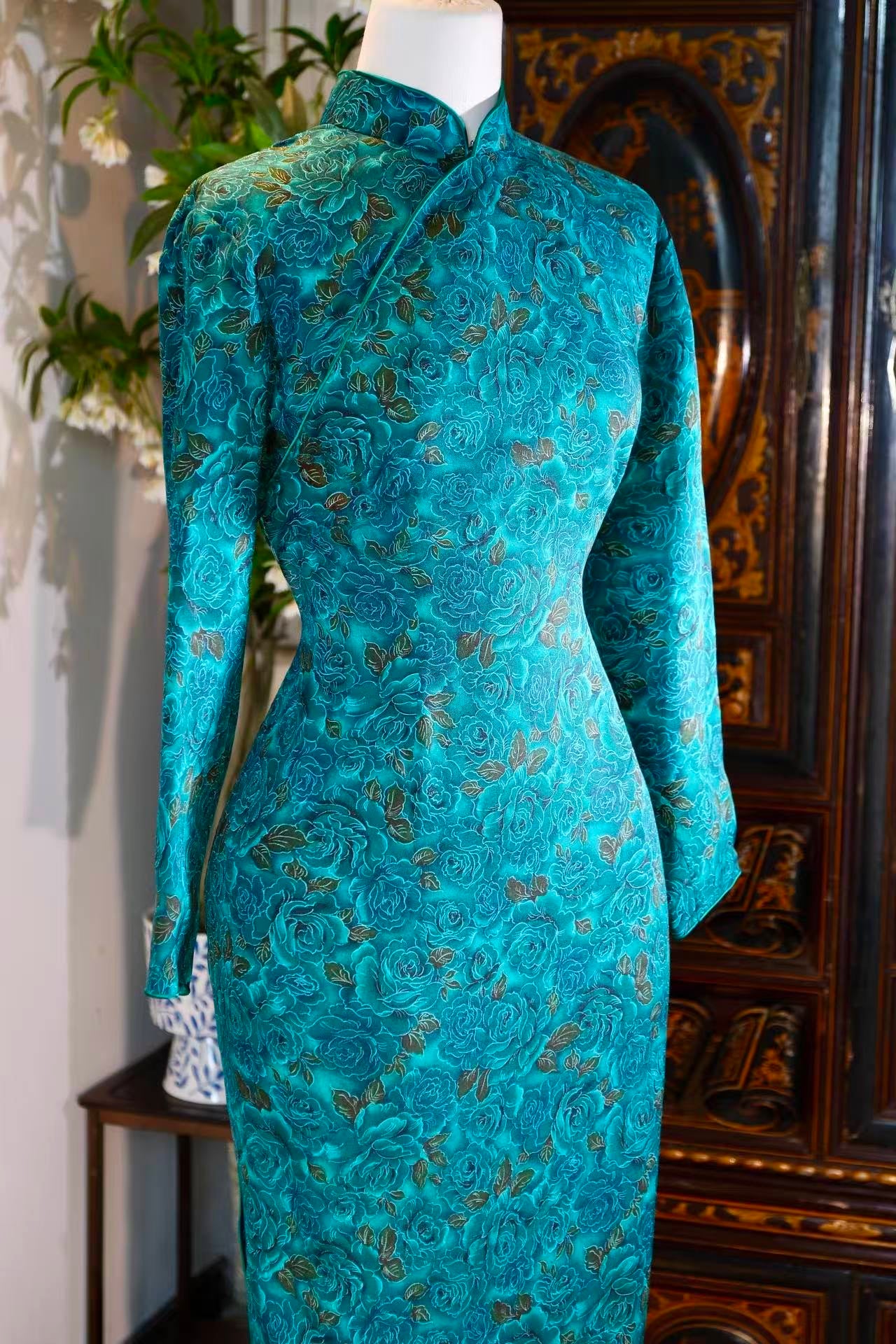
60年代 -《六十年代的流动诗篇》—— 香港产手绘玫瑰纹斜纹布古董旗袍 | 1960s - A Living Verse of the Sixties: A Hand-Painted Rose Motif Twill Qipao from Hong Kong
60年代 -《六十年代的流动诗篇》—— 香港产手绘玫瑰纹斜纹布古董旗袍 | 1960s - A Living Verse of the Sixties: A Hand-Painted Rose Motif Twill Qipao from Hong Kong
Couldn't load pickup availability
《六十年代的流动诗篇》—— 香港产手绘玫瑰纹斜纹布古董旗袍
这件旗袍最引人注目的,是其满布衣身的手绘玫瑰图案。
上世纪六十年代,是旗袍发展的一个重要时期。此时的旗袍,
旗袍,作为中国女性的传统服饰,
A Living Verse of the Sixties: A Hand-Painted Rose Motif Twill Qipao from Hong Kong
This is an antique qipao brimming with the charm of bygone years and immense artistic value. More than a mere garment, it is a segment of solidified history—a microcosm of an era. The seamless integration of its material and craftsmanship makes it a rare treasure, equally suited for collection and elegant wear.
The most striking feature of this qipao is the hand-painted rose motifs that adorn the entire body. Distant from the rigid regularity of machine printing, each brushstroke endows the roses with a unique vitality. The blossoms are full and lush, with petals layered in fluid, dynamic lines as if quietly blooming across the fabric. The deep green twill base provides a steady and elegant foundation, complementing the form of the roses; it accentuates the vividness of the flowers while maintaining an overall sense of dignity. This hand-painting craft is a testament to the artisan spirit of that era—every stroke poured with heart, ensuring that each qipao remains a one-of-a-kind work of art.
The 1960s marked a pivotal period in the evolution of the qipao. During this time, the garment retained its traditional elegance and form-fitting silhouette while integrating modern simplicity and practicality. This specific piece, originating from Hong Kong—the fashion capital of the time—stands as a witness to the flourishing fusion of Eastern and Western cultures. It might have once belonged to a sophisticated lady, serving as the center of attention at significant occasions such as weddings, banquets, or festive celebrations. It carries the joy and memories of its wearer, reflecting the social transitions and aesthetic trends of its day. Today, as it travels through time to stand before us, it continues to exude a captivating charm, as if whispering tales of the past.
As the quintessential traditional attire for Chinese women, the qipao’s evolution has long been observed and praised by scholars and writers. Eileen Chang famously noted in Chronicle of Changing Clothes: "To those who cannot speak, clothes are a language; what one carries with them is a pocket drama." This antique qipao is precisely such a "pocket drama," using fabric as paper and needlework as a pen to depict moving scenes. Its artistic style harmonizes tradition with modernity and East with West, possessing both classical reserve and contemporary chic. Its scarcity lies not only in its age but in the exquisite hand-painting and unique design. In today’s era of fast fashion, an antique qipao that condenses the wisdom and labor of artisans is exceptionally precious. It is a work of art worthy of cherished preservation, carrying the memory of history and the heritage of culture.
Share