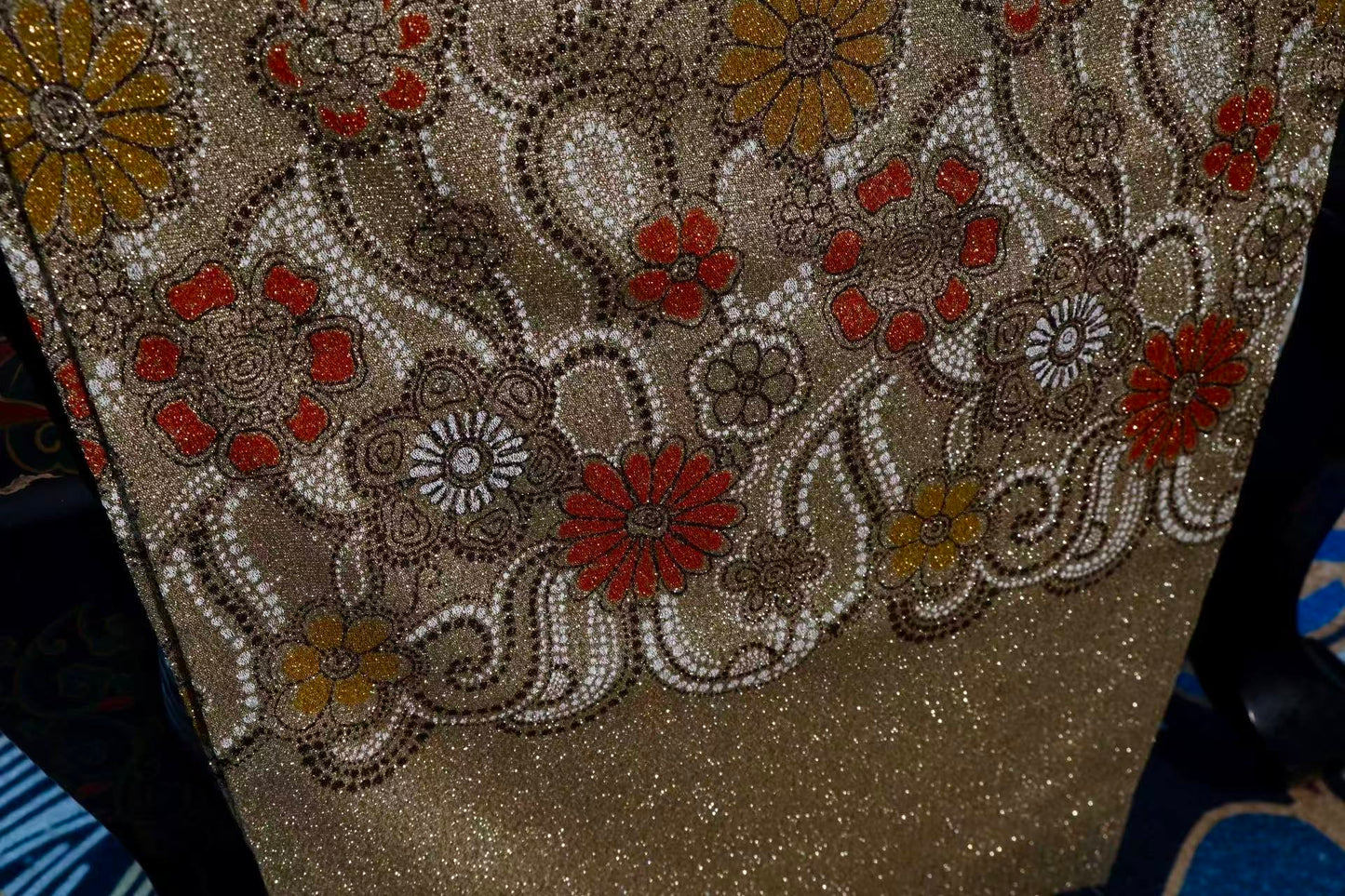
六十年代织金旗袍:织就时光的华章
这件上世纪六十年代的织金古董旗袍,宛如从旧时光里走出的佳人,每一寸纹理都流淌着岁月的风华。其面料以金线为骨,丝线为肉,经纬交织间,闪烁着低调而奢华的光泽,恰似《红楼梦》中所言“金丝八宝攒花线”,将富贵与雅致熔于一炉。
旗袍上的图案,是匠心独运的诗篇。底色为温润的香槟金,其上以点彩技法绣出缠枝花卉纹样——橙红的菊瓣如秋日暖阳,明黄的蕊心似晨露初凝,灰白的藤蔓蜿蜒如云气,深褐的枝叶点缀其间,构成一幅“花枝春满”的图景。纹样布局疏密有致,既有传统缠枝莲的绵延之意,又融入了六十年代特有的几何化审美,花瓣边缘的锯齿状处理,藤蔓线条的流畅转折,无不彰显着那个时代“中西合璧”的设计巧思。
这件旗袍的稀缺性,不仅在于织金工艺的繁复(需以金箔捻线,再与丝线交织,耗时费力),更在于它承载着特殊年代的时尚记忆。六十年代的中国服饰,正处于传统与现代的碰撞期,这件旗袍既保留了立领、斜襟、收腰等经典旗袍元素,又以大胆的色彩与图案,突破了传统旗袍的含蓄表达,堪称“新中式美学”的早期范本。它曾属于怎样的女子?或许是沪上名媛,在外滩的晚风中摇曳生姿;或许是书香门第的闺秀,在书房的灯光下轻抚衣襟。如今,它褪去了昔日的喧嚣,却以沉默的姿态,诉说着那个年代的风雅与风骨。
正如沈从文在《中国古代服饰研究》中所言:“服饰是历史的皮肤,记录着时代的呼吸。”这件织金旗袍,便是六十年代中国服饰史上一枚闪亮的印章,将时光的温度、匠人的心血、穿着者的风华,一同凝固在经纬之间,成为不可复制的艺术孤品。
1960s Brocade Cheongsam: A Woven Masterpiece of Time
This antique brocade cheongsam (Qipao) from the 1960s resembles a graceful lady stepping out of the past, with every inch of its texture flowing with the elegance of bygone years. The fabric uses gold thread as the bone and silk as the flesh; the interlacing warp and weft shimmer with a low-key yet luxurious luster. It evokes the "gold-threaded floral patterns" described in Dream of the Red Chamber, melting opulence and refinement into a single vessel.
The patterns on the dress are poems written with unparalleled craftsmanship. Set against a warm champagne gold base, climbing floral motifs are rendered through a pointillist embroidery technique. Orange-red petals glow like autumn sunbeams, while bright yellow pistils resemble freshly condensed morning dew. Ash-white vines meander like drifting clouds, accented by dark brown foliage, creating a vivid tableau of "blossoms in full spring." The layout is masterfully balanced—it retains the continuous flow of traditional "entwined lotus" designs while integrating the geometric aesthetics unique to the 1960s. The serrated edges of the petals and the fluid turns of the vines showcase the "East-meets-West" design ingenuity of that era.
The rarity of this piece lies not only in the complexity of the Zhijin (weaving with gold) technique—which requires twisting gold leaf into thread before weaving it with silk—but also in its role as a vessel for the fashion memories of a unique period. In the 1960s, Chinese attire was at a crossroads of tradition and modernity. This Qipao preserves classic elements like the standing collar, diagonal bodice, and cinched waist, yet breaks away from traditional reserve through bold colors and patterns, serving as an early paradigm of "New Chinese Aesthetics." Who was the woman who once wore this? Perhaps a Shanghai socialite swaying in the evening breeze of the Bund, or a lady from a scholarly family gently smoothing her lapel under a study lamp. Today, the clamor of the past has faded, yet the garment remains in silent grace, narrating the elegance and character of its time.
As Shen Congwen wrote in Researches on Ancient Chinese Costumes: "Clothing is the skin of history, recording the breath of an era." This gold-brocade cheongsam is a brilliant seal upon the history of 1960s Chinese fashion. It freezes the warmth of time, the soul of the craftsman, and the elegance of the wearer within its threads, remaining an irreplicable masterpiece of art.