六十年代香港手绘丝绒旗袍:岁月凝香,古韵天成
一、衣上风华:秋叶晕染,织就岁月诗行
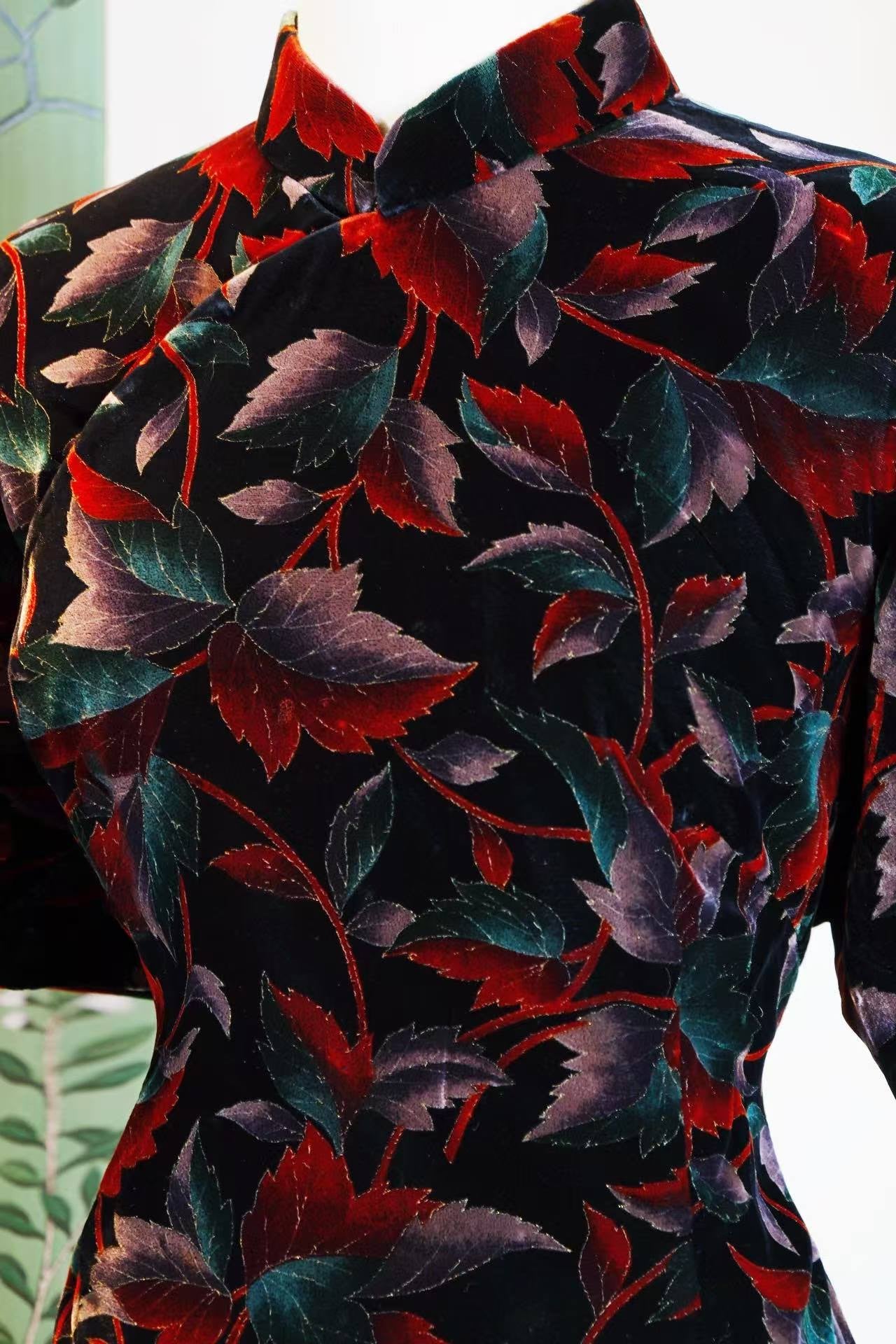
此件旗袍以深邃墨色丝绒为底,其上手绘晕染的秋叶纹样,宛如将“霜叶红于二月花”的诗意凝于方寸之间。叶片以绛红、赭石、黛青诸色层层晕开,边缘处红如晚霞浸染,叶脉间青似远山含黛,深浅交织间,既有“万山红遍”的壮阔,又含“梧叶秋声”的静谧。枝蔓蜿蜒如行云流水,红茎轻牵叶影,在墨色底布上勾勒出“一叶落而知秋深”的东方意境,仿佛将整个秋天的丰盈与萧瑟,都藏进了这一袭丝绒的肌理之中。
二、匠心独运:手绘晕染,定格时光艺术
六十年代的香港,正值中西文化交融的黄金时代,这件旗袍正是那个时代手工艺巅峰的见证。丝绒面料柔滑如水,却极难着色,匠人以传统工笔晕染技法,一笔一划将秋叶的层次与神韵绘于其上——红叶并非单纯的朱砂点染,而是以“退晕法”从叶尖至叶基渐次过渡,赭石与黛青相互渗透,使叶片呈现出“朝霞映叶”的通透质感;枝蔓则以细笔勾勒,线条如“屋漏痕”般自然顿挫,尽显手绘的灵动气韵。这种“一画一染皆心血”的工艺,不仅考验匠人的笔墨功底,更需对色彩的瞬息变化有着极致的掌控,每一处晕染的浓淡、每一根枝蔓的走向,都是时光无法复制的艺术印记。
三、时代印记:香港风华,承载文化记忆
作为香港产古董旗袍,它更是六十年代香港社会风貌的缩影。彼时的香港,既承袭了上海旗袍的婉约风骨,又融入了岭南文化的明快灵动,这件旗袍的修身剪裁与短袖设计,既保留了旗袍“省道贴身”的传统,又迎合了当时都市女性追求轻便的时尚潮流;而手绘秋叶纹样,则暗合了香港“东方之珠”的文化特质——既有“香江秋色”的诗意浪漫,又含“落叶归根”的文化乡愁。它不仅是衣饰,更是一段被岁月封存的集体记忆,见证了香港从渔村到都市的蜕变,以及中西文化在此碰撞出的独特美学火花。
四、稀缺价值:岁月沉淀,艺术与收藏的双重瑰宝
历经六十余载光阴,这件旗袍的丝绒仍保持着温润光泽,手绘图案未见褪色晕染,足见当年工艺之精湛。在机械化生产的今天,这种“以手绘心”的传统技艺已近乎绝迹,而六十年代香港产的手绘丝绒旗袍,更是因存世量稀少、工艺难度极高,成为收藏界的“沧海遗珠”。它不仅是旗袍艺术的活化石,更是研究六十年代香港服饰文化、手工艺发展的重要实物资料,其艺术价值与历史价值,早已超越了衣饰本身,成为值得世代珍藏的文化瑰宝。
此件旗袍,是秋叶的私语,是时光的馈赠,更是东方美学在岁月长河中永不褪色的见证。当指尖拂过丝绒上晕染的叶影,仿佛能听见六十年代香港街头的市声,看见匠人伏案挥毫的身影,触摸到那个时代独有的温婉与风华。
1960s Hong Kong Hand-Painted Velvet Qipao: Fragrance of the Years, Natural Antique Charm
I. Sartorial Splendor: Autumn Leaves in Ink and Wash
This Qipao features a base of profound ink-black velvet, adorned with hand-painted autumn leaf motifs that seem to condense the poetic line—"Frost-bitten leaves are redder than early spring flowers"—into its very fabric. The leaves unfurl in layers of crimson, ochre, and dark cyan; the edges are stained red like sunset clouds, while the veins hold the deep blue of distant mountains. This interplay of light and shadow captures both the grandeur of "mountains dyed in red" and the serenity of "autumn whispers through the sycamores." The winding vines flow like moving water, with red stems gently tethering the shadows of the leaves against the dark velvet, evoking the Oriental sentiment of "Knowing the depth of autumn from a single falling leaf."
II. Ingenious Craftsmanship: The Art of Frozen Time
In 1960s Hong Kong, the golden age of East-West cultural fusion, this Qipao stood as a witness to the pinnacle of handicraft. Velvet is exceptionally difficult to pigment due to its silk-smooth pile; thus, artisans employed traditional Gongbi wash techniques to meticulously render each leaf's spirit. Rather than a simple application of cinnabar, the leaves utilize the "Retreating Wash" (Tuiyun) method, creating a seamless transition from tip to base. The infusion of ochre and cyan grants the foliage a translucent quality, as if "dawn light is reflecting off the leaves." The stems are sketched with fine brushes, their lines possessing the natural, rhythmic pauses of "stele-carving strokes" (Wulouhen). Every stroke is a testament to the artisan’s mastery over the fleeting changes of color—a mark of art that time cannot replicate.
III. Imprint of an Era: Hong Kong Grace and Cultural Memory
As a quintessential Hong Kong antique, this Qipao is a microcosm of the 1960s social landscape. It inherits the graceful spirit of the Shanghai style while integrating the vibrant energy of Lingnan culture. The form-fitting tailoring and short-sleeves preserve the traditional "darted fit" while embracing the urban fashion of the time. The autumn leaf motif subtly aligns with Hong Kong’s identity as the "Oriental Pearl"—possessing both the romanticism of "Autumn on the Fragrant River" and the cultural nostalgia of "falling leaves returning to their roots." It is more than attire; it is a solidified collective memory of Hong Kong’s metamorphosis.
IV. Scarcity and Value: A Dual Treasure of Art and Collection
After sixty years, the velvet retains its warm luster and the hand-painted patterns show no signs of fading, proving the superb craftsmanship of the era. In today’s age of mechanized production, the tradition of "painting from the heart" is nearly extinct. This hand-painted velvet Qipao has become a "lost pearl" in the world of collection due to its extreme scarcity and technical difficulty. It is a living fossil of Qipao art and a vital artifact for studying the development of Hong Kong’s textile history—a cultural treasure worthy of being passed through generations.