兰襟遗韵:六十年代台湾织金烧花丝绒旗袍考释
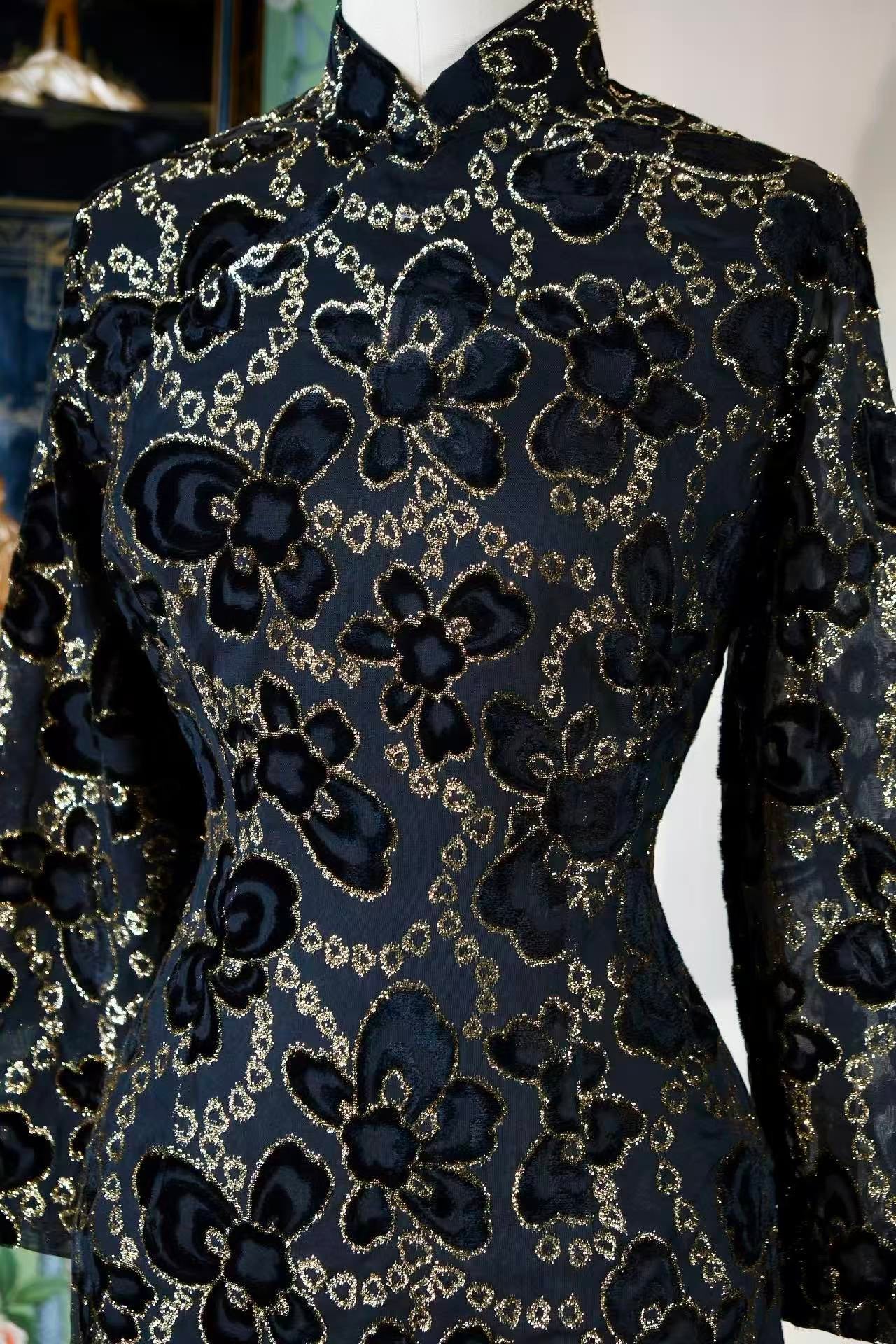
立领斜裁,九分袖垂坠如兰芽;修身线条勾勒东方骨相,此件古董旗袍以烧花丝绒为帛,织金金葱为纬,将蝴蝶兰的幽艳与织金工艺的华贵熔铸为一体,堪称台湾近代旗袍艺术的孤品典范。
面料之珍,尤见于“烧花”与“织金”的双重复调。烧花丝绒以酸液蚀刻绒面,形成通透蕾丝般的镂空肌理,其工艺源自欧洲。更难得者,以织金金葱穿插经纬,在深蓝底绒上绣缀蝴蝶兰纹样——金线细密如发,勾勒花瓣轮廓;金葱碎钻般闪烁,仿若晨露凝于兰蕊。每朵兰花五瓣舒展,蕊心以螺旋纹细密盘绕,叶片则以流线型金线勾勒,曲卷如兰蝶振翅,恰合《楚辞》“扈江离与辟芷兮,纫秋兰以为佩”的君子风骨,又暗合清代李渔《闲情偶寄》所言“衣衫之美,在于纹饰入诗”。
蝴蝶兰纹的选择,暗藏时代密码。六十年代台湾正处传统与现代的碰撞期,兰花作为君子意象与外来审美交织的符号,既承袭了《诗经》“言念君子,温其如玉”的德化审美,又融入了彼时国际时尚界对“东方奇观”的想象。织金金葱的流光,则呼应了宋代词人周密《武林旧事》所载“金线泉”之璀璨,将古典奢华以现代工艺重现。
今观此袍,烧花丝绒的镂空肌理如月下剪影,织金金葱在光线流转中幻化星河。它不仅是旗袍形制的终极美学表达,更是台湾近代工艺史的活化石——当丝绸之路上的金线与东方兰芷之香相遇,这件沉睡半个世纪的华服,正以沉默的华丽,诉说着“衣冠上国”的永恒诗性。
The Lingering Charm of Orchid Grace: A Critical Analysis of a 1960s Taiwanese Woven-Gold Devoré Velvet Cheongsam
With a standing collar, bias-cut silhouette, and three-quarter sleeves that drape like tender orchid sprouts, this antique cheongsam outlines the graceful "Oriental frame." Crafted from devoré velvet (burnout velvet) interlaced with woven-gold lurex, it fuses the haunting elegance of the Phalaenopsis (butterfly orchid) with the opulence of metallic weaving—a unique masterpiece of modern Taiwanese sartorial art.
The rarity of the fabric lies in the "polyphonic" combination of devoré and woven-gold techniques. The devoré velvet utilizes an acid-etching process to create a translucent, lace-like texture—a technique originating in Europe. Even more remarkable is the integration of gold lurex within the warp and weft to embroider the Phalaenopsis motifs upon the deep navy velvet. The gold threads, fine as hair, trace the petals’ contours, while the lurex shimmers like stardust, appearing as morning dew upon the orchid’s heart. Each five-petaled bloom is intricately detailed, with spirals at the core and streamlined gold veins on the leaves, evoking the fluttering wings of a butterfly. This resonates with the noble spirit described in the Chu Ci: "I wove the autumn orchids for my belt," and echoes Li Yu’s sentiment in Occasional Notes on Leisurely Living: "The beauty of a garment lies in its patterns becoming poetry."
The choice of the Phalaenopsis orchid hides a code of the era. 1960s Taiwan was a period of collision between tradition and modernity. As a symbol where "gentlemanly" ideals met imported aesthetics, the orchid inherited the Confucian virtue of being "gentle as jade" from the Book of Songs, while satisfying the international fashion world’s imagination of "Oriental wonders." The radiance of the gold lurex mirrors the "Golden Thread Spring" recorded in Zhou Mi's Old Events in Wulin from the Song Dynasty, reviving classical luxury through modern craftsmanship.
Gazing upon this gown today, the translucent texture of the devoré velvet resembles a moonlight silhouette, while the gold lurex transforms into a shimmering galaxy under shifting light. It is more than the ultimate aesthetic expression of the cheongsam form; it is a living fossil of Taiwan’s modern craft history. When the golden threads of the Silk Road meet the fragrance of the Eastern orchid, this garment, which has slumbered for half a century, speaks with silent magnificence of the eternal poetic spirit of the "Land of Refined Dress."