深圳溯源
Couldn't load pickup availability
衣服尺寸:
胸围/腰围/臀围:96/82/100 厘米
衣长:125 厘米
细节描述:
在时光的褶皱里,总有些衣物能凝固一个时代的风华。眼前这件诞生于上世纪六十年代、由意大利进口烧花丝绒织就、香港精工制作的古董旗袍,便是如此一件承载着东西方美学碰撞与工艺巅峰的“织物史诗”。它不仅是服饰,更是一件行走的艺术品,其稀缺性与艺术价值,足以在服装史的长河中熠熠生辉。
图案:暗夜中的金色诗行
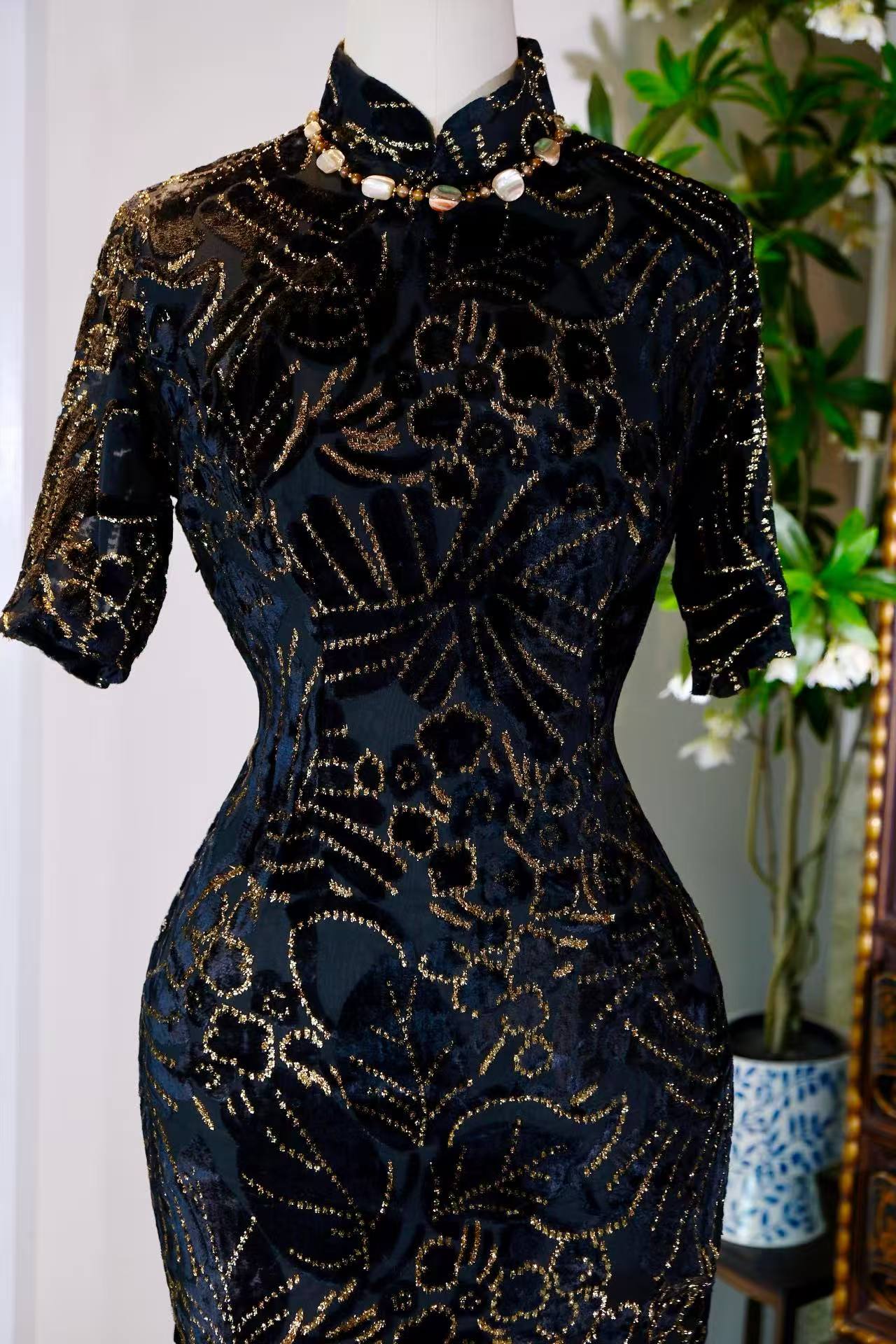
旗袍的图案,是其灵魂所在。深邃如夜的丝绒底色上,以烧花工艺(一种通过化学或物理手段在绒面上“蚀刻”出图案的技法,使图案部分呈现半透明或不同绒高的效果)勾勒出繁复而灵动的金色纹样。这并非简单的花卉堆砌,而是融合了Art Deco的几何韵律与东方传统纹样的抽象表达。
- 纹样构成:图案主体由放射状的扇形、卷曲的藤蔓以及抽象化的花卉(似菊非菊,似莲非莲)交织而成。金色的丝线(或为金属丝线与丝绒混织)在光线下流转,如同暗夜中流淌的星河,又似古老宫廷壁画上剥落的金箔,散发着低调而奢华的光芒。烧花工艺使得图案部分与底绒形成微妙的肌理对比,触之有凹凸之感,视觉上则呈现出“浮光跃金,静影沉璧”的层次。
- 艺术风格:这种图案设计,既保留了旗袍传统的婉约与含蓄,又大胆吸纳了西方现代艺术的装饰性与线条感。它让人联想到六十年代香港作为东西方文化交汇点的独特气质——既根植于深厚的中华文化底蕴,又积极拥抱世界的潮流。其图案的抽象性与几何感,与同时期西方流行的波普艺术、欧普艺术有着微妙的呼应,却又因丝绒的华贵与东方纹样的底蕴而显得更为内敛与深邃。
故事:跨越山海的华服传奇
这件旗袍的故事,始于亚平宁半岛的工坊,终于香江之畔的裁缝铺。
- 意大利的丝绒:上世纪五六十年代,意大利的纺织业,尤其是丝绒织造技术,享誉全球。其生产的丝绒以质地细腻、光泽柔和、垂坠感极佳著称。这件旗袍所用的烧花丝绒,极有可能是当时意大利高端纺织厂的特供品,其工艺复杂,成本高昂,非寻常面料可比。
- 香港的匠心:彼时的香港,是远东的时尚之都,汇聚了来自上海、苏州等地的顶尖裁缝。他们将海派旗袍的精髓——修身、立领、开衩——与西方立体剪裁技术完美融合,创造出独属于香港的“港式旗袍”风格。这件旗袍的版型,便是这种融合的典范:高立领衬托出颈项的修长,修身的剪裁勾勒出女性曼妙的曲线,短袖的设计既保留了传统韵味,又适应了亚热带的气候。每一针每一线,都凝聚着匠人的心血与智慧。
- 主人的风华:可以想象,在六十年代香港的某个华灯初上的夜晚,一位名媛或富商太太身着此袍,穿梭于觥筹交错的宴会之间。丝绒的华贵与金色的璀璨,使她成为全场焦点。旗袍随着她的步履轻轻摇曳,金色的纹样在灯光下闪烁,仿佛将整条维多利亚港的夜色都穿在了身上。它不仅是一件衣服,更是身份、品味与时代精神的象征。
稀缺性:不可复制的时代孤品
这件旗袍的稀缺性,体现在多个层面:
- 工艺的失传:烧花丝绒织造工艺复杂,且对环境和工人健康有一定影响,如今已鲜少使用。这种面料本身就已成为“活化石”。
- 时代的印记:六十年代是旗袍发展的最后一个黄金时期,之后随着成衣业的兴起和西方服饰的普及,手工定制旗袍逐渐式微。这件旗袍是那个特定时代、特定地域(香港)、特定工艺(意大利面料+香港手工)的产物,具有不可复制性。
- 保存的难度:丝绒面料娇贵,易受虫蛀、受潮、褪色。能历经半个多世纪而保存如此完好,实属不易。
引经据典:华服的诗性表达
《诗经·秦风·终南》有云:“君子至止,锦衣狐裘。”华服之美,自古便是身份与风雅的象征。这件旗袍,恰如一件“墨金织就的锦衣”,其丝绒的温润如狐裘,其金线的璀璨似锦衣。
明代张岱在《陶庵梦忆》中描绘晚明服饰之盛:“衣锦尚絅,恶其文之著也。”意为穿着华美的锦衣,外面还要罩一件单衣,是怕花纹太显眼。而这件旗袍,却反其道而行之,以烧花工艺让金色纹样在深色丝绒上“浮”现,既含蓄又张扬,恰是六十年代香港中西合璧、自信开放的审美写照。
法国作家普鲁斯特在《追忆似水年华》中写道:“真正的天堂,是已经失去的天堂。”这件古董旗袍,便是这样一个“失去的天堂”的碎片。它让我们得以窥见那个风华绝代的年代,感受那份对美的极致追求与匠心独运。
它不仅仅是一件衣服,更是一段凝固的历史,一首穿在身上的诗,一件值得被珍藏与传颂的艺术孤品。在快时尚的今天,它提醒我们,真正的奢华,在于时间的沉淀,在于工艺的极致,在于那份独一无二、不可复制的灵魂。
Measurements / Size Guide:
Bust / Waist / Hips: 96/82/100 cm
Total Length: 125 cm
Detailed Description:
Within the folds of time, certain garments solidify the splendor of an era. This antique cheongsam (qipao), born in the 1960s, woven from imported Italian Devoré velvet, and crafted with precision in Hong Kong, is such a "textile epic"—carrying the collision of East-West aesthetics and the peak of craftsmanship. More than attire, it is a walking work of art whose scarcity and artistic value shine brilliantly in the long river of fashion history.
The pattern is the soul of this cheongsam. Against a velvet base as deep as the night, the Devoré technique (a method of "etching" patterns onto the pile through chemical means, creating semi-transparent areas or varying pile heights) outlines intricate and dynamic golden motifs. This is no simple heap of floral designs, but an abstract expression merging the geometric rhythm of Art Deco with traditional Eastern patterns.
Composition of Motifs: The primary patterns consist of radiating fans, curling vines, and abstracted flora (resembling both chrysanthemums and lotuses). The golden threads (likely a blend of metallic wire and silk) flow under the light like a star-filled river in the dark or peeling gold leaf on an ancient palace mural, exuding a low-key yet opulent brilliance. The Devoré process creates a subtle textural contrast between the patterns and the base, offering a tactile depth and a visual layering described as "shimmering light leaping like gold, quiet shadows sinking like jade."
Artistic Style: This design retains the traditional gentleness and reserve of the qipao while boldly absorbing the decorative flair and linear sense of Western modern art. It evokes the unique temperament of 1960s Hong Kong as a cultural crossroads—rooted in deep Chinese heritage yet actively embracing global trends. The abstraction and geometric feel echo the Pop Art and Op Art movements prevalent in the West during the same period, yet it remains more profound and restrained due to the nobility of velvet and the soul of Eastern motifs.
The story of this cheongsam began in the workshops of the Apennine Peninsula and concluded in a tailor shop along the shores of the Fragrant River (Hong Kong).
Italian Velvet: In the 1950s and 60s, the Italian textile industry, particularly its velvet weaving technology, was world-renowned. Its velvet was famous for its fine texture, soft luster, and excellent drape. The Devoré velvet used here was likely a specialized product from a high-end Italian mill—complex to produce and costly, far beyond ordinary fabrics.
Hong Kong Craftsmanship: Hong Kong was then the fashion capital of the Far East, gathering top tailors from Shanghai and Suzhou. They fused the essence of the Shanghainese qipao—slim fit, standing collar, and side slits—with Western 3D tailoring to create the unique "Hong Kong-style qipao." The silhouette of this piece is a paragon of this fusion: the high collar elongates the neck, the slim cut outlines the graceful curves of the female form, and the short sleeves adapt to the subtropical climate while retaining traditional charm.
The Grace of the Owner: One can imagine a socialite or a merchant’s wife in 1960s Hong Kong wearing this robe on a night when the lights were first lit, drifting through a banquet of clinking glasses. The nobility of the velvet and the radiance of the gold made her the focus of the room. As she walked, the golden patterns flickered, as if she were wearing the entire night scape of Victoria Harbour. It was a symbol of status, taste, and the spirit of the age.
The scarcity of this cheongsam is manifested across multiple levels:
Lost Craftsmanship: Devoré velvet weaving is complex and has largely fallen out of use due to environmental and health considerations. This fabric itself has become a "living fossil."
The Imprint of an Era: The 1960s was the final golden age for the qipao; with the rise of the ready-to-wear industry, bespoke qipaos gradually declined. This garment is a product of a specific time, place, and craft (Italian fabric + Hong Kong handcraft), making it unrepeatable.
Difficulty of Preservation: Velvet is a delicate fabric, prone to moths, moisture, and fading. To have survived half a century in such pristine condition is a rare feat.
As the Classic of Poetry states: "When the gentleman arrives, he wears embroidered robes and fox furs." The beauty of fine raiment has always been a symbol of status and elegance. This cheongsam is like a "garment woven of ink and gold," its velvet as warm as fox fur and its gold threads as brilliant as imperial silk.
The Ming Dynasty writer Zhang Dai described the prosperity of late Ming costume: "Wearing embroidered silk yet covering it with plain gauze, lest the patterns be too conspicuous." This cheongsam, however, does the opposite—using the Devoré technique to let the golden patterns "float" upon the dark velvet. It is both reserved and bold, a perfect aesthetic reflection of 1960s Hong Kong—confident, open, and a fusion of East and West.
As Marcel Proust wrote in In Search of Lost Time: "The only true paradise is a paradise that we have lost." This antique cheongsam is a fragment of such a "lost paradise." It allows us a glimpse into that age of peerless elegance and to feel that extreme pursuit of beauty and ingenuity.