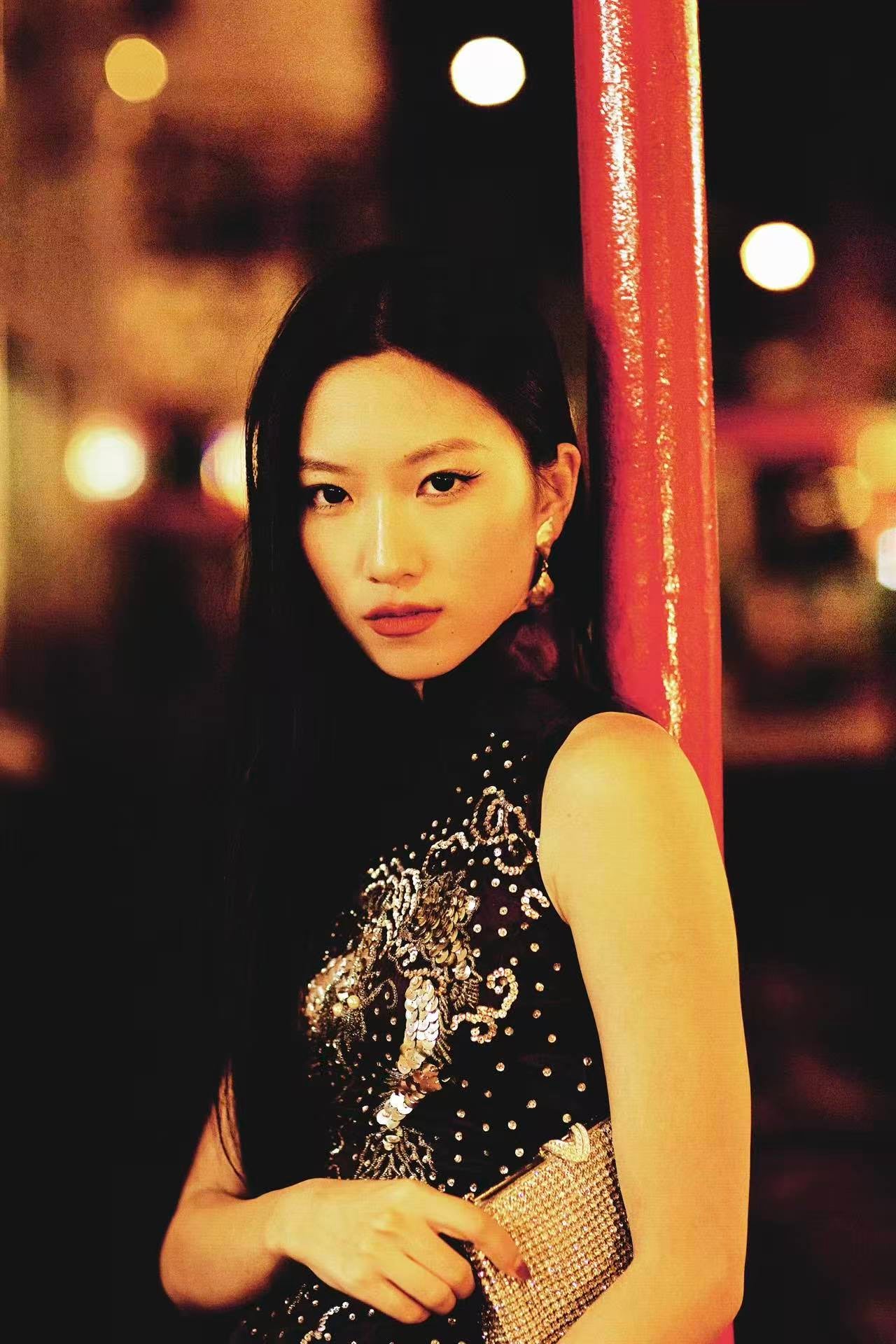
分享一件六十年代末黑缎银珠绣龙凤旗袍:夜霓虹下的东方图腾。
夜幕下的香港,霓虹灯影交织如流金泻玉,映照着这件上世纪六十年代末的黑色缎面银珠潮绣龙凤呈祥旗袍——它仿佛从《南唐书·冯延巳传》“霓裳罢舞,龙凤呈祥”的典籍中走出,将东方最经典的图腾绣入人间烟火。黑色缎面如维港深夜的潮水,银珠绣线似天际坠落的星屑,在夜色中流转出龙凤盘旋的磅礴气韵,恰似《楚辞·离骚》“鸾鸟凤凰,日以远兮”的瑰丽与永恒。
衣身满布龙凤呈祥纹:银珠钉绣的蛟龙腾跃于云水间,龙鳞以 3D 立体钉珠技法层层堆叠,凤凰尾羽则以潮绣独有的绣技法,银线勾勒的凤羽在灯光下泛起粼粼波光,恰合《韩非子·外储说左上》“画龙点睛,龙即飞去”的灵动。
潮绣源于唐代岭南刺绣,至明清发展出钉珠、垫高、盘金三大绝技,2006 年被列入国家级非物质文化遗产。此袍的钉珠工艺需先以银线勾勒龙凤轮廓,再以镊子夹珠逐颗钉缀,每颗珠子需穿过三层缎面底衬,确保牢固度与立体感,其工艺复杂度堪称“针尖上的奢侈品”。
龙凤呈祥纹在传统吉祥纹样中位列“皇家御用”,民间罕有制作,此袍将潮绣钉珠与旗袍剪裁完美融合,堪称“东方图腾的现代变奏”。
六十年代末的香港,正经历传统与现代的剧烈碰撞:兰桂坊的爵士乐与庙街的粤剧交织,西方立体剪裁与东方平面裁剪在旗袍上达成和解。此袍的黑色缎面象征东方的含蓄,银珠绣线则吸纳西方装饰艺术(Art Deco)的璀璨,龙凤图腾在霓虹灯影下流转,恰似《红楼梦》“金玉满堂”与“西方摩登”的完美交融。它不仅是衣物,更是香港黄金年代的文化标本——既有潮绣的骨,又有世界的血,在时间的洪流中,永远绽放着独一无二的东方光芒。
当银珠在黑缎上绽放,当龙凤在夜色中腾飞,这件旗袍早已超越物质本身,成为非遗技艺与时代精神的双重见证。它在针脚间镌刻着岭南匠人的智慧,在纹样中封存着六十年代香港的浮华与沧桑,更在龙凤呈祥的吉意里,诉说着东方美学永不褪色的传奇。每一寸光影流转,都是对“针线有魂,图腾有灵”的最好诠释。
以下是您分享的关于上世纪六十年代末黑缎银珠绣龙凤旗袍的翻译:
🐉 Phoenix & Dragon: A Late 1960s Hong Kong Cheongsam in Black Satin with Silver Pearl Embroidery
Beneath the night sky of Hong Kong, where neon lights interweave like flowing gold and spilling jade, stands this late 1960s vintage cheongsam, featuring the "Dragon and Phoenix Bringing Prosperity" (龙凤呈祥) motif embroidered with silver pearls on black satin in the Chaozhou (Chao) embroidery style. It seems to have stepped out of the classical text History of the Southern Tang Dynasty: Biography of Feng Yanji (南唐书·冯延巳传), which mentions "the dance of the rainbow robes ceases, the dragon and phoenix bring prosperity," stitching the most classic Oriental totems into the human world. The black satin resembles the midnight tide of Victoria Harbour, and the silver pearl embroidery is like stardust falling from the sky, exuding the magnificent, soaring energy of the dragon and phoenix in the darkness, capturing the splendor and eternity of the line from the Songs of Chu: Li Sao: "The Luan and Phoenix birds, daily fly farther away."
The body of the robe is fully covered with the Dragon and Phoenix motif: the silver-beaded dragon (蛟龙) leaps above the clouds and water. The dragon scales are layered using the 3D dimensional beading technique, while the phoenix tail feathers, outlined in silver thread using the unique method of Chao Embroidery (潮绣), shimmer under the light, embodying the agility of the idiom "dotting the eyes of the dragon and the dragon flies away" (画龙点睛) from Han Feizi.
Chao Embroidery originated from Lingnan embroidery during the Tang Dynasty and developed three ultimate techniques by the Ming and Qing dynasties: beading, padding, and gold couching (钉珠、垫高、盘金). It was listed as a National Intangible Cultural Heritage in 2006. The beading technique on this robe first requires outlining the dragon and phoenix with silver thread, and then meticulously attaching each pearl with tweezers. Each pearl must pass through three layers of satin lining to ensure firmness and three-dimensionality, making the process truly the "haute couture of the needlepoint."
The Dragon and Phoenix Bringing Prosperity motif traditionally held the status of "Imperial Use," rarely seen among the populace. This robe perfectly integrates Chao Embroidery beading with cheongsam tailoring, representing a "modern variation of the Oriental totem."
Late 1960s Hong Kong was experiencing a fierce collision between tradition and modernity: the jazz of Lan Kwai Fong interwove with the Cantonese opera of Temple Street, and Western three-dimensional cutting achieved a reconciliation with Eastern flat cutting on the cheongsam. The black satin of this robe symbolizes Oriental subtlety, while the silver pearl embroidery absorbs the brilliance of Western Art Deco. The dragon and phoenix totems, shifting in the neon light, perfectly embody the fusion of "gold and jade filling the hall" (金玉满堂) from Dream of the Red Chamber and "Western Modernity." It is not just clothing but a cultural specimen of Hong Kong's Golden Age—possessing both the structure of Chao Embroidery (潮绣的骨) and the influences of the world (世界的血), forever radiating a unique Oriental light in the torrent of time.
When the silver pearls bloom on the black satin, and the dragon and phoenix soar in the night, this cheongsam transcends the material itself, becoming a dual witness to Intangible Cultural Heritage and the spirit of the era. It inscribes the wisdom of Lingnan artisans in its stitches, seals the glamour and vicissitudes of 1960s Hong Kong in its motifs, and, through the auspicious meaning of the Dragon and Phoenix, narrates the never-fading legend of Oriental aesthetics. Every shift in light and shadow is the best interpretation of "the needlework has a soul, and the totem has a spirit."