深圳溯源
Couldn't load pickup availability
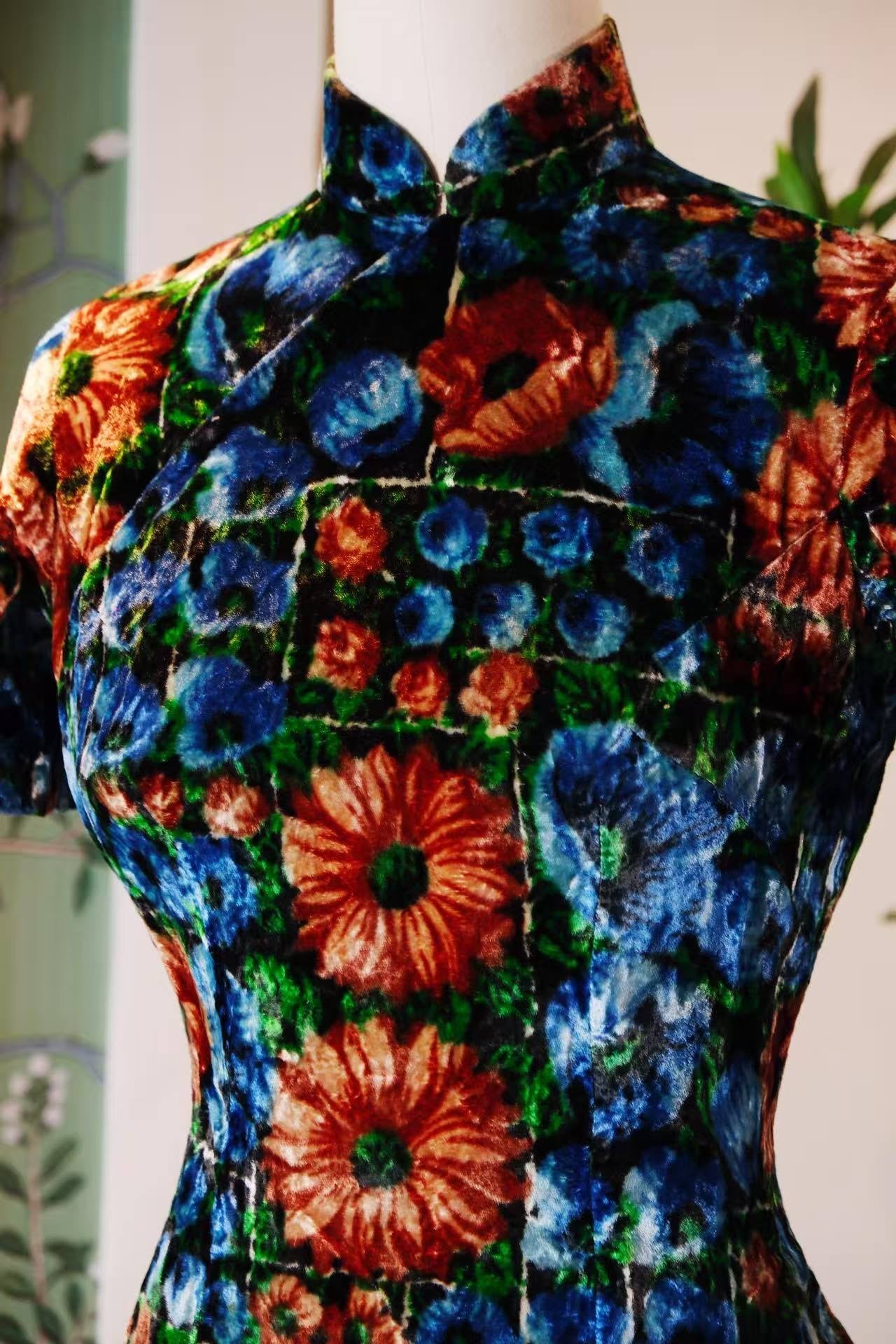
分享一件上世纪六十年代手绘水彩装饰艺术金丝绒台湾产古董旗袍。
这件旗袍的图案以手绘水彩技法绘就,展现出独特的艺术魅力。
手绘水彩技法赋予了旗袍图案独特的艺术质感。
装饰艺术风格(Art Deco)强调几何形状和对称性,
金丝绒面料以其柔软的触感和华丽的光泽,
手绘水彩图案的制作过程需要设计师具备高超的绘画技艺和对色彩的
上世纪六十年代的台湾,正处于经济与文化发展的转型期。
将装饰艺术风格运用于旗袍设计,在当时的台湾并不常见。
The pattern design of this cheongsam, rendered in the hand-painted watercolor technique, showcases a unique artistic charm. The composition features deep, oceanic blue flowers interwoven with fiery orange flowers, creating a vibrant tapestry full of vitality. The flowers vary in form—some budding, others blooming like a sunset—each seemingly telling its own story. Green leaves serve as the background, enhancing the prominence of the flowers and making the entire pattern lively and fresh. These floral motifs are not arranged arbitrarily but adhere to the geometric principles of the Art Deco style, forming a perfect blend of order and freedom.
The hand-painted watercolor technique imbues the cheongsam pattern with a unique artistic texture. The watercolor's blended effect (晕染效果) allows the colors of the flowers to transition naturally, resembling a flowing watercolor painting. This technique not only demonstrates the designer's superb skill but also lends the cheongsam a poetic beauty. As stated in the Songs of Chu: "I wear the angelica and fragrant herbs, and string the autumn orchids for my girdle," where the ancients used fragrant herbs to symbolize virtue. Similarly, the watercolor flowers on this cheongsam exude a unique artistic fragrance.
The Art Deco style emphasizes geometric shapes and symmetry, which is fully realized in the cheongsam's pattern design. The floral motifs are presented in geometric blocks, retaining natural vibrancy while possessing a sense of modern order. This design philosophy echoes the modernist art trends of the early 20th century, reflecting society's contemporary pursuit of fusing tradition and modernity. As the master architect Eliel Saarinen stated: "Art Deco is an attitude toward life; it connects art and life closely."
The velvet (金丝绒) fabric, with its soft touch and luxurious luster, adds a noble quality to the cheongsam. The texture of the velvet complements the watercolor pattern, allowing the cheongsam to present rich visual effects in shifting light and shadow. The choice of this material not only reflects the high level of Taiwanese textile craftsmanship at the time but also highlights the cheongsam's distinct status as a symbol of identity and taste.
The process of creating the hand-painted watercolor pattern demanded the designer possess exceptional painting skill and a keen perception of color. Every blended stroke, every color transition, is the culmination of the designer's effort and dedication. This method of manual creation ensures that every cheongsam is a unique work of art, impossible to replicate by machine. In today's era of industrial production, this hand-painted craftsmanship is especially precious and holds extremely high collection value.
Taiwan in the 1960s was undergoing a period of economic and cultural transition. The cheongsam, as a representative of traditional Chinese attire, integrated the Western Art Deco style during this period, showcasing a unique contemporary character. Taiwanese-made cheongsams were renowned both domestically and internationally for their exquisite craftsmanship and innovative design. However, due to historical reasons and the passage of time, well-preserved 1960s hand-painted watercolor Art Deco velvet cheongsams are exceedingly rare. The existence of this piece undoubtedly provides valuable physical evidence for studying Taiwanese cheongsam culture.
The application of the Art Deco style to cheongsam design was uncommon in Taiwan at the time. The integration of this style not only broke the traditional aesthetic paradigm of the cheongsam but also endowed the garment with a modern, international perspective. It bears witness to the exchange and collision of Chinese and Western cultures, embodying the innovative spirit and unique pursuit of beauty held by designers of that era. This distinct design style ensures that this cheongsam stands out among many vintage pieces, making it an invaluable artistic treasure.