紫藤花影里的六十年代台湾旗袍叙事
衣服尺寸:
胸围/腰围/臀围:106/86/110 厘米
衣长:105 厘米
细节描述:
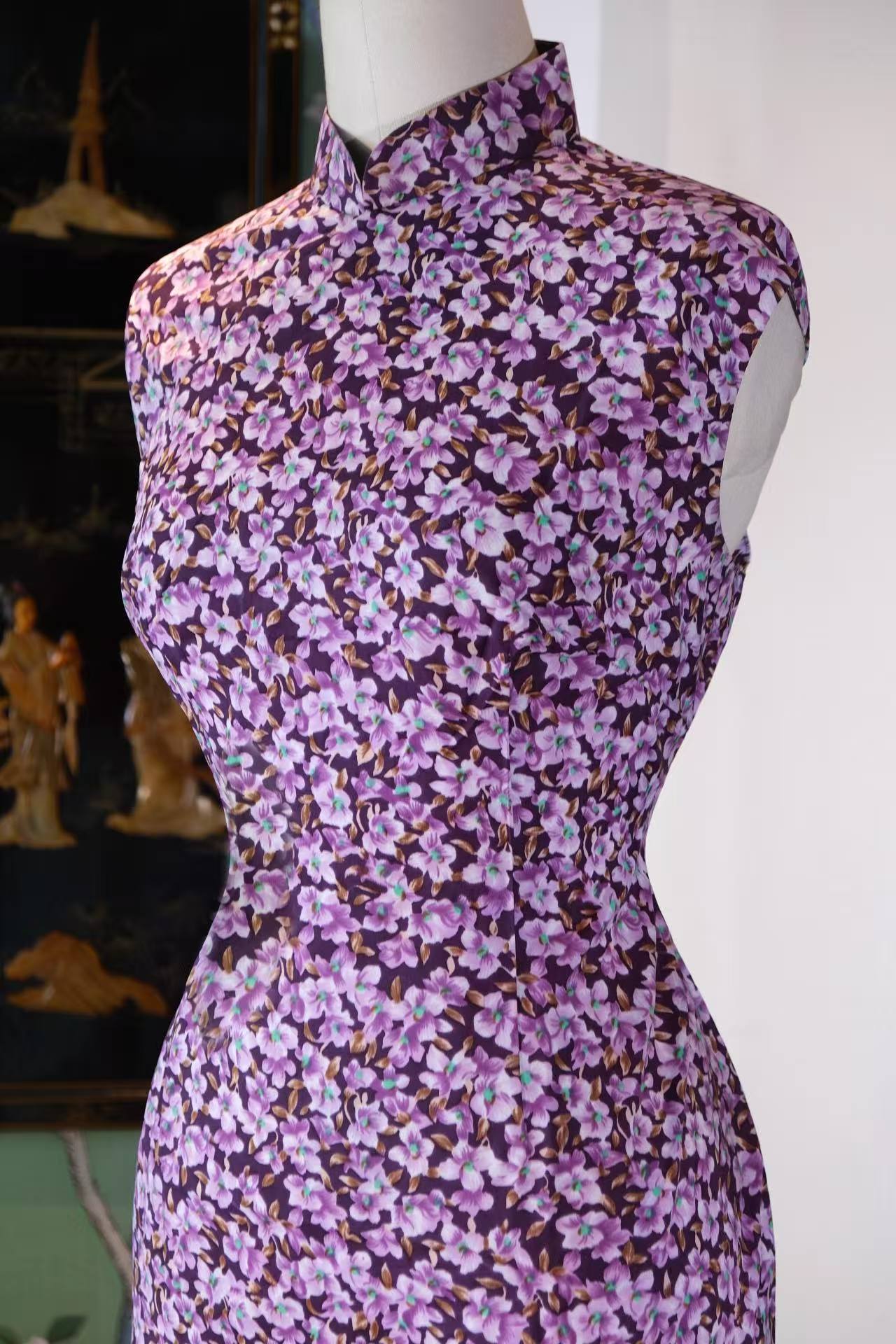
这件深紫色底、满铺碎花的旗袍,是上世纪六十年代台湾纺织工艺与海派剪裁交融的珍贵遗存。衣身以密集的浅紫、粉紫小花与棕褐枝叶构成“满园春色”纹样,花朵如丁香或紫薇,枝叶舒展间暗合“花枝俏”的传统意象,却又以现代印花工艺呈现出轻盈的视觉韵律。
六十年代的台湾旗袍,正处于传统与现代的转型期。彼时上海裁缝南渡,将海派旗袍的修身剪裁与台湾本土的印染技术结合,诞生了这种既保留立领、斜襟等经典元素,又融入现代审美意趣的服饰。这件旗袍的收腰设计贴合人体曲线,袖口与下摆的流畅线条,正是“海派旗袍黄金时代”的余韵。
从艺术风格来看,其碎花图案既非明清织锦的繁复堆砌,也非当代印花的抽象写意,而是带着六十年代特有的“新古典主义”气质——以传统花卉纹样为基底,通过现代印染技术实现色彩的层次过渡。这种“旧瓶装新酒”的设计,恰如张爱玲在《更衣记》中所言:“衣服是一种语言,随身带着一种袖珍戏剧。”
这件旗袍的稀缺性,不仅在于其保存完好的品相,更在于它承载着一段特殊的历史记忆。六十年代的台湾,正处于经济起飞前夕,这件旗袍或许是某位闺秀的嫁衣,或许是某位知识女性的日常着装,其上的每一朵小花,都镌刻着那个时代的审美趣味与生活气息。
如今,当我们凝视这件旗袍,仿佛能看见六十年代台北街头的梧桐树影,听见老式留声机里周璇的《夜上海》,感受到那个时代特有的温婉与坚韧。它不仅是一件服饰,更是一段可以触摸的历史,一种可以传承的美学。
Narrative of a 1960s Taiwanese Cheongsam Amidst Wisteria Shadows
Measurements / Size Guide:
Bust / Waist / Hips: 106/86/110 cm
Total Length: 105 cm
Detailed Description:
This deep purple cheongsam (qipao), adorned with an all-over floral print, is a precious relic of the fusion between 1960s Taiwanese textile craftsmanship and Shanghainese tailoring. The body of the garment features a "Spring Splendor" pattern composed of dense light purple and pink blossoms intertwined with brownish-tan branches and leaves. The flowers, resembling lilac or crape myrtle, stretch out in a way that subtly echoes the traditional imagery of "graceful flowering branches," yet they are rendered through modern printing techniques that present a light, rhythmic visual flow.
In the 1960s, Taiwanese cheongsams were in a transitional period between tradition and modernity. During that era, Shanghainese tailors migrated south, blending the form-fitting cuts of Shanghainese-style qipao with local Taiwanese dyeing and printing technologies. This gave birth to a style that retained classic elements like the standing collar and diagonal bodice (pankou closure) while incorporating modern aesthetic sensibilities. The cinched waist of this piece contours to the body, and the fluid lines of the cuffs and hem are the lingering echoes of the "Golden Age of Shanghainese Cheongsams."
From an artistic perspective, its floral pattern is neither the complex layering of Ming and Qing brocades nor the abstract freehand style of contemporary prints. Instead, it carries a "Neoclassical" temperament unique to the 1960s—using traditional floral motifs as a foundation and achieving layered color transitions through modern industrial printing. This "new wine in an old bottle" design is precisely as Eileen Chang described in Chronicle of Changing Clothes: "Clothes are a language, a pocket drama that one carries around."
The scarcity of this cheongsam lies not only in its impeccably preserved condition but also in the specific historical memory it carries. Taiwan in the 1960s was on the eve of an economic takeoff; this garment might have been the wedding dress of a young lady from a prominent family, or the daily attire of an intellectual woman. Every small flower upon it is engraved with the aesthetic tastes and life breath of that era.
Today, as we gaze upon this cheongsam, it is as if we can see the shadows of plane trees on the streets of 1960s Taipei, hear Zhou Xuan’s "Night Shanghai" playing on an old phonograph, and feel the unique gentleness and resilience of that time. It is more than just a piece of clothing; it is a touchable fragment of history and a heritage of aesthetics.