深圳溯源
Couldn't load pickup availability
衣服尺寸:
胸围/腰围/臀围:90/86/100 厘米
衣长:114 厘米
细节描述:
当1960年代的台北裁缝铺里,剪刀划过这匹斜纹羊毛面料时,谁曾想这件衣裳会穿越半个世纪的风尘,成为今日衣橱里的“活化石”?
一、笔触里的东方现代主义
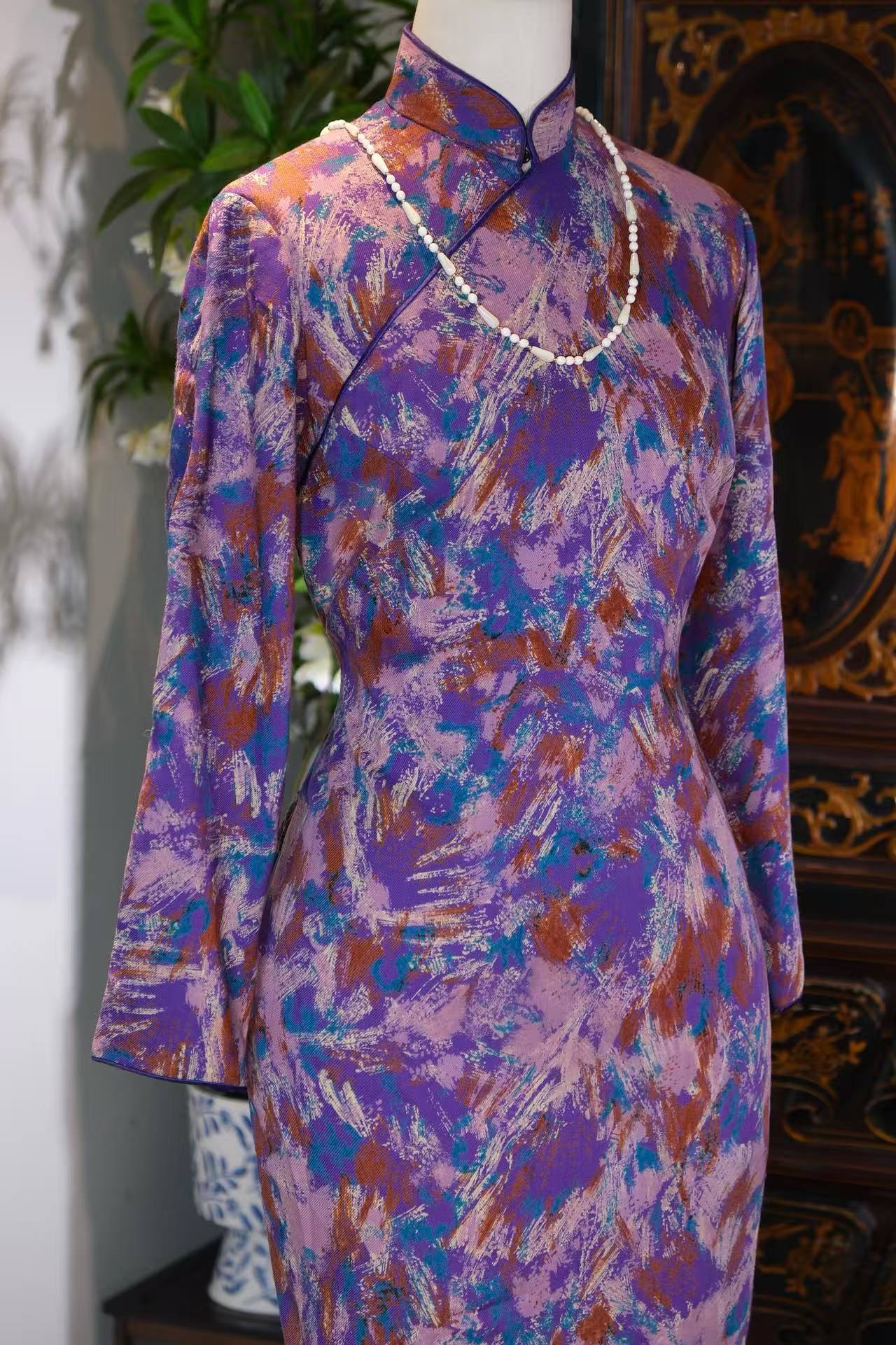
面料上的抽象图案,恰似一幅未干的油画:深紫与浅紫如暮色中的远山层叠,赭石色块似落日余晖在石壁上流淌,间或点缀的靛蓝与银灰,又若晨雾中忽隐忽现的溪涧。这种“笔触式”印花,绝非机器能复制的规整纹样——它带着画家挥毫时的呼吸感,是1960年代台湾纺织业“西学东渐”的见证:彼时留洋归来的设计师,将西方抽象表现主义的水墨意趣,融入传统旗袍面料,成就了这般“远看是山,近看是笔”的视觉诗学。
二、斜纹羊毛里的时代体温
六十年代的台湾,旗袍正从“宽大平直”走向“曲线玲珑”。这件古董衣的剪裁,藏着那个年代的巧思:斜纹羊毛的挺括质感,既保留了旗袍的端庄,又通过面料的弹性勾勒出腰臀曲线;立领高度恰到好处,既非民国初年的高领拘谨,也非后期的低领开放,恰是1960年代知识女性的得体与风骨。
三、稀缺性:时光筛选的孤品
如今市面上常见的“复古旗袍”,多是复刻款或仿古印花,而这件台湾产古董旗袍的稀缺性,在于三个“不可复制”:
- 面料工艺:1960年代台湾羊毛纺织技术尚在起步,这种“油画抽象”印花需手工制版,产量极低,存世量远少于同时期的丝绸旗袍;
- 时代印记:彼时台湾旗袍受西方影响,开始出现“西式省道”与“中式盘扣”的融合,这件衣服的剪裁细节,正是这一过渡期的实物标本;
- 保存状态:羊毛面料易虫蛀、易褪色,而这件旗袍历经六十余年,图案依旧鲜亮,针脚依旧整齐,堪称“时光的幸存者”。
四、穿在身上的文化密码
穿这件旗袍,不仅是穿一件衣服,更是穿一段历史。当你系上珍珠项链,立于镜前,仿佛能看见1960年代的台北街头:穿旗袍的女子走过牯岭街的书摊,路过中山堂的戏院,裙摆扫过青石板路,带起一阵带着墨香的风。这种“流动的东方美学”,正是古董旗袍最动人的地方——它不是博物馆里的标本,而是可以穿在身上的文化记忆。
如今,这件旗袍静候新主人。它或许会参加一场复古派对,或许会成为收藏家的珍品,但无论如何,它都将继续讲述那个“东方遇见西方,传统碰撞现代”的1960年代。
Measurements / Size Guide:
Bust / Waist / Hips: 90/86/100 cm
Total Length: 114 cm
Detailed Description:
When the scissors glided through this twill wool fabric in a 1960s Taipei tailor shop, who could have imagined that this garment would traverse half a century of wind and dust to become a "living fossil" in today's wardrobe?
The abstract pattern on the fabric resembles an undried oil painting: deep and light purples layer like distant mountains at dusk; ochre blocks flow like the lingering glow of a setting sun on stone walls; and occasional flecks of indigo and silver-grey appear like mountain streams flickering through morning mist. This "brushstroke-style" print is far from the mechanical regularity of machine-replicated patterns—it carries the breath of a painter’s flourish. It stands as a testament to the "Western Learning spreading to the East" in the 1960s Taiwanese textile industry: designers returning from overseas integrated the ink-wash essence of Western Abstract Expressionism into traditional Qipao fabrics, achieving a visual poetics where it "looks like mountains from afar, but brushstrokes up close."
In the Taiwan of the 1960s, the Qipao was evolving from "wide and straight" to "curvy and exquisite." The tailoring of this vintage garment hides the ingenuity of that era: the crisp texture of the twill wool maintains the Qipao’s dignity while tracing the curves of the waist and hips through the fabric's natural elasticity. The height of the mandarin collar is perfectly balanced—neither as restrictive as the high collars of the early Republic nor as open as later low-collar styles. It perfectly embodies the decency and character of the 1960s female intellectual.
Most "Retro Qipaos" found on the market today are either reproductions or faux-vintage prints. The rarity of this authentic vintage Taiwanese Qipao lies in three "irreproducible" factors:
Fabric Craftsmanship: In the 1960s, Taiwanese wool textile technology was in its infancy. This "Abstract Oil Painting" print required manual plate-making, resulting in extremely low output. Surviving examples are far rarer than silk Qipaos from the same period.
A Stamp of the Era: Influenced by the West, Taiwanese Qipaos of that time began to see a fusion of "Western-style darts" and "Chinese-style frog buttons." The tailoring details of this piece are a physical specimen of this transitional period.
State of Preservation: Wool fabrics are susceptible to moths and fading. That this Qipao remains vibrant in pattern and neat in stitching after sixty years makes it a true "survivor of time."
Wearing this Qipao is not just wearing a garment; it is wearing a piece of history. When you fasten your pearl necklace and stand before the mirror, it is as if you can see the streets of 1960s Taipei: a woman in a Qipao walking past the bookstalls of Guling Street, passing the theaters of Zhongshan Hall, her hem sweeping over the cobblestones, stirring a breeze scented with ink. This "Flowing Eastern Aesthetics" is the most touching aspect of a vintage Qipao—it is not a specimen in a museum, but a cultural memory that can be worn.
Today, this Qipao awaits its new owner. Perhaps it will attend a vintage party, or perhaps it will become a collector's treasure; regardless, it will continue to tell the story of the 1960s, where "East met West, and tradition collided with modernity."