深圳溯源
Couldn't load pickup availability
衣服尺寸:
胸围/腰围/臀围:88/74/96 厘米
衣长:106 厘米
细节描述:
一、碎花织锦:方寸间的东方意趣
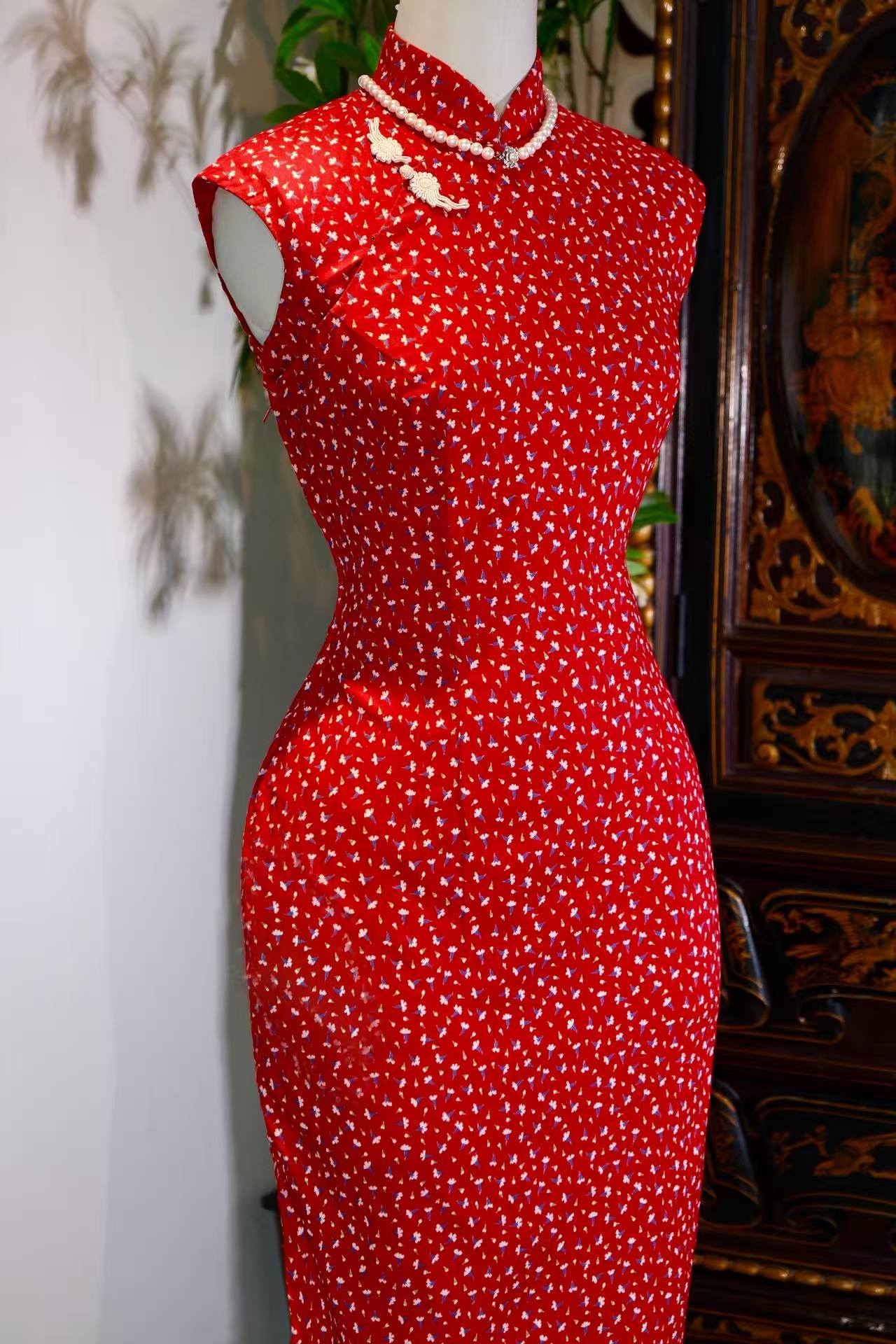
这件上世纪六十年代的台湾产古董旗袍,以正红为底,缀满细密的碎花印花。图案由蓝、白、粉三色交织而成,似兰草抽芽,又如梅花点点,暗合《诗经》“桃之夭夭,灼灼其华”的意象。不同于传统旗袍的龙凤纹样,这种“碎花满地”的设计,是六十年代台湾纺织业受西方印花技术影响后的创新——既保留了东方审美的含蓄,又融入了现代生活的活泼气息。
细观花型,每朵小花仅米粒大小,排列却疏密有致,如宋人小品画中的“折枝花卉”,于方寸间见天地。红底与碎花的碰撞,既有“万绿丛中一点红”的视觉冲击,又因花色的柔和而消解了正红的张扬,恰如《长物志》所言“宁古无时,宁朴无巧”,在复古与现代间找到了微妙的平衡。
二、时光叙事:一件旗袍的迁徙与新生
这件旗袍的剪裁更见匠心:无袖设计露出肩线,贴合六十年代女性追求“简约利落”的审美;收腰曲线贴合身形,却不过分紧绷,暗合《礼记》“衣不帛襦袴”的中庸之道;领口与襟边的米白色盘扣,如两枚玉簪斜插,既固定衣襟,又成点睛之笔。据说,这类旗袍多由台湾“旗袍世家”手工制作,一件需耗时半月,从画样、裁剪到盘扣,皆是师徒口传心授的技艺。
三、稀缺之美:时代洪流中的孤本
如今,这样的台湾产古董旗袍已成“衣中孤本”。六十年代后,成衣工业化浪潮席卷,手工旗袍逐渐式微;现存世的同类旗袍,多藏于博物馆或私人藏家手中,如台北故宫博物院所藏的“六十年代台湾旗袍系列”,便以此类碎花款为典型。
从艺术风格看,它既非传统旗袍的“宫廷华贵”,亦非现代旗袍的“夸张暴露”,而是“过渡时代”的审美标本——既有东方服饰的“写意精神”,又暗含西方剪裁的“人体工学”,恰如学者李欧梵所言:“六十年代的台湾旗袍,是东方美学在现代性冲击下的优雅转身。”
四、结语:穿在身上的历史
这件红底碎花旗袍,不仅是一件衣物,更是一段凝固的时光。它见证了台湾纺织业的黄金年代,承载了六十年代女性的审美追求,更以“碎花”为笔,在丝绸上书写了东方美学的现代性探索。正如《考工记》所云“天有时,地有气,材有美,工有巧,合此四者,然后可以为良”,这件旗袍的稀缺性,正在于它集“时代、地域、材质、工艺”于一身,成为不可复制的“衣中孤本”。
若你有幸得见,不妨轻抚那细密的碎花——指尖触到的,是六十年代的阳光、台湾的海风,以及一位女性对美的永恒追求。
Measurements / Size Guide:
Bust / Waist / Hips: 88/74/96 cm
Total Length: 106 cm
Detailed Description:
This 1960s vintage cheongsam (qipao), made in Taiwan, features a vibrant vermilion base adorned with dense, fine floral prints. The patterns, woven from blue, white, and pink, resemble sprouting orchids or delicate plum blossoms, echoing the imagery from The Classic of Poetry: "The peach tree is young and elegant; brilliant are its flowers." Diverging from traditional dragon and phoenix motifs, this "all-over ditsy floral" design represents the innovation of the Taiwanese textile industry under the influence of Western printing technology—preserving Eastern restraint while embracing the liveliness of modern life.
Observing the floral patterns closely, each tiny blossom is only the size of a grain of rice, yet they are arranged with rhythmic spacing, much like the "broken-branch flowers" (Zhezhi Huahui) in Song Dynasty album leaf paintings—finding a universe within an inch. The collision of the red ground and the tiny flowers provides the visual impact of "a touch of red amidst a sea of green," yet the softness of the floral colors tempers the boldness of the vermilion. It strikes a delicate balance between vintage and modern, as suggested in Treatise on Superfluous Things: "Rather ancient than trendy, rather simple than ingenious."
The tailoring reveals even greater ingenuity: the sleeveless design exposes the shoulder line, catering to the 1960s aesthetic of "simplicity and sharpness." The cinched waist contours the silhouette without being overly tight, aligning with the "Golden Mean" found in The Book of Rites. The cream-white frog buttons (Pankou) at the collar and lapel are like two jade hairpins, serving both as fasteners and as the crowning touch. It is said that such qipaos were mostly handmade by "qipao dynasties" in Taiwan, taking half a month to complete—from sketching and cutting to coiling the buttons, all through skills passed down orally from master to apprentice.
Today, such Taiwan-made vintage qipaos have become "orphaned masterpieces" of clothing. After the 1960s, the wave of industrial ready-to-wear swept through, and handmade qipaos gradually declined. Surviving pieces of this kind are mostly held in museums or by private collectors, such as the "1960s Taiwan Qipao Series" in the National Palace Museum in Taipei, where this floral style is a quintessential representative.
Artistically, it possesses neither the "palatial luxury" of traditional qipaos nor the "exaggerated exposure" of modern ones. Instead, it is an aesthetic specimen of a "transitional era"—possessing the "freehand spirit" of Eastern attire while subtly incorporating the "ergonomics" of Western tailoring. As scholar Leo Ou-fan Lee remarked: "The Taiwan qipao of the 1960s is the elegant turn of Eastern aesthetics under the impact of modernity."
This red-ground floral qipao is more than a garment; it is a solidified segment of time. It witnessed the golden age of the Taiwanese textile industry, carried the aesthetic pursuits of 1960s women, and used the "floral print" as a pen to write the modern exploration of Eastern aesthetics on silk. As Kao Gong Ji states: "Heaven has its seasons, Earth its vital energy, materials their beauty, and craftsmanship its ingenuity. When these four combine, the result is excellence." The scarcity of this qipao lies in its synthesis of era, region, material, and craft, making it an unrepeatable masterpiece.
If you are fortunate enough to see it, touch those fine floral prints gently—what your fingertips feel is the sunlight of the 1960s, the sea breeze of Taiwan, and a woman’s eternal pursuit of beauty.