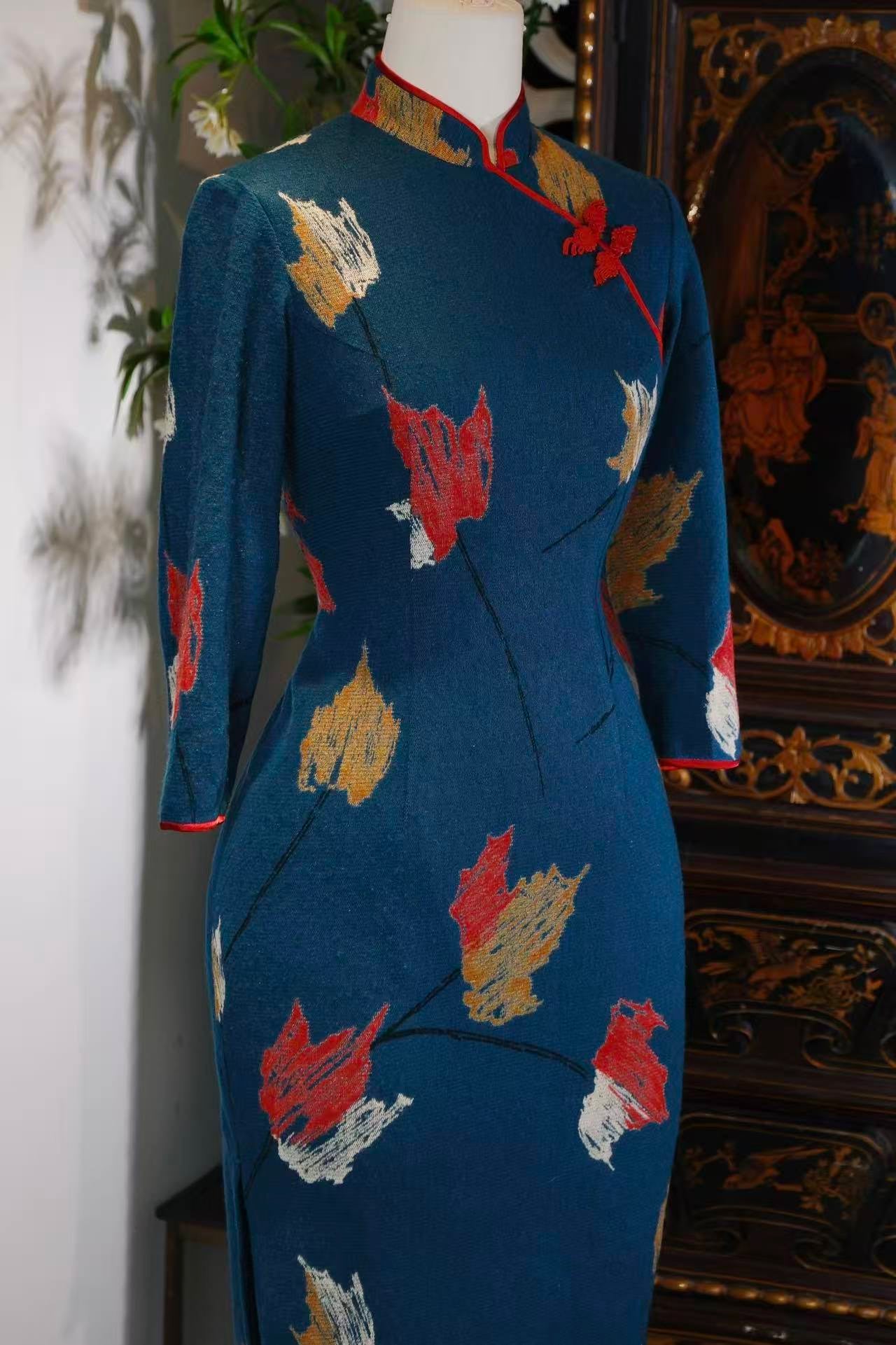
《织物里的秋日诗篇》—— 一件上世纪六十年代台湾产精仿羊毛印花古董旗袍美学鉴赏
衣服尺寸:
胸围/腰围/臀围:94/80/106 厘米
衣长:100 厘米
细节描述:
这是一件藏于时光深处的1960年代台湾精仿羊毛印花古董旗袍,它以深邃的靛蓝为底,织就了一幅流动的秋日诗篇。衣身之上,红、金、米白三色交织的抽象花卉图案,如泼墨般洒脱,又似工笔般细腻,每一片花瓣都似在风中轻颤,诉说着那个年代独有的温婉与坚韧。领口与袖口的朱红滚边,如点睛之笔,勾勒出东方女性的含蓄之美,而斜襟处的盘扣,则是传统工艺的无声坚守。
这件旗袍的珍贵,不仅在于其材质的考究——精仿羊毛的细腻触感,历经半个多世纪仍保有温润光泽;更在于其承载的历史重量。1960年代的台湾,正处于传统与现代的交汇点,旗袍作为女性身份的象征,既延续了民国时期的优雅,又融入了战后新生的活力。这件衣服,或许曾属于一位在台北街头漫步的大家闺秀,她的身影与这件旗袍一同,见证了那个时代女性从家庭走向社会的悄然蜕变。
从艺术风格来看,这件旗袍的印花设计颇具现代主义色彩,抽象的花卉形态打破了传统旗袍图案的繁复,展现出一种简约而不失格调的美学追求。这种风格,与当时西方现代艺术的兴起不谋而合,却又深深扎根于东方文化的土壤,形成了一种独特的“东方现代性”。
至于其稀缺性,更不言而喻。1960年代的台湾旗袍,多为手工定制,每一件都是独一无二的艺术品。而像这样保存完好、工艺精湛的精仿羊毛印花旗袍,更是凤毛麟角。它不仅是一件衣服,更是一段历史的见证,一种文化的传承,一份属于那个时代的集体记忆。
正如张爱玲所言:“衣服是一种语言,随身带着的是袖珍戏剧。”这件旗袍,便是那出戏剧中最动人的篇章,它以布料为纸,以针线为笔,书写了一段关于美、关于时代、关于女性的永恒故事。
A Poem of Autumn Wool: A 1960s Taiwan Fine-Gauge Printed Wool Antique Qipao
Measurements / Size Guide:
Bust / Waist / Hips: 94/80/106 cm
Total Length: 100 cm
Detailed Description:
Hidden deep within the folds of time, this 1960s fine-gauge printed wool antique qipao from Taiwan uses a profound indigo base to weave a flowing autumn poem. Across the garment, abstract floral patterns in a tri-color interweaving of red, gold, and cream are splashed with the freedom of ink-wash painting yet possess the delicacy of fine-brush work. Each petal seems to tremble slightly in the breeze, whispering the unique gentleness and resilience of that era. The cinnabar-red piping (Gunbian) at the collar and cuffs acts as a finishing touch, sketching the restrained beauty of the Oriental woman, while the frog fasteners (Pankou) at the diagonal closure stand as a silent guard of traditional craftsmanship.
I. Historical Weight and Material Elegance
The preciousness of this qipao lies not only in its exquisite material—the fine-gauge wool remains delicate to the touch and retains a warm luster after more than half a century—but also in the historical weight it carries. 1960s Taiwan stood at the intersection of tradition and modernity. As a symbol of female identity, the qipao of this period continued the elegance of the Republican era while integrating the renewed vitality of the post-war years. This garment may have belonged to a lady of a prominent family strolling the streets of Taipei; her silhouette, along with this qipao, witnessed the quiet transformation of women moving from the domestic sphere into society.
II. Artistic Style: The Emergence of Oriental Modernity
Artistically, the print design possesses a distinct modernist flair. The abstract floral forms break away from the traditional complexity of qipao patterns, showcasing an aesthetic pursuit of "simplicity without loss of character." This style coincided with the rise of Western modern art yet remained deeply rooted in the soil of Oriental culture, forming a unique "Oriental Modernity."
III. Scarcity and Collective Memory
Its scarcity is self-evident. 1960s Taiwanese qipaos were mostly bespoke, making each one a unique work of art. A fine-gauge printed wool qipao preserved in such impeccable condition and with such superb craftsmanship is a rarity among rarities. It is more than a garment; it is a witness to history, a cultural legacy, and a piece of collective memory belonging to that era.
As Eileen Chang famously remarked: "Clothes are a language; what one carries with them is a pocket drama." This qipao is the most moving chapter of that drama. Using fabric as its paper and needlework as its pen, it writes an eternal story of beauty, of an era, and of womanhood.