织金烧花间的流光溢彩——一件六十年代港产古董旗袍的艺术叙事
衣服尺寸:
胸围/腰围/臀围:// 厘米
衣长: 厘米
细节描述:
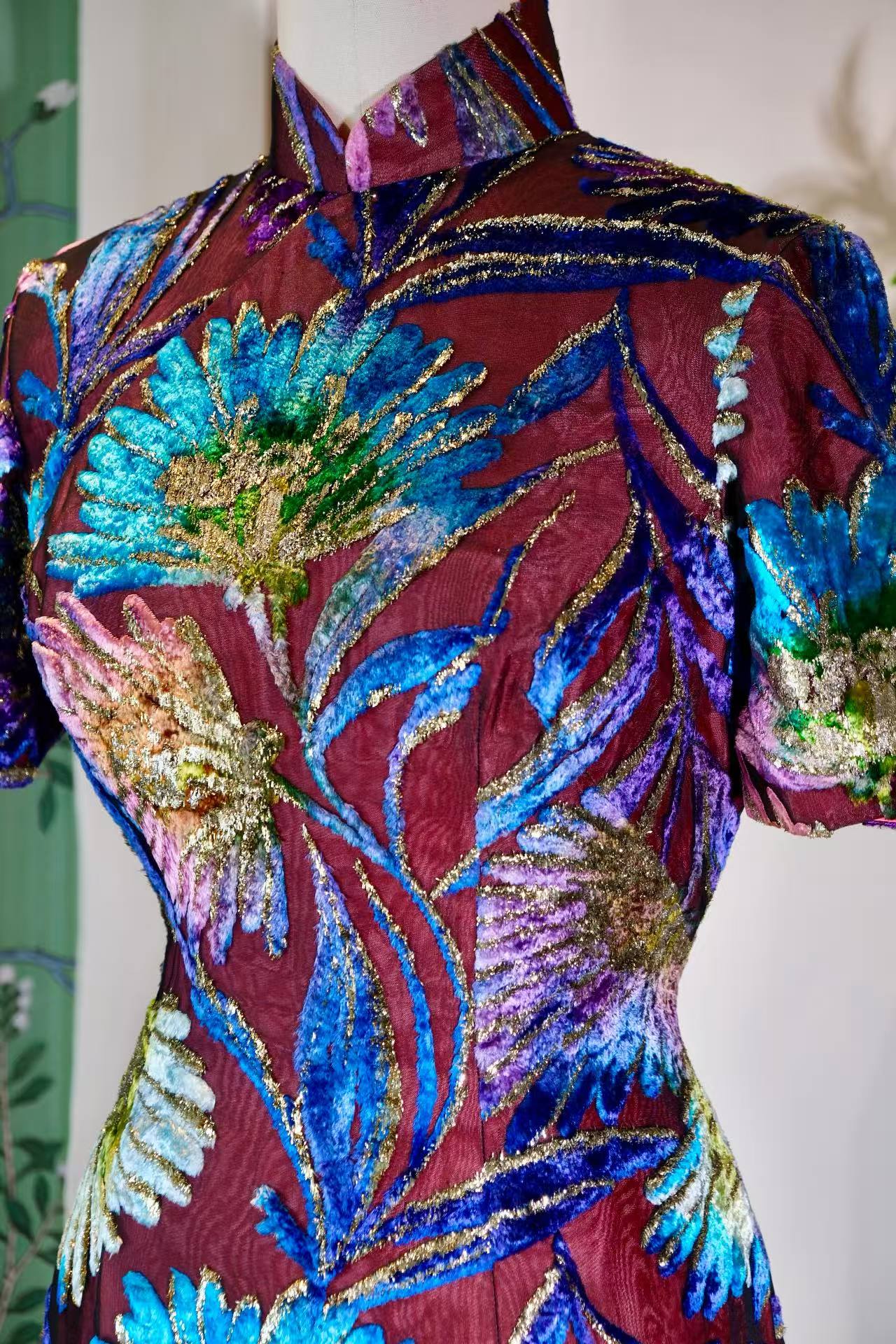
这件诞生于20世纪60年代的香港产古董旗袍,以意大利进口烧花丝绒为底,织金手绘晕染工艺为魂,将东方传统服饰美学与西方现代艺术思潮熔于一炉,成为中西文化交融的“物质文本”。
旗袍上的图案以“缠枝莲纹”为母题,却突破了传统纹样的程式化表达。意大利烧花丝绒的基底上,丝绒经特殊工艺烧蚀出通透的镂空肌理,似烟似雾,若隐若现,暗合《长物志》所言“虚实相生,无画处皆成妙境”的东方美学意境。其上以织金工艺勾勒花枝轮廓,金线如游丝般穿梭于蓝紫晕染的花瓣之间,花瓣以手绘晕染技法呈现,从靛蓝到粉紫的渐变过渡自然,仿佛将莫奈《睡莲》的光影流动凝于织物之上。尤为精妙的是,花蕊处以金银线绣出放射状纹样,似梵高《星月夜》中旋转的星云,又似敦煌壁画中飞天的飘带,在传统与现代、东方与西方的艺术语汇间自由切换。
这件旗袍的诞生,恰逢香港作为“东方之珠”的黄金时代。彼时,东西方文化在此激烈碰撞又温柔相拥:意大利的奢华面料漂洋过海而来,香港的工匠以“苏绣”技法改良织金工艺,手绘晕染则借鉴了西方油画的光影处理。正如学者王德威所言:“香港文化是‘混杂性’的典范,在传统与现代、本土与全球的张力中寻找平衡。”这件旗袍正是这种“混杂性”的物质载体——它既保留了中国传统旗袍的立领、斜襟、收腰、开衩等经典形制,又通过意大利面料的垂坠感与织金工艺的华丽感,赋予其现代女性的自信与张扬。
其稀缺性更在于工艺的不可复制性:烧花丝绒需经高温烧蚀,成品率极低;织金手绘晕染需匠人具备极高的艺术修养与手工技艺,每一针每一线都凝聚着时光的温度。如今,这种融合中西、跨越时空的工艺已近乎绝迹,使得这件旗袍成为“活着的文物”,见证着一个时代的文化交融与艺术创新。
它不仅仅是一件衣服,更是一段被织物封存的时光——当指尖抚过那烧花的镂空、织金的光泽、晕染的色彩,仿佛能听见六十年代香港的市声,看见东西方文化在此交织的璀璨烟火。这,便是古董衣的魅力:它让历史可触,让艺术可穿,让美在时光的长河中永恒流转。
Glistening Radiance Amidst Gilded Devoré: An Artistic Narrative of a 1960s Hong Kong Antique Qipao
Measurements / Size Guide:
Bust / Waist / Hips: / / cm
Total Length: cm
Detailed Description:
Born in the 1960s, this antique Hong Kong qipao uses imported Italian devoré velvet as its foundation and woven gold with hand-painted ombré as its soul. It fuses traditional Eastern aesthetic with Western modern art movements, serving as a "material text" of East-West cultural exchange.
I. Visual Poetics: The Interplay of Void and Substance
The patterns on the qipao take the "entwining lotus" as a motif but break away from the stylized constraints of traditional imagery.
-
The Devoré Base: On the Italian velvet substrate, the pile is etched away through specialized processes to create a translucent, hollowed texture. This misty, ethereal effect aligns with the Eastern aesthetic principle from Zhang Wu Zhi: "Void and substance generate each other; the unpainted spaces become the most wondrous realms."
-
Gilded Contours & Ombré: Woven gold outlines the flower stalks, with metallic threads weaving like gossamer through petals of blue and violet. These petals utilize a hand-painted gradient technique, transitioning naturally from indigo to magenta—as if the fluid light and shadow of Monet’s Water Lilies were frozen onto the fabric.
-
Artistic Synthesis: Most exquisite are the floral stamens, embroidered with gold and silver threads in radial patterns. They evoke the swirling nebulae of Van Gogh’s The Starry Night or the drifting ribbons of Dunhuang murals, shifting effortlessly between the vocabularies of tradition and modernity.
II. A Cultural Intersection: The Golden Age of the "Pearl of the Orient"
The birth of this qipao coincided with the golden era of Hong Kong. It was a time when East and West collided fiercely yet embraced tenderly: luxury Italian fabrics crossed the oceans, Hong Kong artisans refined weaving techniques with Su-style embroidery influences, and hand-painting borrowed the chiaroscuro of Western oil painting.
As scholar David Der-wei Wang noted: "Hong Kong culture is a paradigm of 'hybridity,' seeking balance within the tensions of tradition and modernity, the local and the global." This qipao is the physical carrier of that hybridity—retaining the classic silhouette of the standing collar, diagonal bodice, cinched waist, and side slits, while imbuing it with the confidence and vibrance of the modern woman through the drape of Italian fabric and the splendor of woven gold.
III. Scarcity and Soul: The Wearable Living Relic
The rarity of this piece lies in the irreproducibility of its craft:
-
Technical Rigor: Devoré velvet requires high-temperature erosion with an extremely low yield rate.
-
Artistic Mastery: The combination of woven gold and hand-painted ombré demands craftsmen with profound artistic cultivation; every stitch and hue condenses the "warmth of time."
Today, this cross-temporal craftsmanship has nearly vanished, making this qipao a "living relic" of cultural integration. It is more than a garment; it is a segment of time sealed in fabric. When one's fingertips brush over the hollowed velvet and the gilded luster, the city sounds of 1960s Hong Kong seem to echo, and the fireworks of cultural intersection become visible. This is the charm of antique clothing: it makes history tangible, art wearable, and beauty eternal.