深圳溯源
Couldn't load pickup availability
衣服尺寸:
胸围/腰围/臀围:104/86/108 厘米
衣长:125 厘米
细节描述:
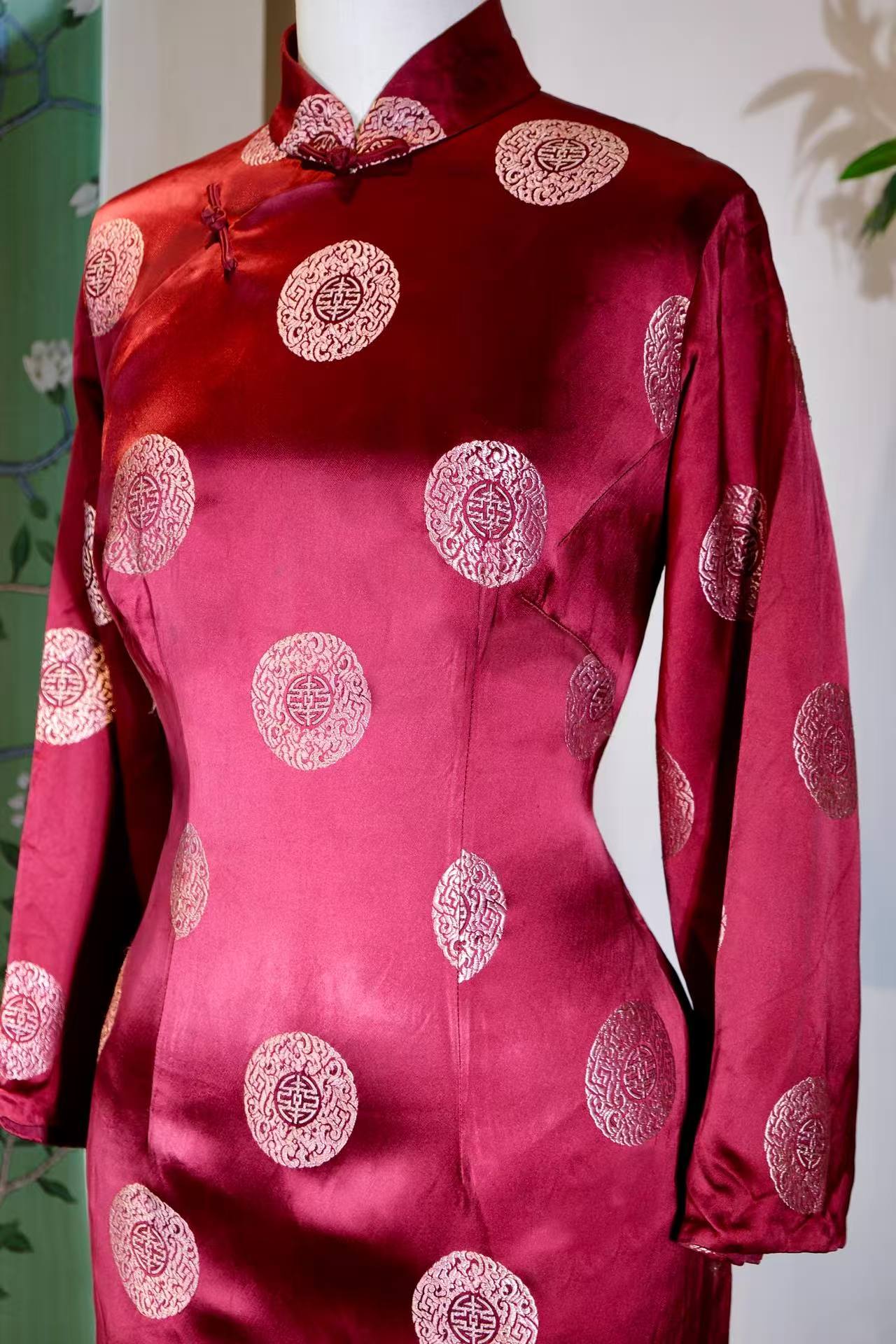
一袭绛红织锦缎旗袍静立,光线下浮动着如月光般清雅的白丝提花,仿佛将上世纪六十年代香港的繁华与东方美学的精髓凝于一衣。这件香港产的古衣,以织锦缎为骨,团纹为魂,是传统工艺与时代审美的完美结晶,更是一段可触摸的服饰史。
一、团纹提花:素雅中的吉祥密码
旗袍通体以绛红色织锦缎为料,缎面光泽温润如琥珀,其上满布“团寿纹”——圆形纹样内以篆书“寿”字为核心,外绕缠枝莲纹或回纹,形成“福寿绵长”的吉祥寓意。与常见的织金工艺不同,这件旗袍的团纹以白色丝线提花织就,在绛红底色的映衬下,如雪落红梅,清雅中透着贵气。这种“素提花”工艺,需将白色蚕丝与红色经线交织,通过经纬线的浮沉形成纹样,既保留了织锦缎的厚重质感,又增添了水墨画般的留白意境。
细观纹样,每个团寿纹的直径约5厘米,间距均匀,纹样边缘以白色丝线勾勒,在光线下呈现出细腻的浮雕感。这种“团纹”设计源于中国传统“团花”工艺,最早可追溯至唐代“陵阳公样”,至明清时期成为宫廷织物主流纹样。正如《天工开物》所言:“织锦之工,必以团花为贵”,团纹不仅象征团圆美满,更通过重复排列形成视觉韵律,使旗袍在行走间如流动的画卷。六十年代香港织锦缎多出口欧美,此类满幅白丝提花设计更显素雅奢华,是当时“东方主义”时尚潮流中难得的清雅之作。
二、香云遗韵:从面料到剪裁的匠心独运
这件旗袍的面料为典型的“香港织锦缎”,与顺德香云纱并称“南国双璧”。六十年代香港纺织业鼎盛,织锦缎多采用日本进口人造丝与国产真丝交织,既保留了真丝的柔滑,又增强了面料的挺括度,使旗袍更贴合人体曲线。旗袍剪裁遵循“海派旗袍”改良风格:立领高约4.5厘米,领口与斜襟处缀手工盘扣,扣头为“如意结”,寓意吉祥如意;腰身收至极致,下摆微喇,长度及踝,完美展现女性“S”型曲线。这种剪裁既保留了传统旗袍的含蓄,又融入了西方立体剪裁的精髓,是中西文化交融的见证。
三、岁月留痕:一件古董衣的前世今生
上世纪六十年代,香港作为远东时尚之都,汇聚了上海裁缝与本地工匠,织锦缎旗袍成为名媛贵妇的“战袍”。这件旗袍的主人,或许是一位穿梭于中环写字楼与半岛酒店茶座的职业女性,亦或是一位在家庭聚会中惊艳四座的少奶奶。旗袍上的每一道褶皱,都藏着一段关于勇气与优雅的故事——在东西方文化碰撞的年代,她穿着这件白丝提花旗袍,既坚守着东方的吉祥寓意,又展现着现代的独立风姿。
如今,这样的古董旗袍已极为稀缺。六十年代的香港织锦缎多因战乱、迁徙而散佚,完整保存至今且品相如此完好者,堪称凤毛麟角。它不仅是服饰,更是一件流动的艺术品,承载着时代的记忆与东方的美学密码。
正如《诗经》所云:“青青子衿,悠悠我心”,这件旗袍以其素雅的白丝提花、吉祥的团寿纹样,诉说着一个关于优雅、吉祥与传承的故事。它是时光的礼物,也是东方美学的永恒见证。
Measurements / Size Guide:
Bust / Waist / Hips: 104/86/108 cm
Total Length: 125 cm
Detailed Description:
A crimson brocade cheongsam (qipao) stands in quiet dignity, its surface shimmering with elegant white-silk jacquard patterns that drift like moonlight. It seems to encapsulate the prosperity of 1960s Hong Kong and the essence of Eastern aesthetics within a single garment. Crafted in Hong Kong with a "Brocade Satin" frame and a "Medallion Soul," this antique is a perfect fusion of traditional craftsmanship and era-defining aesthetics—a tangible piece of fashion history.
The cheongsam is fashioned from crimson brocade satin, its surface possessing a luster as warm as amber. It is adorned throughout with "Tuan Shou" (Longevity Medallion) patterns—circular motifs featuring the seal-script character for "Longevity" (Shou) at the core, surrounded by intertwining lotuses or fretwork, symbolizing "eternal fortune and longevity." Distinct from common gold-weaving techniques, the medallions here are woven with white silk jacquard. Against the crimson ground, they appear like snow falling on red plum blossoms—regal yet refined. This "Plain Jacquard" process, involving the interlacing of white silk with red warp threads, preserves the heavy texture of brocade while adding a "white-space" poetic quality reminiscent of ink wash paintings.
Observing the patterns, each medallion is approximately 5cm in diameter, spaced with rhythmic precision. The edges, outlined in white silk, present a delicate bas-relief effect under the light. This "Medallion" design traces its roots to the Tang Dynasty’s "Lingyang Style," becoming a staple of imperial textiles by the Ming and Qing dynasties. As Tiangong Kaiwu states: "In the craft of brocade, the medallion is the most precious." Beyond symbolizing reunion and perfection, the repetitive arrangement creates a visual rhythm, turning the cheongsam into a fluid scroll. In the 1960s, Hong Kong brocade was often exported to Europe and America; this full-coverage white-silk jacquard design was a rare, serene masterpiece amidst the "Orientalist" fashion trends of the time.
The fabric is quintessential "Hong Kong Brocade," often paired with Shunde’s Gambiered Silk as the "Twin Jewels of the South." During the 1960s textile boom in Hong Kong, brocade often combined imported Japanese rayon with domestic genuine silk, maintaining silk’s smoothness while enhancing structural crispness to better contour the body. The tailoring follows the reformed "Shanghai Style": a standing collar 4.5cm high, adorned with "Ruyi Knot" frog buttons symbolizing auspiciousness. The waist is cinched to the extreme, with a subtle flare at the ankle-length hem, perfectly showcasing the "S-curve." This cut preserves Eastern reserve while integrating Western 3D draping—a witness to the fusion of East and West.
In the 1960s, as the fashion capital of the Far East, Hong Kong gathered Shanghainese tailors and local craftsmen. Brocade qipaos became the "battle robes" of socialites and noblewomen. The original owner might have been a professional woman navigating the offices of Central and the tea rooms of the Peninsula Hotel, or a lady of the house stunning guests at a family gathering. Every fold hides a story of courage and grace—in an era of cultural collision, she wore this white-silk jacquard piece, upholding Eastern traditions while projecting a modern, independent spirit.
Today, such vintage qipaos are exceedingly scarce. Much of the 1960s Hong Kong brocade was lost to migration and upheaval; to find a piece preserved in such pristine condition is a true rarity. It is not merely clothing, but a fluid work of art carrying the memory of an era and the aesthetic codes of the East.
As The Classic of Poetry says: "Green is your collar, deep is my longing." With its elegant white-silk jacquard and auspicious medallion motifs, this qipao tells a story of grace, fortune, and heritage. It is a gift of time and an eternal witness to Eastern aesthetics.