胭脂凝露,丝绒生香——一件六十年代台湾压花丝绒旗袍的衣史钩沉
衣服尺寸:
胸围/腰围/臀围:94/74/104 厘米
衣长:112 厘米
细节描述:
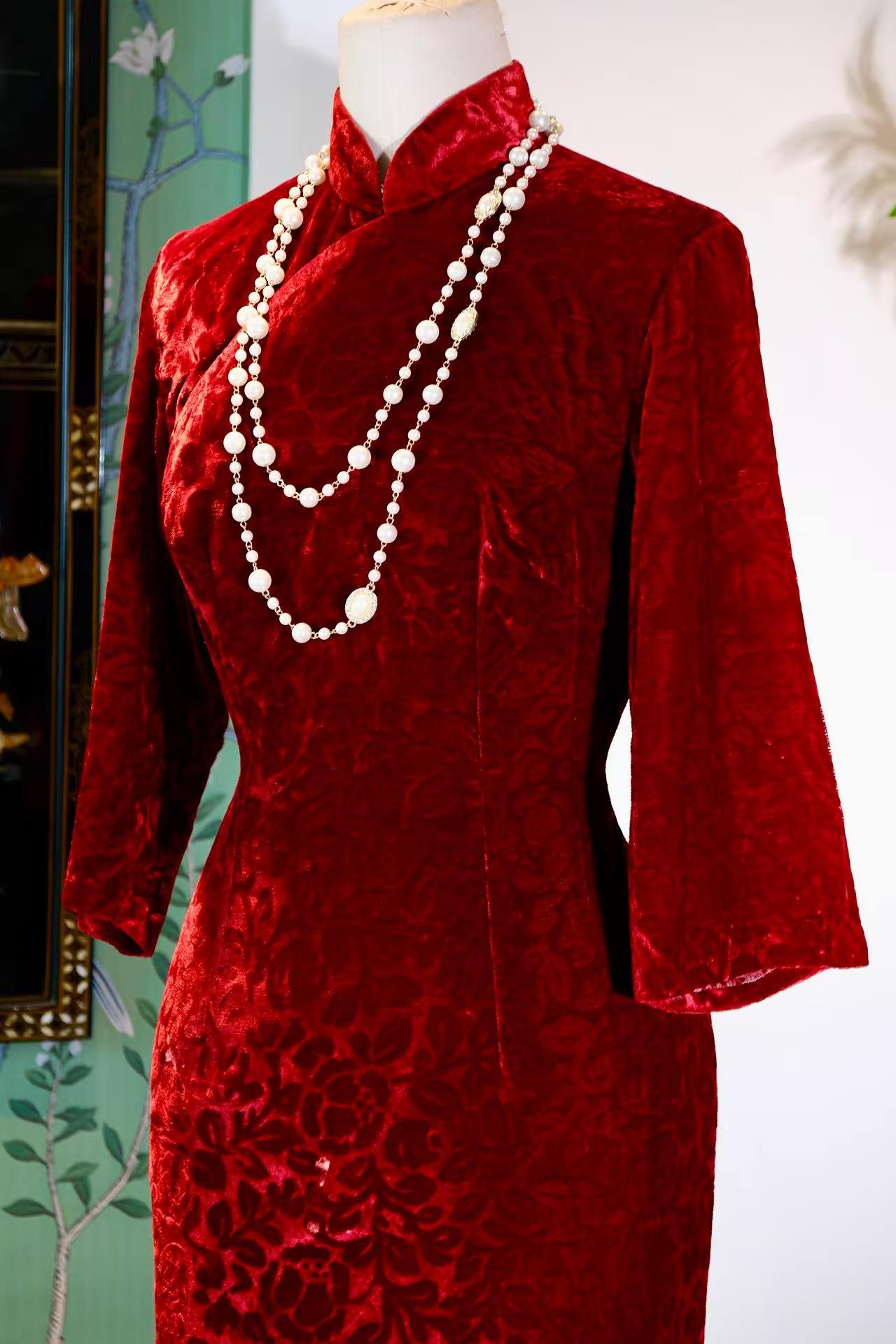
当指尖触碰到这件酒红色压花丝绒旗袍的刹那,仿佛触到了六十年代台湾岛上的温润时光。丝绒面料上,暗纹如月下花影般舒展,细看是缠枝牡丹与卷草纹的交叠——牡丹花瓣以浮雕般的压花工艺凸起,边缘却晕染着丝绒特有的柔光,宛如《长物志》中“花色欲艳,丝理欲细”的雅趣;卷草纹则如流水般蜿蜒其间,暗合宋代“折枝花”构图的疏朗,却又带着民国以来西风东渐的曲线韵律。这种“压花”工艺,在六十年代的台湾尚属高端制衣技艺:工匠需将丝绒面料置于铜制花版与软木模具之间,经高温压制,使绒毛在压力下形成凹凸纹理,既保留了丝绒的华贵,又增添了触手可及的立体诗意。
这件旗袍的诞生地,是六十年代台北大稻埕的旗袍工坊。彼时台湾丝绒面料多从日本进口,而旗袍工艺则由江浙迁台的老师傅传承——他们将上海“海派旗袍”的修身剪裁,与台湾本土的细腻审美熔于一炉。七分袖的设计,既保留了传统旗袍的端庄,又融入了六十年代女性参与社会活动的便利需求。腰身处两道暗省,将女性曲线勾勒得含蓄而流畅,正如张爱玲在《更衣记》中所言:“旗袍的紧身,是为了显出‘线条’,这线条是中国女子的‘风骨’。”
它的稀缺性,藏在时光的褶皱里。六十年代台湾的压花丝绒旗袍,多用于重要场合,如婚宴、节庆或外交活动,存世量本就稀少。而这件旗袍的丝绒面料,经岁月沉淀愈发显出“旧红”的醇厚——非新制丝绒的鲜亮,而是如陈年胭脂般,在光线下泛着“绛纱”与“朱砂”交织的微光,恰似《红楼梦》中“软烟罗”的质感:“若单拿出来做帐子,必得配着银红的纱,才好看。”更难得的是,其压花纹样保存完好,绒毛未因岁月而倒伏,暗纹依旧清晰如新,这在存世的古董旗袍中堪称凤毛麟角。
今日重观这件旗袍,它不仅是衣,更是一段凝固的历史。丝绒上的压花,是六十年代台湾工匠对“美”的执着;酒红色的沉静,是那个时代女性“外柔内刚”的精神写照;而每一道剪裁,都在诉说着“衣以载道”的东方美学。正如艺术史家巫鸿所言:“衣物是身体的延伸,也是时代的镜像。”这件旗袍,正是六十年代台湾社会风貌与审美理想的绝佳镜像,其艺术价值与历史稀缺性,足以让每一位爱衣之人,在触摸它的瞬间,与半个世纪前的风华,悄然相逢。
Crimson Dew and Fragrant Velvet: A Historical Portrait of a 1960s Taiwanese Embossed Velvet Qipao
Measurements / Size Guide:
Bust / Waist / Hips: 94/74/104 cm
Total Length: 112 cm
Detailed Description:
The Texture of Time: "Shadowed Flowers Beneath the Moon"
The moment your fingertips touch this wine-red embossed velvet qipao, you are transported to the gentle, humid days of 1960s Taiwan. The dark patterns unfurl across the velvet like floral shadows under moonlight—a meticulous layering of intertwined peonies and scrolling grass motifs. The peony petals rise in relief through a high-temperature embossing process, their edges softened by the velvet’s natural luster. This echoes the refined taste described in the Treatise on Superfluous Things: "Colors should be vivid, yet the silk texture fine." The scrolling grass flows between the blooms with the airy composition of Song Dynasty "broken branch" paintings, yet carries the rhythmic curves of Western-influenced Modernism.
The Craft: A Fusion of Shanghai Soul and Island Grace
This garment was born in the qipao workshops of Dadaocheng, Taipei. During the 1960s, high-end velvet was often imported from Japan, while the tailoring techniques were preserved by master craftsmen who had migrated from Jiangsu and Zhejiang. They fused the body-conscious "Haipai" (Shanghai Style) cut with the delicate local aesthetics of Taiwan. The three-quarter sleeve design preserves traditional dignity while accommodating the practical needs of 1960s women entering social and professional spheres. Two subtle darts at the waist outline the silhouette with a fluid restraint—fitting Eileen Chang's description: "The tightness of the qipao is to reveal 'lines,' and these lines are the 'strength' of Chinese women."
The Rarity: A Survivor in Aged Crimson
The rarity of this piece lies within the folds of history. In 1960s Taiwan, embossed velvet qipaos were reserved for momentous occasions—weddings, festivals, or diplomatic events—making their survival infrequent. The fabric has aged into a mellow "old red," lacking the harsh brightness of new velvet. Instead, it glows with a deep shimmer of cinnabar and crimson, reminiscent of the "Soft Smoke Gauze" from Dream of the Red Chamber. Remarkably, the embossed patterns remain crisp and the nap of the velvet has not collapsed over half a century, a condition that is truly one in a million among surviving vintage garments.
Conclusion: A Mirror of an Era
This qipao is more than mere clothing; it is a frozen segment of history. The embossing represents the dedication of 1960s Taiwanese artisans to beauty, while the quiet wine-red hue mirrors the "soft outside, strong inside" spirit of the women of that era. Every cut speaks to the Eastern aesthetic that "clothing carries the Way." As art historian Wu Hung noted: "Clothing is an extension of the body and a mirror of the times." This piece is a perfect reflection of 1960s Taiwanese society and aesthetic ideals.