深圳溯源
Couldn't load pickup availability
衣服尺寸:
胸围/腰围/臀围:100/94/106 厘米
衣长:108 厘米
细节描述:
在时光的织机里,有些织物能留住一个时代的呼吸。这件上世纪六十年代香港制造的织锦缎旗袍,便是一段凝固的岁月诗篇,将东方美学的典雅与港岛风华的摩登,织进了每一缕丝线之中。
图案:竹影摇风,暗香浮动
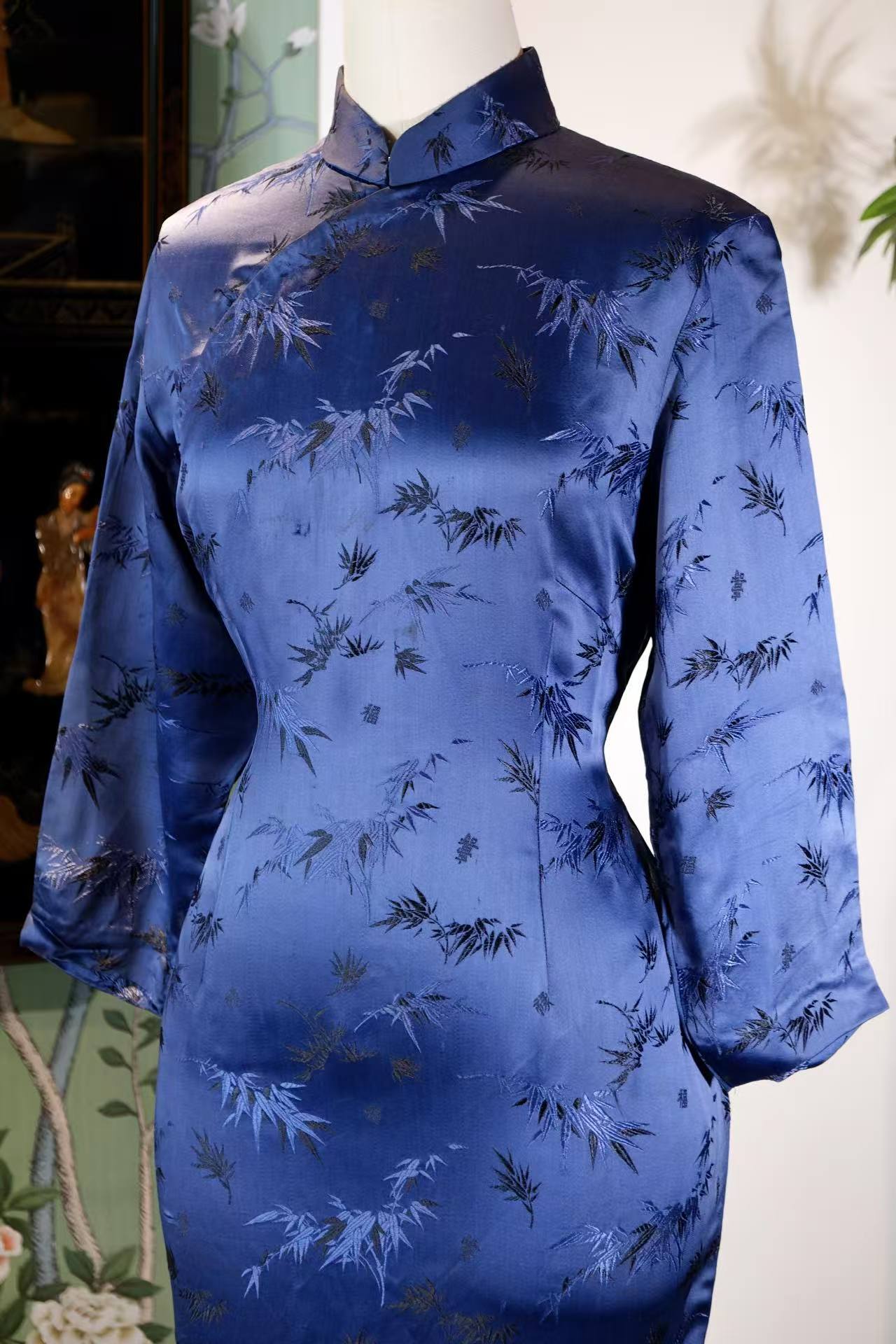
旗袍通体以深邃的宝蓝色为底,如静谧夜空,又似深潭碧水。其上以提花工艺织就的竹叶纹样,疏密有致,随风摇曳。竹枝以浅蓝与墨色丝线勾勒,叶片则以略浅的蓝调呈现,在光线下泛着温润的光泽,仿佛月光穿过竹林,留下斑驳的影子。竹叶的形态并非写实,而是经过艺术提炼,带有中国画的写意韵味,寥寥数笔,便勾勒出“未出土时先有节,及凌云处尚虚心”的君子风骨。这种“暗花”织法,使得图案不张扬却耐人寻味,随着穿着者的步履轻移,竹影仿佛在缎面上流动,平添几分灵动与含蓄。
故事:香江旧梦,衣香鬓影
上世纪六十年代的香港,正处于东西方文化交汇的黄金时期。旗袍,作为当时女性衣橱中的必备单品,既承载着传统礼仪的庄重,也融入了现代都市的时尚气息。这件旗袍,或许曾属于一位穿梭于中环写字楼与太平山顶派对间的摩登女郎,亦或是某位书香门第的大家闺秀,在茶楼听曲、戏院观影时,用它来展现自己的品味与风韵。
当时的香港制衣业,尤其是高端定制旗袍,工艺极为考究。从选料、裁剪,每一道工序都凝聚着手艺人的匠心。织锦缎作为顶级面料,其生产本身就需要复杂的提花机和精湛的织造技术。这件旗袍的剪裁,贴合人体曲线,却又不过分紧绷,保留了传统旗袍的端庄与含蓄,同时通过流畅的线条,展现出女性的柔美身姿。它见证了那个时代香港女性的自信与优雅,是她们在时代浪潮中,坚守自我风格的一种表达。
艺术风格与稀缺性:织金错彩,古韵今风
从艺术风格上看,这件旗袍完美体现了“海派旗袍”与“港式风格”的融合。它既有海派旗袍的精致与考究,如对领口、袖口、开衩等细节的注重,又融入了香港特有的国际化视野与现代审美,使得整体造型更为简洁大气。宝蓝色与竹叶纹样的搭配,是典型的中国传统色彩与纹样的运用,蓝色在中国文化中象征着宁静、深远与智慧,而竹子则代表着坚韧、高洁与虚心,两者结合,赋予了这件衣物深厚的文化内涵。
其稀缺性则体现在几个方面:首先是年代久远,历经半个多世纪的岁月洗礼,保存如此完好的古董旗袍已属凤毛麟角。其次是面料珍贵,织锦缎的生产工艺复杂,成本高昂,在当时便是奢侈品,如今更是难以复制。再者,这件旗袍的图案设计与剪裁工艺,都代表了当时香港制衣业的最高水准,是那个特定历史时期工艺与审美的结晶。正如《天工开物》所言:“凡织花文必用嘉湖,出口、出水,皆干丝为经,则任从提挈,不忧断接。他省者即勉强提花,潦草而已。”足见当时对织锦工艺的严苛要求。
这件蓝缎竹影旗袍,不仅仅是一件衣物,更是一件流动的艺术品,一段可触摸的历史。它静静地诉说着那个年代的故事,等待着有缘人,去续写它新的篇章。
备注:微瑕特价
Measurements / Size Guide:
Bust / Waist / Hips: 100/94/106 cm
Total Length: 108 cm
Detailed Description:
In the loom of time, certain fabrics capture the very breath of an era. This silk brocade qipao, crafted in 1960s Hong Kong, is a solidified poetic movement, weaving the elegance of Oriental aesthetics and the modern grace of the island’s heyday into every silken thread.
The qipao features a profound royal blue base, reminiscent of a serene night sky or the deep, clear waters of a hidden pool. Upon this canvas, the bamboo leaf patterns are created through a sophisticated jacquard weaving process, arranged with varying density to suggest a gentle sway in the breeze. The bamboo stalks are outlined with light blue and inky silk threads, while the leaves appear in a slightly paler blue tone, emitting a warm luster under the light—as if moonlight were filtering through a bamboo grove, leaving mottled shadows behind. The form of the bamboo is not literal but artistically refined, carrying the freehand (xieyi) charm of Chinese ink painting. With just a few strokes, it captures the gentlemanly character: "having integrity before emerging from the earth, and remaining humble even when reaching the clouds." This "hidden floral" (anhua) weaving technique ensures the pattern is understated yet thought-provoking; as the wearer moves, the bamboo shadows seem to flow across the satin, adding a layer of agility and reserve.
Hong Kong in the 1960s was in the golden age of intersection between Eastern and Western cultures. The qipao, an essential staple in a woman's wardrobe at the time, carried the solemnity of traditional etiquette while absorbing the fashionable aura of a modern metropolis. This garment might have belonged to a modern lady navigating between the office buildings of Central and parties at Victoria Peak, or perhaps a daughter of a scholarly family, wearing it to showcase her taste and charm while listening to melodies in a teahouse or watching a film at the theater.
During that period, the Hong Kong garment industry—especially high-end bespoke qipao tailoring—was exceptionally meticulous. From fabric selection to cutting, every step condensed the craftsman's ingenuity. Silk brocade, as a top-tier material, required complex jacquard looms and exquisite weaving techniques for its production. The tailoring of this qipao fits the human silhouette without being overly tight, preserving the dignity and restraint of the traditional qipao while revealing a woman's soft posture through fluid lines. It stands as a witness to the confidence and elegance of Hong Kong women in that era, serving as an expression of their adherence to personal style amidst the shifting tides of the times.
From an artistic perspective, this qipao perfectly embodies the fusion of the "Shanghai-style" (Haipai) and "Hong Kong-style" tailoring. It possesses the exquisite refinement of the Shanghai legacy—seen in the attention to the collar, cuffs, and slits—while integrating Hong Kong’s unique international vision and modern aesthetic, resulting in a more concise and atmospheric silhouette. The pairing of royal blue with bamboo motifs is a classic application of traditional Chinese colors and patterns. Blue symbolizes tranquility, depth, and wisdom in Chinese culture, while bamboo represents resilience, noble character, and humility. Together, they endow the garment with profound cultural connotations.
Its scarcity is manifested in several ways: First is its age; after more than half a century of time’s baptism, a well-preserved antique qipao like this is truly as rare as "phoenix feathers and unicorn horns." Second is the preciousness of the fabric; the production of silk brocade is complex and costly, making it a luxury item even then, and nearly impossible to replicate today. Furthermore, the pattern design and tailoring craftsmanship represent the highest standards of the Hong Kong garment industry at that specific historical moment. As Tiangong Kaiwu (The Exploitation of the Works of Nature) states: "For weaving floral patterns, one must use Jiaxing and Huzhou silk... then it can be lifted and managed without worry of breakage." This illustrates the rigorous requirements for brocade craftsmanship at the time.
This "Bamboo Shadows on Blue Satin" qipao is more than just a piece of clothing; it is a moving work of art and a touchable piece of history. It quietly narrates the stories of that era, waiting for a kindred spirit to continue its new chapter.
PS:As-is condition with minor vintage wear; price adjusted accordingly.