深圳溯源
Couldn't load pickup availability
衣服尺寸:
胸围/腰围/臀围:86/70/96 厘米
衣长:110 厘米
细节描述:
在时尚的长河中,总有一些衣物,如同时间的琥珀,凝固了某个特定时代的审美、工艺与气韵。这件上世纪六十年代产于台湾的蔷薇羊毛时装款古董旗袍,便是这样一件承载着历史温度与艺术灵魂的珍品。
一、图案:蔷薇盛放,典雅与生机的交响
这件旗袍最引人注目的,莫过于其上遍布的蔷薇图案。
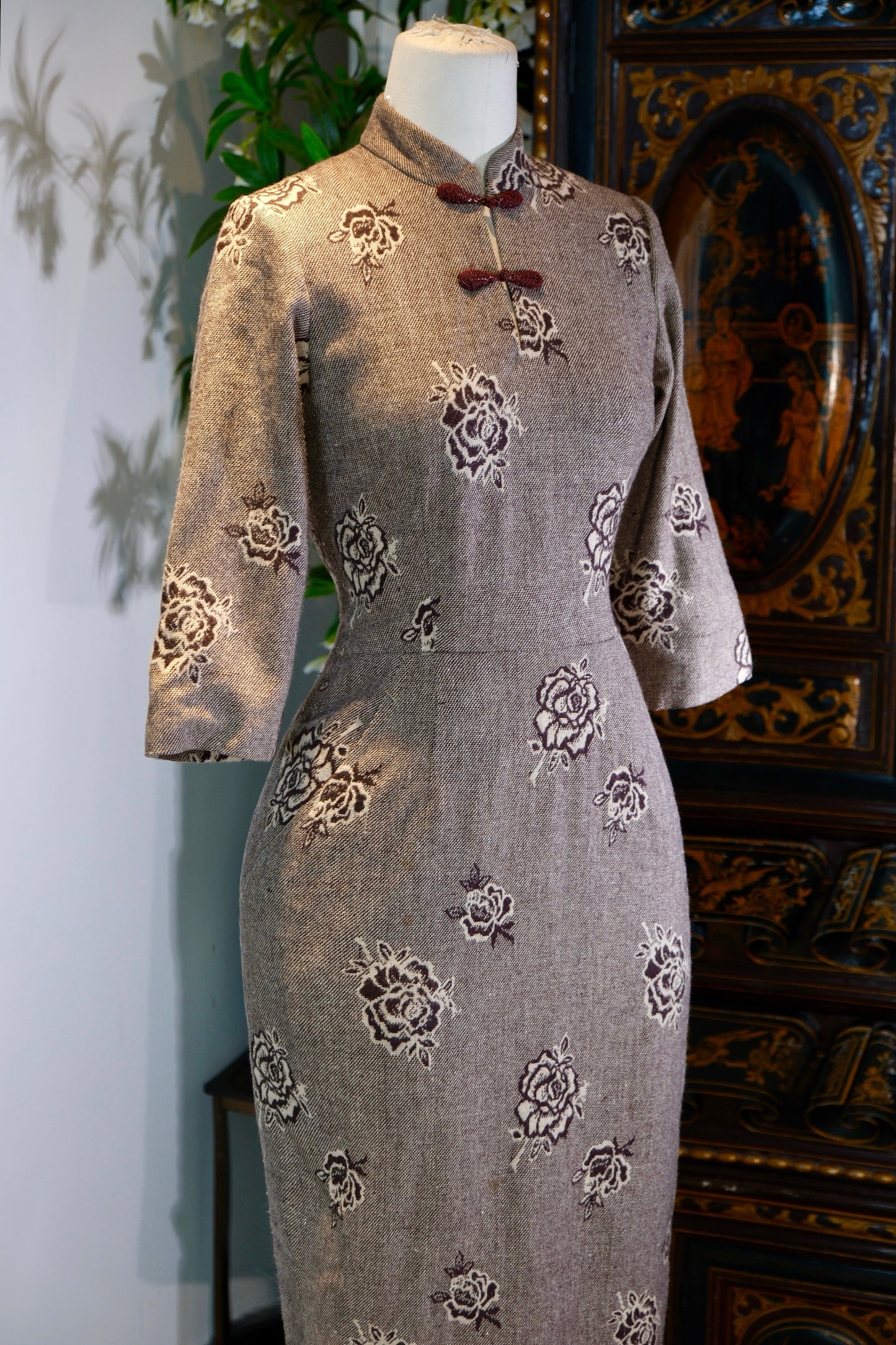
- 纹样设计:蔷薇花型饱满,花瓣层叠,以深褐与米白(或浅金)两色交织呈现。花朵并非简单的平面印花,而是通过羊毛织物特有的提花或织锦工艺,使得图案具有浮雕般的立体感与肌理感。花叶舒展,枝蔓隐约,既有中国古典花卉的写意韵味,又融入了当时西方流行的装饰艺术风格(Art Deco)的几何化倾向,显得典雅而不失活泼。
- 布局与色彩:蔷薇图案以散点式布局均匀分布于灰褐色的羊毛底料之上。灰褐色调沉稳内敛,如同秋日午后的阳光,温润而富有质感。蔷薇的深色轮廓与浅色花蕊在底料上跳跃,形成鲜明而和谐的对比,既不喧宾夺主,又点睛提神,仿佛暗夜中的点点星光,又似旧时光里悄然绽放的温柔记忆。这种色彩搭配,既符合六十年代追求的自然、质朴风尚,又不失女性的柔美与高贵。
二、故事:海峡彼岸的时尚印记
上世纪六十年代的台湾,正处于社会转型与文化交融的特殊时期。
- 时代背景:彼时,旗袍作为中华女性服饰的代表,在台湾依然盛行,但已开始吸收西方时装的剪裁理念与面料技术,向着更现代化、实用化的方向发展。这件旗袍正是这一“时装化”趋势的产物。它摒弃了传统旗袍过于繁复的装饰,采用更为挺括保暖的羊毛面料,适应了当时都市女性日益丰富的社交与职业需求。
- 工艺与产地:台湾在当时以其精湛的纺织工艺闻名,这件旗袍选用的羊毛面料,手感厚实而细腻,保暖性佳,显示出当时台湾纺织业的先进水平。其剪裁合体,线条流畅,立领、盘扣、侧开衩等传统元素被巧妙地保留并加以改良,七分袖的设计更显干练与时尚。每一针每一线,都凝结着那个时代匠人的心血与智慧。
三、艺术风格与稀缺性:穿越时空的孤品
这件旗袍的艺术风格,是东方古典美学与西方现代设计的完美融合。
- 艺术风格:它既有中国传统服饰的含蓄与典雅(如立领的端庄、盘扣的精致),又体现了六十年代国际时尚界推崇的简洁线条与实用主义。蔷薇图案的运用,既可视为对中国传统“花开富贵”吉祥寓意的延续,也可解读为对西方浪漫主义情怀的呼应。其整体风格,正如林语堂先生所言:“人生在世,还不是有时笑笑人家,有时给人家笑笑。”这件旗袍,便是以一种优雅的姿态,笑看风云变幻,从容走过岁月。
- 稀缺性:“衣不如新,人不如故”,而对于古董衣而言,却是“衣愈旧,情愈浓,价值愈珍”。历经半个多世纪的风霜,能够如此完好地保存下来的六十年代台湾产羊毛旗袍实属凤毛麟角。其面料的特殊性、图案的独特性、工艺的精湛性以及背后所承载的时代记忆,都决定了它的不可复制性与极高的收藏价值。它不仅仅是一件衣物,更是一段历史的见证,一种文化的传承,一份可以触摸的旧日情怀。
拥有这件旗袍,便如同拥有了一段凝固的时光。它适合在重要的场合穿着,让穿着者在举手投足间散发出独特的古典韵味与现代知性;它也适合被精心收藏,作为一件传家之宝,将这份跨越时代的美丽与故事,代代相传。
Measurements / Size Guide:
Bust / Waist / Hips: 86/70/96 cm
Total Length: 110 cm
Detailed Description:
In the long river of fashion, certain garments act like amber, freezing the aesthetics, craftsmanship, and spirit of a specific era. This 1960s Taiwanese-made rose-patterned wool "Fashion-Style" antique cheongsam (qipao) is one such treasure, carrying historical warmth and an artistic soul.
The most striking feature of this qipao is the pervasive rose motif.
Pattern Design: The roses are full-bodied with layered petals, presented in an interweaving of deep brown and cream-white (or pale gold). These are not simple flat prints; the inherent jacquard or brocade techniques of the wool fabric give the patterns a sculptural relief and tactile texture. The stretching leaves and subtle vines carry the freehand charm of classical Chinese floral art while integrating the geometric tendencies of Art Deco, appearing both elegant and spirited.
Layout and Palette: The roses are arranged in a "scattered-point" layout across a grey-brown wool base. This base tone is steady and reserved, like autumn afternoon sunlight—warm and textured. The dark silhouettes and light stamens of the roses dance upon the fabric, creating a vivid yet harmonious contrast. Like starlight in a dark night or tender memories blooming in old times, this palette aligns with the 1960s pursuit of natural, rustic fashion without losing feminine grace.
Taiwan in the 1960s was in a unique period of social transformation and cultural fusion.
Era Background: At that time, while the qipao remained a representative garment for Chinese women, it began to absorb Western tailoring concepts and fabric technologies, evolving toward modernization and practicality. This "Fashion-Style" qipao is a product of this trend. It discarded redundant decorations in favor of crisp, warm wool, catering to the increasingly rich social and professional lives of urban women.
Craftsmanship and Origin: Taiwan was renowned for its exquisite textile industry. The wool chosen for this piece is thick yet delicate, providing excellent warmth and showcasing the advanced level of the industry at the time. The silhouette is streamlined, and traditional elements like the standing collar and frog buttons are cleverly retained and refined. The three-quarter sleeve design adds a touch of efficiency and modern flair.
The artistic style of this qipao is a perfect fusion of Eastern classical aesthetics and Western modern design.
Artistic Style: It possesses the modesty of traditional Chinese attire (the dignity of the collar, the delicacy of the buttons) while embodying the clean lines and utilitarianism championed by the 1960s international fashion world. The rose motif can be seen as a continuation of the Chinese "wealth and honor" symbolism or a response to Western Romanticism. As Lin Yutang once suggested, life is about laughing at others and being laughed at in turn; this qipao stands with an elegant posture, watching the changing winds of time with composure.
Scarcity: For antique clothing, the older the garment, the deeper the sentiment and the rarer the value. It is truly a "phoenix feather" rarity to find a 1960s Taiwanese wool qipao preserved so perfectly. Its specific material, unique pattern, and the era-specific memories it carries make it irreplaceable. It is a touchable piece of old-world sentiment.
To own this qipao is to own a segment of frozen time. It is suitable for important occasions, allowing the wearer to exude classical charm and modern intellect; it is also a "family heirloom" piece, passing down this cross-generational beauty and its stories from one age to the next.