深圳溯源
Couldn't load pickup availability
衣服尺寸:
胸围/腰围/臀围:98/86/104 厘米
衣长:115 厘米
细节描述:
在时尚的长河中,总有些衣物超越了蔽体的实用,成为凝固时光的艺术品。这件上世纪六十年代香港产的金丝绒旗袍,便是这样一件承载着历史温度与东方美学的珍品。它不仅仅是一件衣裳,更是一段关于风华、工艺与时代变迁的无声叙事。
一、图案的诗意:暗夜繁花,雍容绽放
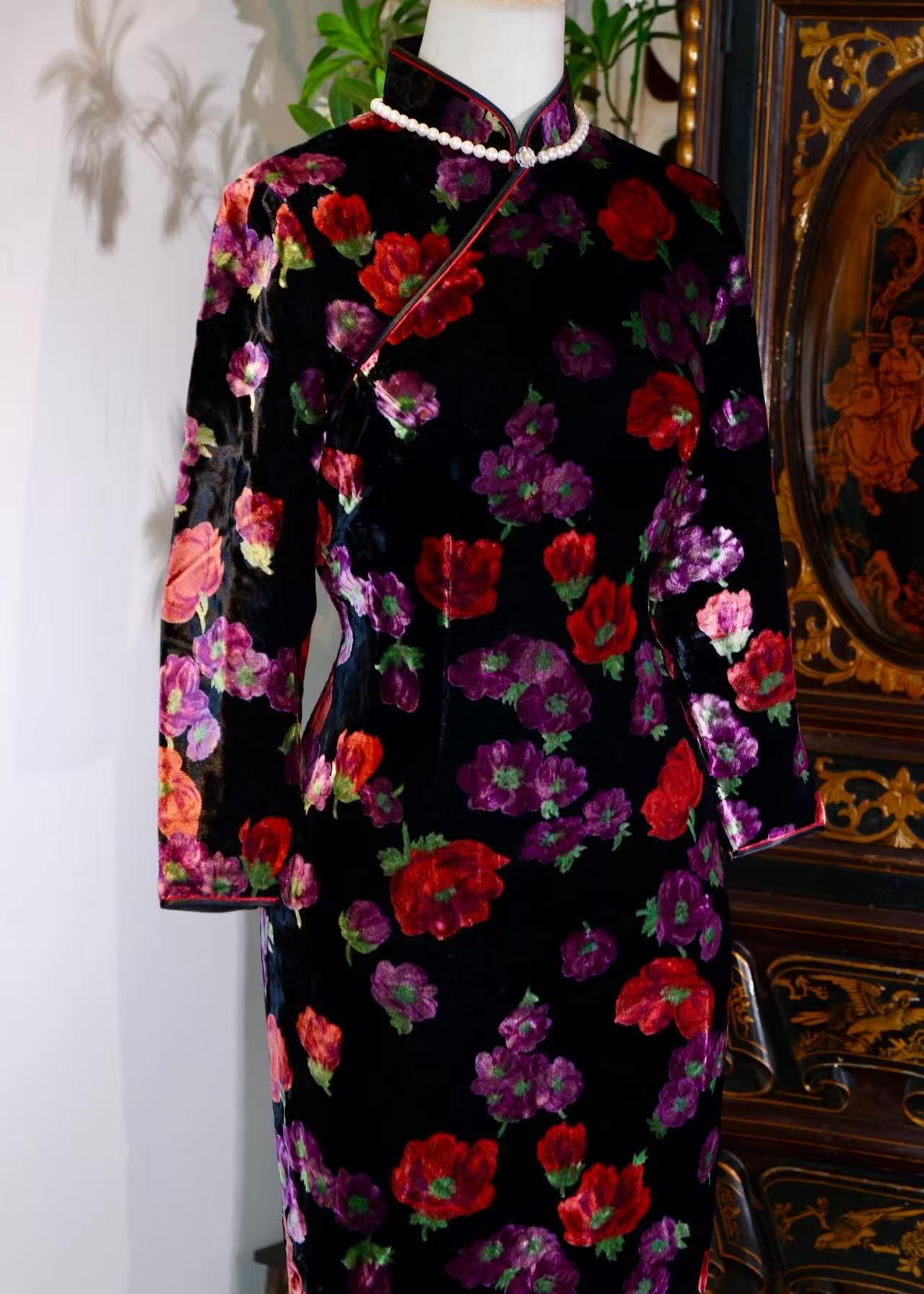
这件旗袍的底色是深邃如夜的黑色金丝绒,其独特的绒面质地,在光线下流转着低调而奢华的光泽,仿佛将旧上海的霓虹与维多利亚港的夜色都吸纳其中。在这沉静的背景之上,大朵的牡丹与罂粟花肆意绽放,构成了整件作品的视觉核心。
图案中的花朵,色彩浓郁而热烈。牡丹以正红、玫红为主调,花瓣层叠,雍容华贵,尽显“国色天香”之态。而紫色的罂粟花则带着一丝神秘与浪漫,与牡丹交织在一起,形成一种既古典又略带现代感的视觉冲击。花叶以嫩绿点缀,为整体增添了几分生机与灵动。这些花朵并非工整排列,而是错落有致,疏密得当,如同在暗夜中自由生长的花园,充满了生命力。这种“满地花”的纹样,在六十年代的香港颇为流行,它既继承了传统吉祥寓意,又融入了当时西方艺术中对于色彩和构图的现代探索,是东西方审美交融的绝佳体现。
二、古董衣的故事:香江旧梦,风华绝代
六十年代的香港,是东西方文化激烈碰撞与融合的熔炉。经济的腾飞带来了社会的变迁,女性的社会地位与自我意识也日益觉醒。旗袍,作为东方女性的代表性服饰,在这一时期也经历了重要的演变。它不再仅仅是闺阁中的传统礼服,更成为都市女性在社交、工作等场合展现自信与魅力的战袍。
这件金丝绒旗袍,正是那个时代的产物。它采用经典的斜襟、立领、七分袖设计,线条流畅,剪裁合体,完美勾勒出女性的窈窕身姿。金丝绒面料的选择,本身就暗示了其主人的不凡品味与身份。在那个年代,能够拥有一件如此考究的旗袍,无疑是时尚与地位的象征。我们可以想象,它或许曾属于一位在写字楼里运筹帷幄的女强人,或是一位在高级餐厅里谈笑风生的名媛。它见证过香江的纸醉金迷,也聆听过旧日时光的浅吟低唱。
三、艺术的考据与稀缺性:一针一线,皆是风华
从工艺上看,这件旗袍的稀缺性体现在多个方面。首先是面料。金丝绒(Velvet)在当时属于较为昂贵且难以驾驭的面料,其剪裁与缝制都需要极高的技艺,稍有不慎便会破坏绒面的光泽与整体效果。其次是图案的印染工艺。如此大面积、色彩丰富的花卉图案,在当时的印染技术下,要做到色彩饱满、图案清晰且不易褪色,实属不易。
再者,是细节的考究。领口、襟边、袖口及下摆处,均以细致的滚边工艺处理,不仅加固了衣物,更增添了精致感。这种对细节的极致追求,正是传统旗袍工艺的精髓所在。
正如张爱玲在《更衣记》中所言:“对于不会说话的人,衣服是一种暗语,随身带着的一种袖珍戏剧。”这件旗袍,便是这样一出无声的戏剧。它诉说着六十年代香港的风情万种,也诉说着东方女性独有的含蓄与张扬。在快时尚泛滥的今天,这样一件承载着历史、艺术与匠心的古董旗袍,其稀缺性与收藏价值不言而喻。它不仅是衣橱中的一件华服,更是一件值得细细品味与珍藏的文化瑰宝。
Measurements / Size Guide:
Bust / Waist / Hips: 98/86/104 cm
Total Length: 115 cm
Detailed Description:
In the long river of fashion, some garments transcend practical utility to become artworks that freeze time. This 1960s Hong Kong-made gilded velvet qipao is such a treasure, carrying historical warmth and Eastern aesthetics. It is not merely a dress, but a silent narrative of elegance, craftsmanship, and the shifting tides of an era.
The base color of this qipao is a black gilded velvet as deep as the night. Its unique texture ripples with a low-profile yet luxurious luster under the light, as if absorbing both the neon of old Shanghai and the evening hues of Victoria Harbour. Upon this quiet backdrop, large peonies and poppies bloom wantonly, forming the visual core of the piece.
The flowers in the pattern are rich and passionate in color. The peonies, dominated by true red and rose tones, feature layered petals that exude the "national grace and heavenly fragrance" of classical tradition. Meanwhile, the purple poppies carry a hint of mystery and romance, intertwining with the peonies to create a visual impact that is both classical and modern. Tender green leaves provide accents of vitality. These flowers are not arranged in a rigid grid but are scattered with intentional density—like a garden growing freely in the dark. This "all-over floral" (Mandi Hua) motif was highly popular in 1960s Hong Kong; it inherited traditional auspicious meanings while incorporating modern Western explorations of color and composition—a perfect fusion of East-West aesthetics.
The 1960s in Hong Kong was a melting pot where Eastern and Western cultures collided and merged. Economic takeoff brought social change, and the social status and self-awareness of women were awakening. The qipao, as the representative attire of Eastern women, underwent significant evolution during this period. It was no longer just a traditional gown for the inner chambers but became a "battle suit" for urban women to showcase confidence and charm in social and professional settings.
This gilded velvet qipao is a quintessential product of that era. It features a classic diagonal bodice (Xiejin), a standing collar, and three-quarter sleeves, with smooth lines and a tailored fit that perfectly outlines the graceful feminine silhouette. The choice of gilded velvet itself suggests the extraordinary taste and status of its original owner. In that age, owning such a sophisticated qipao was a definitive symbol of fashion and prestige. One can imagine it belonging to a female executive orchestrating affairs in an office building or a socialite laughing over dinner in a high-end restaurant. It witnessed the glamour of old Hong Kong and listened to the low hum of bygone days.
From a technical perspective, the scarcity of this qipao is reflected in several aspects:
Material Mastery: Gilded velvet (Velvet) was expensive and difficult to handle at the time. Cutting and sewing required supreme skill, as a single error could ruin the luster of the pile or the overall drape.
Dyeing Sophistication: Achieving such large-scale, color-rich floral patterns with the dyeing technology of the 1960s—ensuring saturation and clarity without fading—was a remarkable feat.
Exquisite Detailing: The collar, edges, cuffs, and hem are all treated with meticulous piping (Gumbian). This not only reinforced the garment but added a layer of refined delicacy. This pursuit of detail is the very essence of traditional qipao craftsmanship.
As Eileen Chang wrote in Chronicle of Changing Clothes: "To those who cannot speak, clothes are a kind of secret language, a pocket drama carried with oneself." This qipao is exactly that—a silent drama. It speaks of the myriad charms of 1960s Hong Kong and the unique mix of reserve and flamboyance in Eastern women. In today’s world of fast fashion, such an antique qipao—carrying history, art, and heart—possesses undeniable scarcity and collectible value. It is not just a beautiful garment in a wardrobe, but a cultural treasure worthy of deep appreciation.