深圳溯源
Couldn't load pickup availability
衣服尺寸:
胸围/腰围/臀围:96/78/96 厘米
衣长:109 厘米
细节描述:
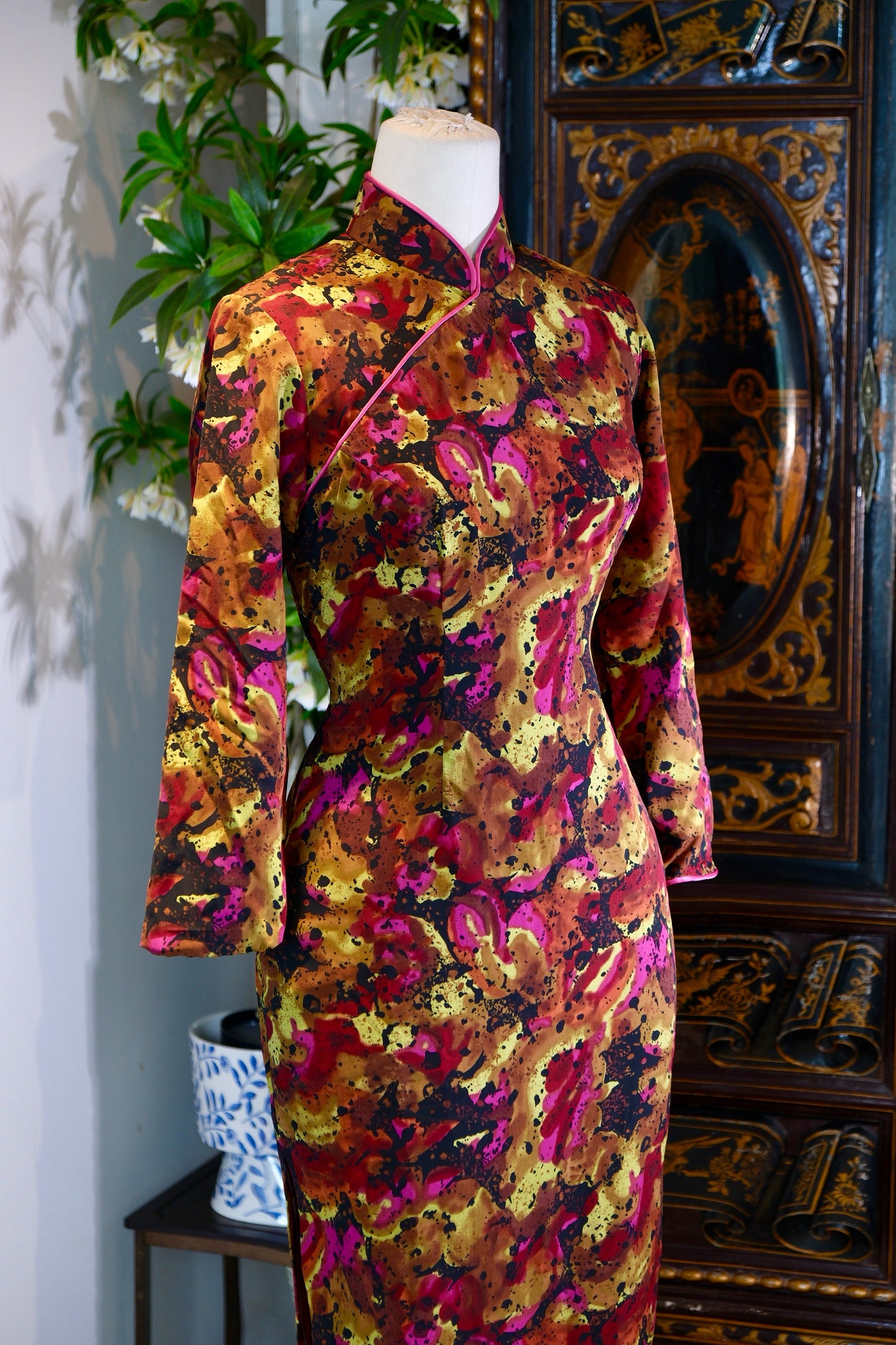
这件旗袍最摄人心魄之处,在于其面料纹样。它完全摒弃了传统旗袍中常见的具象花鸟、龙凤或几何纹样,转而采用了一种极具抽象表现主义风格的油画印花。
- 色彩构成:图案以浓郁的土黄、赭石为底色,仿佛秋日的大地或陈年的宣纸。在此基础上,大面积的洋红与品红色块肆意流淌,如同泼墨般晕染开来。深邃的墨黑斑点与线条穿插其中,起到了“压阵”的作用,增加了画面的层次感与重量感。
- 笔触感:这种印花并非规整的印染,而是模仿了油画笔触的厚重与肌理。色块边缘模糊而自由,既有类似张大千晚年泼彩山水的写意,又带有西方野兽派马蒂斯式的色彩张力。
- 视觉隐喻:这不仅是布面上的花纹,更像是一幅流动的画作。它让人联想到夕阳下的残荷,或是暮色中燃烧的晚霞,充满了现代艺术的张力与不确定性。
香江旧梦:六十年代的摩登回响
这件旗袍诞生于上世纪六十年代的香港,那是一个新旧交替、中西交融的黄金时代。
- 时代背景:彼时的香港,正如张爱玲笔下所描绘的,是“华洋杂处”的熔炉。西方的现代艺术思潮随着贸易与文化交流涌入东方,与传统的东方美学发生了激烈的碰撞。这件旗袍正是那个时代的产物——它保留了旗袍经典的立领、斜襟和收腰剪裁,却在纹样上大胆拥抱了现代主义。
- 穿着者的想象:我们可以想象,这件旗袍曾属于一位受过良好教育、思想独立的女性。她或许穿着它出席过中环的鸡尾酒会,或是漫步在尖沙咀的街头。这件衣服见证了她在那个风云变幻年代里的优雅与从容。它不是为了取悦他人而穿,而是女性自我意识觉醒、追求个性表达的宣言。
孤本之美:稀缺性与艺术价值
在古董衣收藏界,这样一件油画抽象印花的旗袍具有极高的稀缺性与收藏价值。
- 工艺的绝响:这种复杂的油画感印花对当时的印染技术要求极高。为了还原油画的笔触与色彩过渡,往往需要多套色印染,成本不菲。这种面料在当时属于高端定制级别,产量极少。
- 不可复制性:与批量生产的现代成衣不同,这件古董旗袍上的每一个色斑、每一处色彩过渡都是独一无二的。岁月的沉淀赋予了面料一种独特的光泽与质感,这是现代工业印染无法模仿的。
- 艺术史价值:它不仅仅是一件服装,更是研究六十年代香港时尚史与现代设计史的实物标本。它证明了在那个年代,东方女性已经开始尝试用服装来表达现代艺术的审美趣味。
结语
这件六十年代香港产的油画抽象印花旗袍,是一首凝固的诗,是一幅流动的画。它以赭黄与洋红交织出时代的热烈,以抽象笔触书写着东方的摩登。它稀缺、独特,等待着下一位懂得欣赏它的主人,续写这段跨越半个世纪的香江旧梦。
Measurements / Size Guide:
Bust / Waist / Hips: 96/78/96 cm
Total Length: 109 cm
Detailed Description:
The most soul-stirring aspect of this cheongsam (qipao) is the fabric pattern. It completely abandons the figurative birds, flowers, dragons, or geometric motifs common in traditional qipaos, opting instead for an abstract expressionist oil-painting print.
Color Composition: The pattern uses rich earth yellow and ochre as its base, resembling autumn soil or aged rice paper. Upon this foundation, large splashes of carmine and magenta flow willfully, diffusing like splashed ink. Deep black spots and lines intersperse throughout, serving as an "anchor" (Ya Zhen) that adds a sense of hierarchy and weight to the visual field.
Tactile Brushstrokes: This is no ordinary uniform printing; it mimics the heavy texture and grain of oil painting brushstrokes. The edges of the color blocks are blurred and free, possessing both the freehand spirit of Zhang Daqian’s late-period splashed-color landscapes and the raw color tension of Matisse’s Fauvism.
Visual Metaphor: More than just a pattern on cloth, it is a fluid masterpiece. It evokes images of withered lotuses under a setting sun or burning clouds in the twilight—full of the tension and uncertainty characteristic of modern art.
Born in 1960s Hong Kong, this piece is a product of a golden era where the old gave way to the new and East met West.
Historical Context: The Hong Kong of that time, as depicted by Eileen Chang, was a melting pot of Chinese and Western cultures. Modern Western artistic trends surged eastward through trade and cultural exchange, colliding fiercely with traditional Eastern aesthetics. This qipao is a quintessential artifact of that era—retaining the classic standing collar, diagonal bodice, and cinched waist, while boldly embracing Modernism in its motif.
The Wearer's Silhouette: One can imagine this garment belonging to an educated, independent woman. Perhaps she wore it to a cocktail party in Central or strolled through the streets of Tsim Sha Tsui. This dress witnessed her grace and composure amidst a changing era. It was not worn to please others, but as a manifesto of self-awareness and personal expression.
In the world of vintage collecting, a qipao with such an abstract oil-painting print possesses immense scarcity and value.
The Swan Song of Craftsmanship: This complex, oil-like print demanded peak textile technology of the time. To replicate the brushstrokes and color transitions, multiple rounds of screen printing were required, incurring significant costs. Such fabric belonged to the realm of high-end bespoke tailoring, with extremely low production volumes.
Irreproducibility: Unlike mass-produced modern garments, every color spot and transition on this antique qipao is unique. The passage of time has bestowed the fabric with a specific luster and texture that modern industrial printing simply cannot replicate.
Art History Value: It is an empirical specimen for studying the history of Hong Kong fashion and modern design. It proves that even then, Eastern women were experimenting with using clothing to express the aesthetic tastes of modern art.
This 1960s Hong Kong-made abstract print cheongsam is a solidified poem, a fluid painting. It weaves the fervor of an era with ochre and magenta, and writes the modernity of the East with abstract strokes. Rare and unique, it awaits a discerning owner to continue this "Fragrant Harbor Dream" that has spanned half a century.