深圳溯源
Couldn't load pickup availability
衣服尺寸:
胸围/腰围/臀围:110/104/116 厘米
衣长:105 厘米
细节描述:
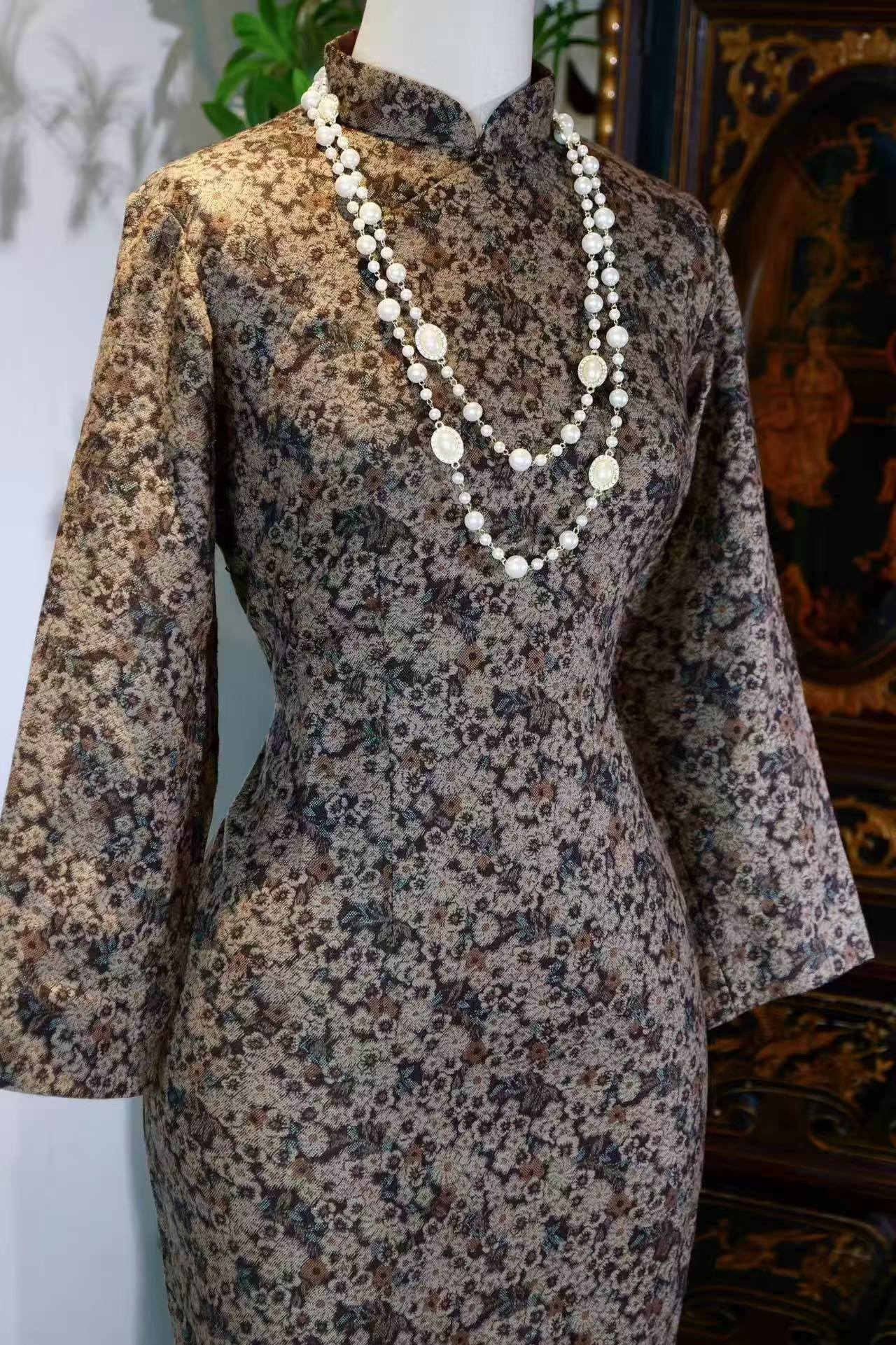
在时光的衣橱深处,总有一些衣物,它们不仅仅是布料与针线的结合,更是凝固了特定时代风韵与个人记忆的琥珀。眼前这件上世纪六十年代香港产的碎花古董旗袍,便是这样一件承载着历史温度与艺术灵光的珍品。它静默地立于模特架上,珍珠项链垂坠,仿佛在低语着一段关于香江的、优雅而内敛的往事。
一、图案的密语:繁花似锦与低调的奢华
这件旗袍最引人注目的,莫过于其通体覆盖的碎花图案。它并非那种张扬艳丽的俗世之花,而是一种经过精心设计的、充满秩序感与复古情调的“密花”。
- 色彩基调:整体色调沉稳而温暖,以大地色系为主,融合了深棕、浅褐、米黄与灰蓝。这种配色方案,既符合六十年代复古的审美趋向,又透露出一种历经岁月沉淀后的温润质感,如同老照片泛黄的边角,自带一种怀旧滤镜。
- 纹样构成:图案由无数细小的、几何化的花卉与枝叶构成,它们紧密排列,形成一种类似织锦或提花面料的视觉效果。花朵的形态并非写实,而是经过了抽象与简化,带有一种装饰艺术的风格。这种“碎”并非杂乱无章,而是一种“乱中有序”的繁复之美,远观如一片朦胧的花雾,近看则能发现每一朵小花都精雕细琢。
这种图案设计,在六十年代的香港旗袍中颇为典型。它既吸收了西方现代设计的简约线条,又保留了中国传统纹样的繁复与寓意,是中西文化交融的产物。它不像民国早期的旗袍那样素雅,也不似七十年代以后那样大胆奔放,而是处于一个微妙的平衡点上——既追求时尚,又恪守着东方女性的含蓄与端庄。
二、古董衣的故事:香江黄金时代的剪影
这件旗袍的故事,要从上世纪五六十年代的香港说起。那是一个特殊的年代,内地战乱频仍,大量资本、人才与文化精英南迁至香港,使得这座东方之珠迎来了经济与文化的“黄金时代”。电影业蓬勃发展,邵氏、电懋等电影公司制造了无数银幕传奇,而旗袍,正是那个时代香港女性最标志性的着装。
我们可以想象,这件旗袍的主人,或许是一位在写字楼里工作的白领,或许是一位电影明星,又或许是一位名媛。在那个年代,拥有一件量身定制的旗袍,是身份与品味的象征。她可能会穿着它去参加公司的年会,或是在周末与朋友去看一场电影,亦或是在某个重要的社交场合惊艳四座。
六十年代的香港旗袍,在剪裁上已经非常成熟。它继承了民国旗袍的修身特点,但更加强调女性的曲线美。高领、收腰、开衩,每一个设计都精准地勾勒出东方女性的曼妙身姿。而这件旗袍的七分袖设计,更是那个年代的流行元素,既保留了传统旗袍的端庄,又增添了一丝现代女性的干练与洒脱。
珍珠项链的搭配,更是点睛之笔。在六十年代,珍珠是优雅与高贵的代名词,与旗袍的搭配堪称经典。这串珍珠项链,大小不一,错落有致,与旗袍的碎花图案相得益彰,共同营造出一种“低调的奢华”氛围。
三、艺术风格与稀缺性:引经据典的解读
从艺术史的角度来看,这件旗袍的图案设计,可以追溯到中国传统的“缠枝纹”与“宝相花”纹样,但经过了现代化的改造。它摒弃了传统纹样的对称与庄重,转而采用更自由、更生活化的碎花形式,这与六十年代全球范围内兴起的“波普艺术”与“装饰艺术复兴”思潮不谋而合。
正如艺术史学家贡布里希在《秩序感》中所言:“装饰艺术的本质,在于通过重复与变化,创造出一种视觉上的韵律与和谐。”这件旗袍的碎花图案,正是这种“秩序感”的完美体现。它通过无数细小的、重复的花卉单元,构建出一个宏大而和谐的视觉整体,既满足了人们对繁复美的追求,又不会让人感到眼花缭乱。
而其稀缺性,则体现在以下几个方面:
- 年代久远:六十年代的古董旗袍,存世量本就稀少。经过半个多世纪的岁月洗礼,能够保存如此完好、图案依旧清晰的,更是凤毛麟角。
- 香港制造:六十年代的香港旗袍,以其精湛的工艺与独特的设计风格,在国际上享有盛誉。与上海旗袍的内敛、北京旗袍的华贵不同,香港旗袍更注重时尚与实穿性,是中西文化交融的典范。
- 文化符号:它不仅仅是一件衣服,更是一个时代的文化符号。它见证了香港的经济腾飞与文化繁荣,也承载了无数女性的青春记忆与梦想。
这件六十年代香港产的碎花古董旗袍,是一件集艺术性、历史性与稀缺性于一身的珍品。它以其独特的图案设计、精湛的工艺与深厚的文化底蕴,向我们讲述了一个关于香江旧梦的、优雅而动人的故事。它不仅仅是一件可以穿着的衣物,更是一件值得收藏与传承的艺术品。
Measurements / Size Guide:
Bust / Waist / Hips: 110/104/116 cm
Total Length: 105 cm
Detailed Description:
Deep within the wardrobe of time, some garments are more than a fusion of fabric and thread; they are amber, freezing the charm and personal memories of a specific era. This 1960s Hong Kong-made floral antique cheongsam (qipao) is such a treasure, carrying historical warmth and artistic "aura." Draped with a pearl necklace, it stands silently, whispering an elegant and restrained tale of old Hong Kong.
The most striking feature of this cheongsam is its all-over floral pattern. These are not the flamboyant, gaudy blossoms of the mundane world, but a meticulously designed "dense floral" pattern full of order and vintage sentiment.
Color Palette: The tones are steady and warm, dominated by an earthy palette of deep browns, light tans, beiges, and grayish-blues. This scheme aligns with 1960s retro aesthetic trends while revealing a mellow texture tempered by time—like the yellowed edges of an old photograph, possessing an innate nostalgic filter.
Motif Composition: The pattern consists of countless tiny, geometric flowers and leaves, tightly arranged to create a visual effect similar to brocade or jacquard. The forms are not realistic but abstracted and simplified, carrying an Art Deco flair. This "fragmented" detail is not chaotic; it is a complex beauty of "order within disorder." From afar, it looks like a hazy floral mist; up close, every tiny blossom reveals exquisite craftsmanship.
This design is typical of 1960s Hong Kong qipaos, absorbing the minimalist lines of Western modern design while retaining the complexity and symbolism of traditional Chinese motifs. It sits at a delicate equilibrium—pursuing fashion while upholding the reserve and dignity of the Oriental woman.
The story of this qipao begins in the 1950s and 60s. During this unique period, the southward migration of capital, talent, and cultural elites turned Hong Kong into the "Pearl of the Orient," ushering in a "Golden Age" of economic and cultural prosperity. As the film industry boomed with legends from Shaw Brothers and Cathay, the cheongsam became the most iconic attire for Hong Kong women.
We can imagine the owner: perhaps a white-collar professional in a Central office building, a film star, or a socialite. At that time, owning a bespoke cheongsam was a symbol of status and taste. She might have worn it to an annual corporate gala, a weekend movie date, or a pivotal social event.
By the 1960s, Hong Kong tailoring had reached full maturity. It inherited the slim-fit characteristics of the Republican era but placed greater emphasis on the female curve. The high collar, cinched waist, and side slits precisely contoured the graceful silhouette. The three-quarter sleeve design was a hallmark of the era—preserving traditional dignity while adding a touch of modern capability and panache. The choice of a pearl necklace is the finishing touch; in the 60s, pearls were synonymous with nobility, creating an atmosphere of "understated luxury."
From an art history perspective, the pattern design can be traced back to traditional Chinese "Intertwining Vine" and "Baoxiang Flower" motifs, but modernized. It eschews the symmetry and solemnity of tradition for a freer, more lifestyle-oriented floral form, coinciding with the global rise of Pop Art and the Art Deco revival of the 1960s.
As art historian E.H. Gombrich noted in The Sense of Order: "The essence of decorative art lies in creating visual rhythm and harmony through repetition and variation." The floral pattern of this qipao is a perfect manifestation of this "sense of order." Its scarcity is defined by several factors:
Temporal Distance: 1960s antique qipaos are increasingly rare. To find one preserved so well, with patterns so clear after half a century, is truly a feat.
Hong Kong Provenance: Hong Kong-made pieces were world-renowned for their craftsmanship. Unlike the reserved Shanghainese style or the opulent Beijing style, Hong Kong qipaos focused on fashion and wearability, serving as a model of East-West fusion.
Cultural Symbol: It is a cultural icon witnessing Hong Kong's economic takeoff and carrying the youthful memories and dreams of countless women.
This 1960s Hong Kong floral antique cheongsam is a masterpiece merging artistry, history, and scarcity. Through its unique design and profound cultural heritage, it tells an elegant and moving story of an old Hong Kong dream. It is not just a garment to be worn; it is a work of art to be cherished and passed down.