深圳溯源
Couldn't load pickup availability
衣服尺寸:
胸围/腰围/臀围:100/78/104 厘米
衣长:102 厘米
细节描述:
一、衣身图案:金线织就的暗夜星河
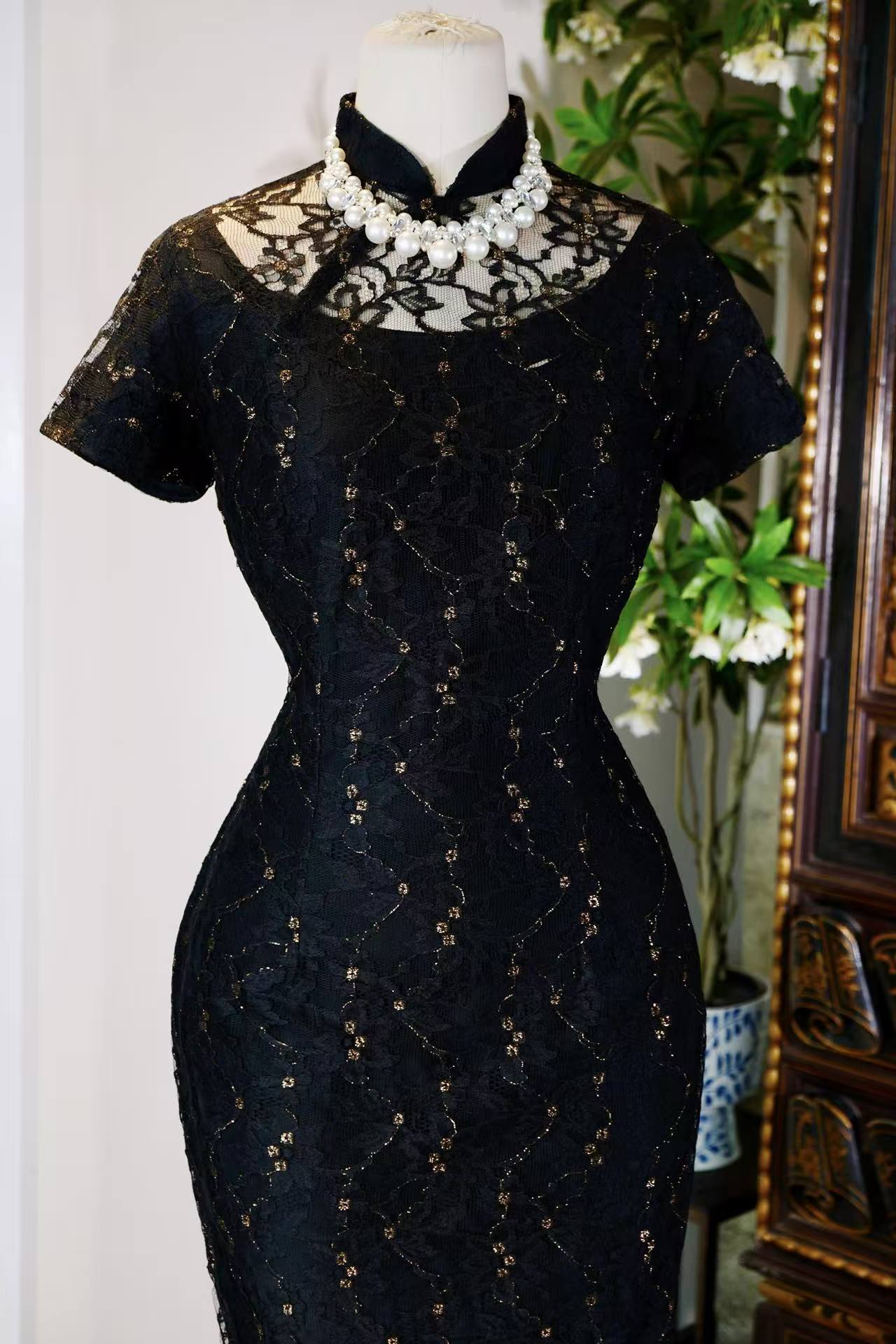
此件旗袍以法国进口Lamé金属蕾丝为衣身主体,黑色蕾丝为底,金线如游龙般穿梭其间,织就出连绵不绝的缠枝花卉纹样——近观可见玫瑰与忍冬藤蔓相互缠绕,花瓣边缘以细密的金线勾勒轮廓,花蕊处缀以微小的金箔圆点,似夜空中闪烁的星子;蕾丝网眼细密如蝉翼,透光时金线折射出细碎光芒,行走间衣袂轻摆,便如暗夜星河流动,华丽而不失含蓄。领口与肩部采用挖胸工艺,隐约露出白皙的肌肤,形成“犹抱琵琶半遮面”的东方美学意境。
二、古董衣的故事:东西方文明的针线对话
这件诞生于1960年代的旗袍,是特殊时代的产物。彼时香港作为“东方之珠”,汇聚东西方文化精髓:法国Lamé金属蕾丝通过远洋货轮抵达维多利亚港,被香港工匠以传统旗袍剪裁技艺重新解构——立领、斜襟、收腰、开衩,每一道线条都遵循中式旗袍“曲线玲珑”的审美,而金属蕾丝的运用,则是向西方高级定制工艺的致敬。
可想象一位香港名媛,在1965年的某个晚宴上身着此衣:珍珠项链与金线蕾丝相映成辉,开衩处若隐若现的腿部线条,既保留了东方女性的温婉,又透露出六十年代女性解放的思潮。它不是流水线上的产物,而是工匠一针一线缝制的孤品,每一处针脚都藏着时代的呼吸。
三、艺术风格与稀缺性:孤品中的“金丝雀”
从艺术风格看,此旗袍是“中西合璧”的典范:法式蕾丝的奢华与中式旗袍的典雅碰撞,形成独特的“海派复古”风格,与张爱玲笔下“旗袍是逃不掉的梦”不谋而合——金线蕾丝是梦的华彩,黑色底色是梦的深邃。其稀缺性更在于:Lamé金属蕾丝在1960年代属高端进口面料,产量稀少;而香港工匠将西方面料与东方剪裁结合的技艺,如今已近乎失传。现存世的六十年代港产蕾丝旗袍不足百件,如此件般保存完好、金线未褪、蕾丝无破损者,更是凤毛麟角。
它不仅是衣物,更是一件“可穿戴的艺术品”:触摸金线,能感受到六十年代的时尚脉搏;凝视蕾丝,能窥见东西方文明在针线间的温柔对话。正如《服饰与时尚》期刊所言:“古董旗袍的价值,不在于面料的昂贵,而在于它承载的时代记忆与文化基因。”这件黑金蕾丝旗袍,便是那基因中最华丽的一章。
Measurements / Size Guide:
Bust / Waist / Hips: 100/78/104 cm
Total Length: 102 cm
Detailed Description:
The body of this cheongsam (qipao) is primarily crafted from imported French Lamé metallic lace. Against a black lace base, golden threads weave through like wandering dragons, creating a continuous pattern of intertwining floral vines. A close inspection reveals roses and honeysuckle tendrils entwined, with petal edges outlined in dense gold thread and centers adorned with tiny gold-foil dots, resembling shimmering stars in the night sky. The lace mesh is as fine as a cicada's wing; when light passes through, the metallic threads refract a delicate brilliance. As the wearer moves, the garment flows like a midnight galaxy—opulent yet reserved. The neckline and shoulders feature a "keyhole" (挖胸) cutout, subtly revealing the skin and creating the Eastern aesthetic of "hiding half one's face behind a lute."
Born in the 1960s, this cheongsam is a product of a unique era. At that time, Hong Kong—the "Pearl of the Orient"—was a melting pot of Eastern and Western cultures. French Lamé metallic lace arrived at Victoria Harbour via ocean liners, only to be deconstructed and reimagined by Hong Kong artisans using traditional tailoring. While the standing collar, diagonal bodice, cinched waist, and side slits follow the "exquisite curves" of Chinese aesthetic, the use of metallic lace is a direct homage to Western Haute Couture.
One can imagine a Hong Kong socialite at a gala in 1965: her pearl necklace mirroring the golden lace, the silhouette of her legs flickering through the side slits. The garment preserves the gentleness of the Eastern woman while whispering the burgeoning thoughts of female liberation in the 60s. This is no assembly-line product but a one-of-a-kind piece hand-sewn stitch by stitch, with every seam holding the breath of an era.
Artistically, this cheongsam is a paragon of East-meets-West fusion. The luxury of French lace collides with the elegance of the Chinese qipao, forming a unique "Shanghainese Retro" style. It aligns perfectly with Eileen Chang’s sentiment that "the qipao is an inescapable dream"—the golden lace is the dream's splendor, and the black base its depth. Its scarcity is further heightened by the fact that Lamé lace was a high-end imported fabric in the 1960s with very limited yield. Moreover, the skill required to marry Western fabric with Eastern tailoring is a nearly lost art. Fewer than a hundred Hong Kong-made lace qipaos from the 1960s survive today; one in such pristine condition, with untarnished gold threads and undamaged lace, is truly a "rare bird."
It is more than clothing; it is a "wearable work of art." Touching the gold threads, one feels the fashion pulse of the 1960s; gazing at the lace, one glimpses the gentle dialogue between East and West. As the journal Costume and Fashion put it: "The value of an antique qipao lies not in the expense of the fabric, but in the era's memory and cultural genes it carries." This black-gold lace cheongsam is undoubtedly the most magnificent chapter of those genes.