1960s Italian Suiting and Hong Kong Beaded Qipao Set: Ms. Woo’s Midnight Galaxy
When the structural precision of Italian suiting met the visionary draftsmanship of Hong Kong’s master tailors, this 1960s heavily beaded ensemble emerged as the most luminous midnight galaxy within Ms. Woo’s wardrobe anthology. Breaking completely away from the singular framework of the traditional qipao, this silhouette operates as the ultimate material expression of cross-cultural technique and premium design philosophy.
I. Palette and Fabric: A Metallic Poem Against an Abyssal Canvas
The visual authority of this two-piece set relies on a commanding, high-contrast interlace of deep, light-absorbing black Italian suiting fabric and highly reflective metallic trim:
-
The Chromatic and Material Tension: Sourced during the mid-1960s, this premium black suiting wool was highly progressive, encoding an aura of mystery, noble prestige, and avant-garde rebellion. The textile possesses a proud, substantial structural skeleton and a subtle, sophisticated luster. Diverging from the fluid slipperiness of traditional silk satins, it emphasizes a structured, commanding softness—sculpting sharp, defensive lines while maintaining absolute anatomical comfort.
-
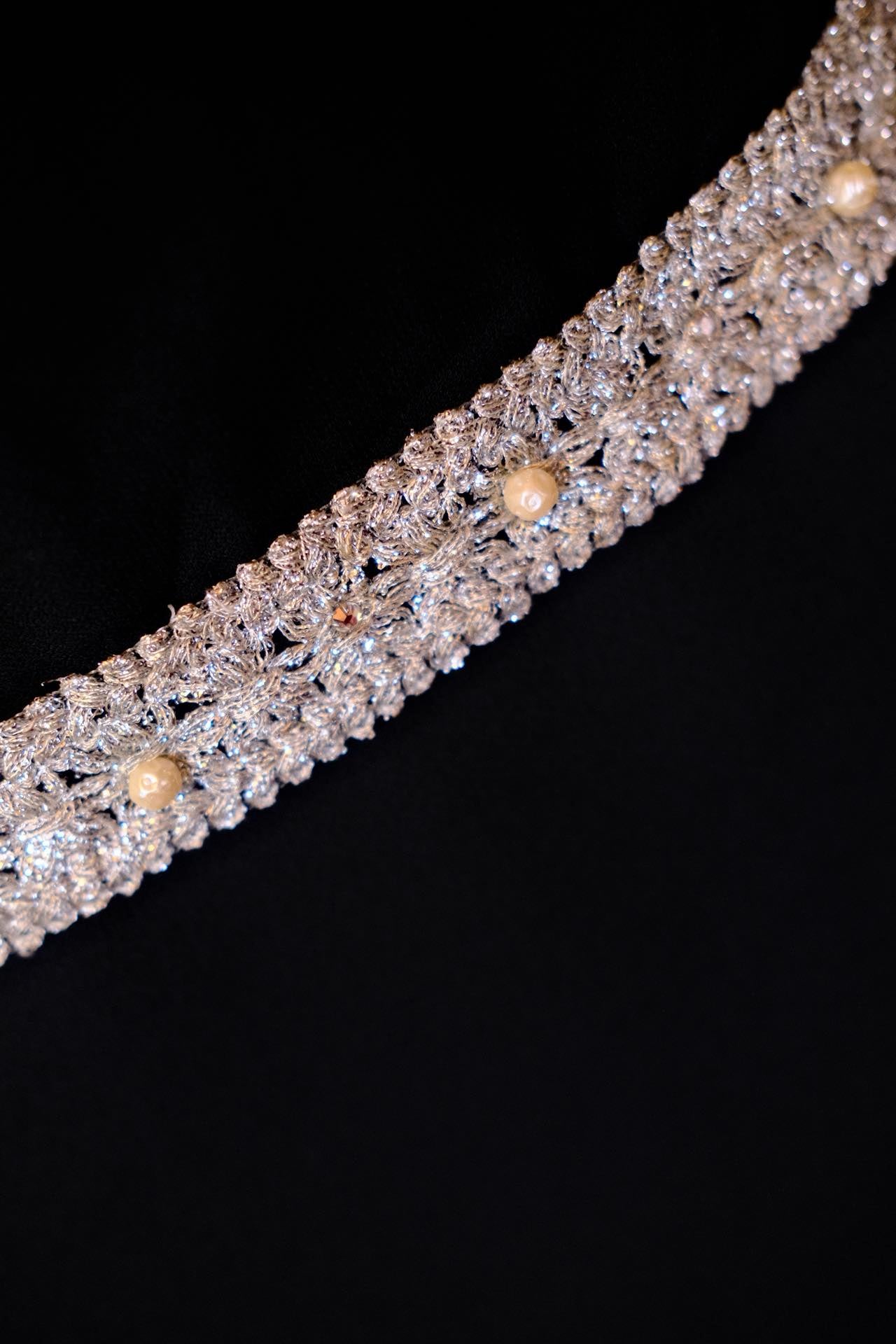
The Luminescent Accents: The collar, cuffs, and front placket are bordered with specialized metallic lace hand-woven from fine silver threads. Rendered in intricate floral and scrolling vine motifs, this shimmering border activates under directional lighting, transforming the garment into a "metallic poem" that glitters like a constellation with every movement of the posture.
II. Architecture and Silhouette: The Hybrid Geometries of Mid-Century Tailoring
The conceptual soul of this masterpiece resides in its ability to translate the sharp, tailored lines of Western outerwear through the serene, elegant drafting metrics of elite Hong Kong dressmaking:
-
The Multi-Layering Matrix: The ensemble is engineered across two independent components: a foundational high-neck, three-quarter sleeve qipao dress and a coordinating long-sleeve beaded outerwear top. This modular approach shatters the functional limits of traditional single-piece garment construction, gifting the wearer complete stylistic freedom.
-
The Structured Western Cover: The long-sleeve outerwear top features a flat, architectural shoulder plane, a subtly contoured waistline, and a naturally structural flared hem. This geometry masterfully reinterprets the definitive hourglass silhouette of mid-century Western suiting.
-
The Restrained Eastern Core: The interior qipao gown preserves a sharp standing mandarin collar and elegant three-quarter sleeves, tracing the body with clean, modernist lines. This high collar serves to beautifully elongate the neck profile while multiplying the ensemble's formal dignity and sense of ceremony.
III. Technical Details: Manual Tambour Beading and Artisan Precision
-
The Extreme Artistry of Hand-Beading: The collar, cuffs, and front openings of the upper jacket are encrusted with manual tambour beading. Every bead was meticulously chosen and hand-sewn by senior craftsmen to form complex botanical trails. This rich jewel-work mirrors the underlying silver lace, bouncing light across multi-faceted angles to create an unforgettable, shifting cosmic shimmer under evening lamps.
-
The Precision Silver Lace Edge-Work: The application of the silver filigree lace along the structural margins requires immense technical skill. It introduces a perfectly stable, crisp border that flawlessly balances the inherent structural stiffness of the European suiting fabric against the absolute flexibility of Eastern edge-work, keeping the lines sharp and clean down to the exact millimeter.
IV. Cultural Archiving: A Tactile Monument to the Globalized Executive
This two-piece ensemble stands as a flawless crystallization of 1960s globalized high fashion, capturing the exact historical moment when avant-garde Western tailoring textiles, European material luxury, and elite Hong Kong custom construction fused into a unified style philosophy.
It survives far beyond the boundaries of an archival wardrobe item; it operates as a living, wearable piece of fashion history. It documents Ms. Woo's legacy as a pioneering, globetrotting female entrepreneur commanding respect across international borders, permanently preserving the romance, industry, and uncompromising artistry of a golden era.