深圳溯源
Couldn't load pickup availability
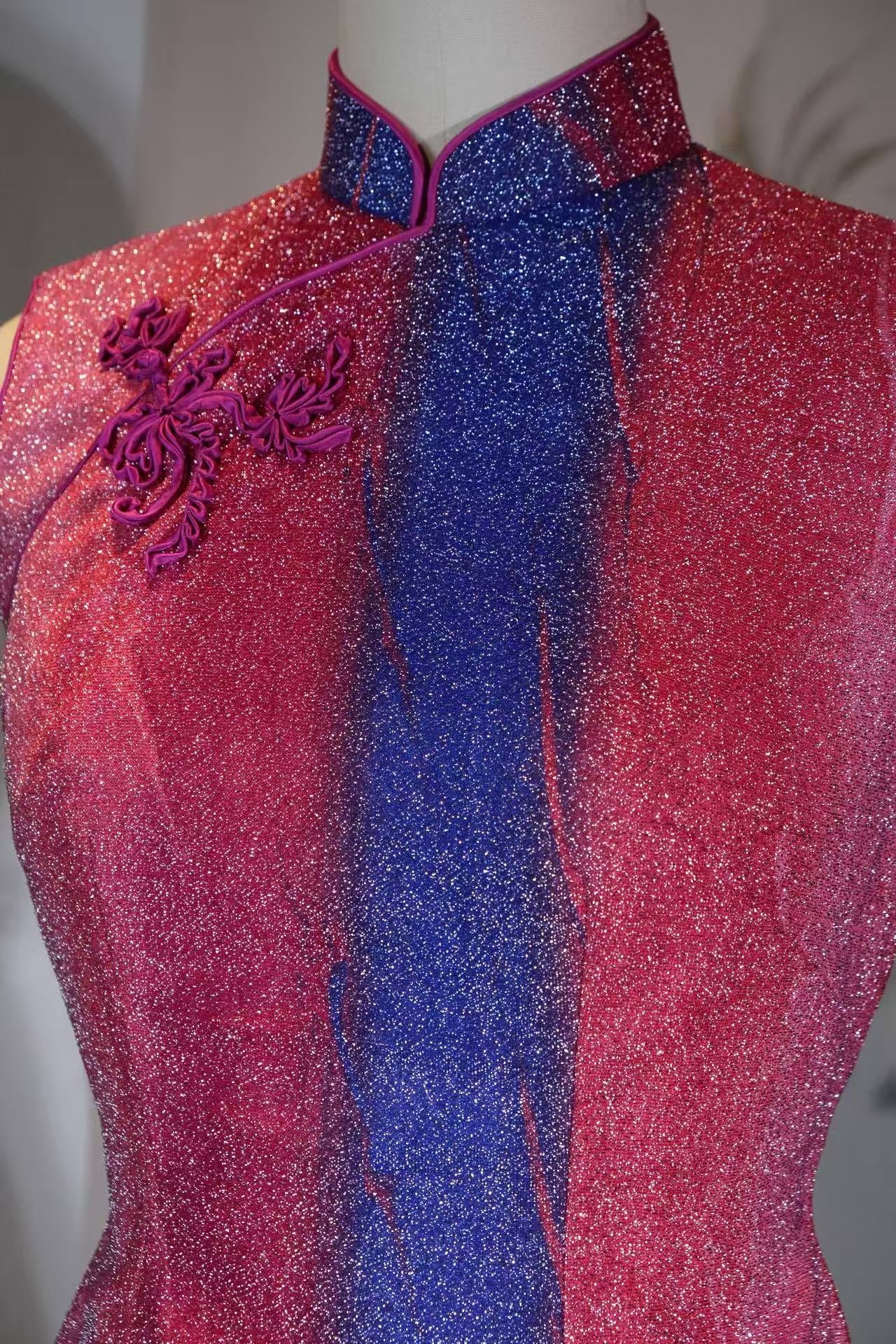
六十年代香港织银渐变嵌丝硬花扣古董旗袍:
此件旗袍诞生于上世纪六十年代的香港,
旗袍材质以织银工艺为核心,将金属银丝经纬交错于丝线之中,
领侧的硬花扣是整件旗袍的点睛之笔。所谓“硬花扣”,
六十年代的香港织银旗袍存世量稀少,皆因材质特殊:银丝易氧化、
这件旗袍不仅是衣物,更是一部微缩的东方美学百科全书——
[I. Silhouette: A Fusion of Haipai Grace and Hong Kong Modernity] Created in 1960s Hong Kong, this Qipao was born at the cross-section of Haipai (Shanghai-style) romance and Hong Kong-style modernity. Its silhouette inherits the slender bone structure of the Republican era—a high Mandarin collar to define a swan-like neck, a sleeveless cut to reveal the curve of the shoulders, and high side slits that offer glimpses of the legs. This design masterfully harmonizes Oriental restraint with 1960s urban sensuality. As the textile hub of the Far East at the time, Hong Kong was renowned for its "Hong Kong Tailoring." This gown’s precise fit, subtle waist tapering, and natural drape over the hips demonstrate a profound understanding of female aesthetics, standing as a paragon of mid-century fashion.
[II. Fabric: The Shimmer of Silver and Gradient Weaving] The material centers on a "Silver-Woven" technique, interlacing metallic silver threads into the silk warp and weft to create a unique "diamond-dust" luster. As light flows across the fabric, the gown resembles a pouring galaxy, reflecting starlit glimmers from every inch. Even more remarkable is the "Gradient" technique: using deep violet as the baseline, the colors transition seamlessly toward the hem through shades of crimson and rose pink. The violet evokes settling twilight, while the red mirrors the first bloom of dawn—two color systems engaging in a temporal dialogue. This gradient is not achieved through flat surface dyeing but through the meticulous density-controlled weaving of different colored threads, embodying the weaver’s rhythm and touch—a miniature masterpiece in textile history.
[III. Details: The Craftsmanship of Inlaid Hard-Floral Frogs] The "Hard-Floral Frogs" (buttons) at the collar are the crowning touch. These ornaments use metallic wire as the bone and silk thread as the flesh, crafted through four rigorous processes: coiling, winding, inlaying, and weaving. Shaped as "entwined lotuses," the petals are layered and three-dimensional, with the stamens outlined in silver. While preserving traditional auspicious meanings (continuous prosperity and the birth of noble sons), the metallic skeleton provides a modern, structural integrity. Compared to the softness of traditional fabric frogs, the Hard-Floral Frog is crisp and majestic, requiring the artisan to adjust the direction of every silk thread with tweezers.
[IV. Rarity: A Living Legacy of Hong Kong Craftsmanship] Silver-woven Qipaos from 1960s Hong Kong are exceptionally rare due to their volatile materials: silver threads oxidize easily and silk becomes brittle over time. Less than 2% of the original production survives in pristine condition. That this gown remains intact after sixty years—with its silver luster undimmed and its gradient colors vibrant—is a miracle. The combination of inlaid hard-floral frogs and gradient weaving represents the absolute peak of Hong Kong tailoring, a piece of "wearable intangible heritage."
[V. Conclusion: An Encyclopedia of Oriental Aesthetics] This Qipao is more than a garment; it is a miniature encyclopedia of Oriental aesthetics. It carries the urban charm of 1960s Hong Kong, condenses a millennium of silver-weaving history, and interprets the aesthetic philosophy of the "Land of Dress and Etiquette" through its radiant presence. It is a history of art that can be felt, and a cultural soul that can be touched.