溯源
无法加载取货服务可用情况
这不仅仅是一件衣服,它是一把开启时光的钥匙,将我们带回那个东西方文化激烈碰撞、火花四溅的二十世纪六十年代的香港。
当时,随着大批手艺精湛的上海裁缝南下,旗袍这门古老的东方艺术,在香港这片独特的土壤上,迎来了它最璀璨、最“摩登”的黄金时代。电影《花样年华》中,张曼玉那婀娜多姿的旗袍形象,正是那个时代审美的经典回响。
这件橙红色旗袍,便是一位穿越半个世纪风尘的“时光旅人”,为我们带来了那个年代最鲜活的时尚印记。
🏛️ 形制:立体剪裁勾勒的“宝瓶”风骨
首先映入眼帘的,是它极具时代特征的版型。这件旗袍彻底告别了传统的平面剪裁,采用了深受西方影响的“五幅裁”立体剪裁工艺。它强调“衫身合一”的贴身感,以“尖胸、细腰、收下摆”为核心,勾勒出如精致花瓶般的S型身体曲线。
这身利落的无袖剪裁,正是六十年代香港旗袍大胆革新的标志。它褪去了旧时繁冗的绲边,将女性的肩颈线条展露无遗,是当时香港职业女性独立、自信与追求个体价值觉醒的鲜明写照。
🌍 纹样:东方神韵与异域图腾的诗意碰撞
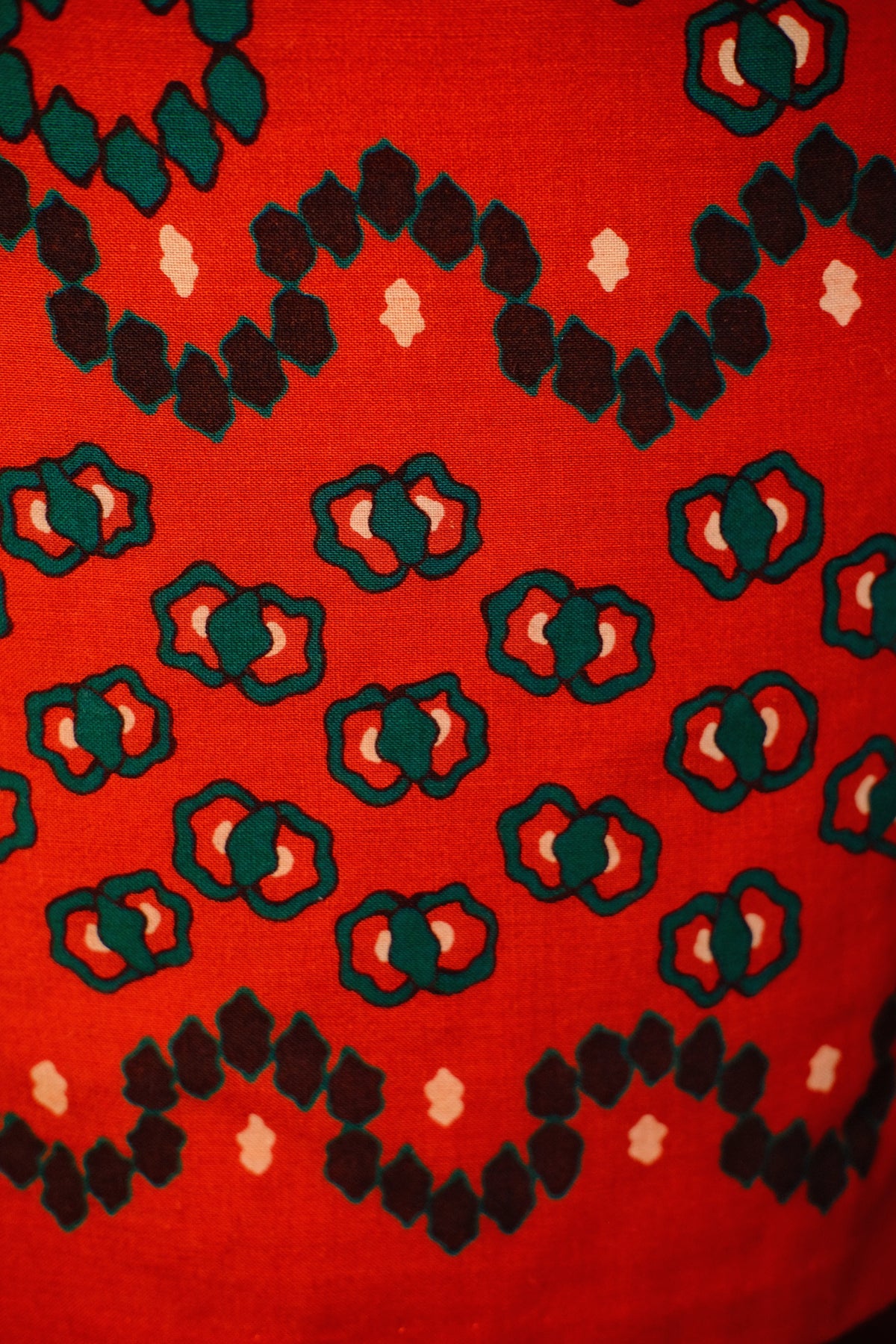
最引人注目的,无疑是它大胆而前卫的面料。不同于传统旗袍上的梅兰竹菊或工笔花鸟,这件旗袍选用的是充满活力的几何抽象图案。
这种撞色设计,正如您敏锐察觉到的,确实带有强烈的异域部落风情,令人联想到非洲图腾的生命力与原始之美。然而,这恰恰是六十年代香港“中西合璧”审美的精髓所在。彼时,西方的Art Deco(装饰艺术)风格与全球文化潮流正以前所未有的速度涌入,设计师们大胆地将这种充满现代感与野性张力的图案,嫁接于最传统的东方立领之上,创造出一种前所未有的冲突与和谐之美。
📜 意涵:时代精神的“橙红”注脚
这抹鲜亮的橙红色,在当时是活力与反叛的象征。它不似正红那般端庄沉重,也不似粉红那般娇柔婉约,它属于新时代的青年,充满了热情与动感。
这件旗袍,便是一首凝固的诗,一篇无声的散文。它记录的不仅是一位女性的曼妙身姿,更是一个时代的开放与包容。它将东方的含蓄内敛与西方的外放张扬完美地融为一体,讲述着一个关于文化交融、审美革新的永恒故事。
This transcends mere attire; it serves as a key unlocking time, transporting us back to 1960s Hong Kong—an era of fierce cultural collision and dazzling sparks between East and West.
At that time, as a massive influx of master tailors from Shanghai migrated south, the ancient Eastern art of the Qipao welcomed its most brilliant and "modern" golden age upon the unique soil of Hong Kong. In the film In the Mood for Love, Maggie Cheung’s undulating, graceful Qipao imagery serves as the classic resonance of that era's aesthetic.
This orange-red Qipao stands as a "traveler through time," emerging from half a century of dust to deliver the most vibrant fashion imprint of that epoch.
First to catch the eye is its deeply characteristic period silhouette. This Qipao completely departs from traditional flat construction, adopting the Western-influenced "five-panel" three-dimensional tailoring technique (3D Tailoring). Prioritizing a seamless fit between garment and body, it deploys a core formula of "pronounced bust, slender waist, and tapered hem" to outline an exquisite S-shaped hourglass silhouette.
The sharp, sleeveless cut (Sleeveless Cut) marks a bold, innovative milestone for 1960s Hong Kong Qipaos. Stripping away cumbersome piping of the past, it bares the wearer's neck and shoulders—vividly portraying the independence, self-assurance, and awakening individual agency of Hong Kong’s career women of the period.
Most arresting of all is its bold, avant-garde fabric. Diverging from the traditional orchids, bamboo, or meticulous floral-and-bird paintings of conventional Qipaos, this piece selects a vibrant geometric abstract pattern.
As your perceptive eye might note, this color-blocked design indeed carries a strong exotic tribal flair, evoking the raw vitality and primitive beauty of African totems. Yet this very synthesis captures the quintessential essence of 1960s Hong Kong’s "East-meets-West" aesthetic. At that time, Western Art Deco style and global cultural currents flooded in with unprecedented velocity. Designers audaciously grafted these modern, wild, and dynamic patterns onto the traditional Eastern standing collar (Standing Collar), forging an unprecedented harmony born of contrast.
This brilliant orange-red hue served as a symbol of vitality and rebellion in its day. Lacking the heavy formality of true crimson or the delicate sweetness of pink, it belonged to the youth of a new age, brimming with passion and kinetic energy.
This Qipao is a solidified poem, a silent piece of prose. It records not only a woman's graceful form, but the openness and inclusivity of an entire epoch. Fusing Eastern reticence with Western extroversion and tension, it relates an enduring narrative of cultural synthesis and aesthetic renewal.