深圳溯源
无法加载取货服务可用情况
衣服尺寸:
胸围/腰围/臀围/衣长:96/88/100/107 厘米
细节描述:
【衣冠考据:东洋技艺与宝岛剪裁的世纪邂逅】
这件旗袍,不仅是一件衣物,更是一段被封存在织物里的断代史。
作为上世纪六十年代的产物,它精准地捕捉了那个时代“西风东渐”与“传统坚守”并存的微妙平衡。彼时,台湾正处于旗袍制作的黄金年代,而日本纺织业凭借其精湛的工业化水平,向亚洲各地输送着顶级的面料。这件旗袍最引人入胜之处,便在于其“日本进口机绣蕾丝”的面料身份。
在服装史的研究视野中,六十年代的机绣工艺正处于从繁复走向精致的转折点。不同于早期粗糙的机制花边,这种源自日本的进口蕾丝,采用了高密度的网眼打底,其上以金线进行立体盘绣。这种工艺既保留了手工刺绣的温润光泽,又具备了工业制品的规整与耐用,是当时上流社会女性追逐的“摩登”象征。它见证了战后亚洲纺织贸易的繁荣,也记录了台湾裁缝师如何将外来面料与本省道统完美融合的匠心。
【纹样赏析:金线勾勒的暗夜繁花】
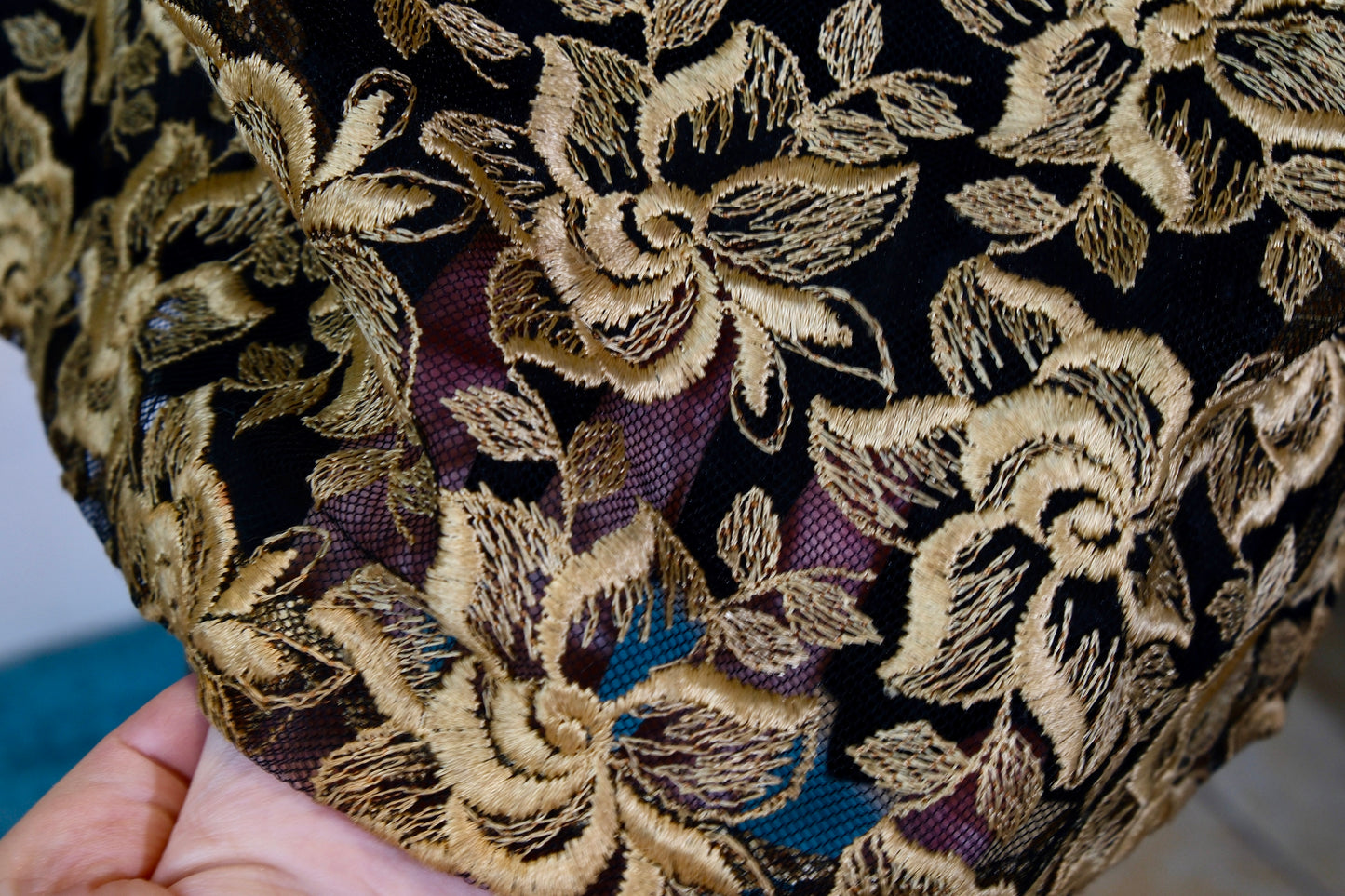
细观其纹样,这是一种极具装饰艺术风格的“满地金绣花卉”。
* 构图: 图案采用了经典的“缠枝莲”变体结构,但经过了现代化的几何处理。花朵并非写实的牡丹或芍药,而是经过抽象化处理的玫瑰或大丽花形态,花瓣层叠,枝叶蔓延伸展,呈现出一种连绵不断、生生不息的视觉张力。
* 色彩: 底色为深邃纯粹的墨黑,宛如深夜的幕布;而绣线则选用了色泽醇厚的哑光金。黑与金的搭配,在色彩心理学上象征着尊贵与神秘,在视觉上则形成了强烈的明暗对比(Chiaroscuro),使得金色的花朵仿佛在黑暗中浮动、呼吸。
* 质感: 透过微距镜头(如图5),我们可以清晰地看到蕾丝网眼的细腻肌理。金线并非平铺直叙,而是通过针法的变化,营造出花瓣的卷曲与叶片的脉络。这种“透肉”的视觉效果,含蓄地流露着六十年代女性对身体美的自信与张扬——既遮盖了肌肤,又通过黑色的网眼隐约透出肤色,是一种高级的性感。
【典故与意境:云想衣裳花想容的现代演绎】
李白曾云:“云想衣裳花想容,春风拂槛露华浓。”这件旗袍,便是对这句千古名句的六十年代注脚。
它没有选择传统的丝绸缎面,而是选择了更具现代感的蕾丝,这本身就是一种文学性的隐喻——“露华浓”不再是丝绸上的反光,而是金线在灯光下流转的色泽。张爱玲在《更衣记》中写道:“对于不会说话的人,衣服是一种语言,随身带着的是袖珍戏剧。”
穿着这件旗袍的女子,行走间,黑色的网眼如同夜的呼吸,金色的花朵则是她心事的绽放。它让人联想到王家卫电影《花样年华》中那种欲说还休的氛围,但比之更为华丽、更为外放。它是属于那个时代“名媛”的战袍,出入于晚宴、牌局或是重要的社交场合,每一步都摇曳生姿。
【稀缺性综述:不可复制的时光孤品】
为何说它稀缺?
1. 面料的绝版: 六十年代日本进口的特定规格机绣蕾丝,随着纺织技术的迭代和工厂的变迁,早已停止生产。如今的机器刺绣虽快,却难复当年那种特有的丝线光泽与网底韧性。
2. 保存的难度: 蕾丝面料娇贵,极易勾丝、脆化。这件旗袍历经六十载岁月,金线依然牢固,网底未见大面积破损,且整体版型挺括,实属万里挑一的全品(Mint Condition)。
3. 版式的经典: 注意其领口的高度与袖口的长度(图1、图4),这是最正统的六十年代海派/台式剪裁。立领紧扣咽喉,彰显端庄;短袖恰到好处地露出手臂线条,修饰身形。这种版型对穿着者的身材要求极高,也因此筛选出了真正的气质佳人。
这不仅是一件古董衣,这是一段关于美、关于工艺、关于那个流金岁月的实物档案。它静静地悬挂在那里,等待着下一位懂它的主人,续写那段未完的锦绣华章。
"For those who cannot speak, clothes are a language, a pocket theater carried upon the body." — Eileen Chang, Reflections on Clothing (更衣记)
Measurements / Size Guide:
Bust / Waist / Hips / Total Length: 96/88/100/107 cm
Detailed Description:
This qipao stands not merely as a garment, but as a preserved chronological document sealed within textile fibers.
As a product of the 1960s, it precisely captures the delicate balance of an era defined simultaneously by Western influence and traditional preservation. During this period, Taiwan experienced a golden age of qipao production, while the Japanese textile industry—powered by advanced postwar industrialization—supplied premium, high-specification fabrics across Asia. The most captivating historical identity of this piece rests in its fabric: Japanese imported machine-embroidered lace.
In textile history, 1960s machine embroidery reached a major turning point, moving from early industrial coarseness toward high refinement. Departing from primitive mechanical trims, this Japanese imported lace utilized a dense, fine mesh ground overlaid with heavy golden thread executed in structured, dimensional couch-stitching. This technique preserved the warm luster of traditional hand embroidery while benefiting from the precision and durability of mid-century industrial manufacturing. It represented a coveted symbol of "modernity" among the era's upper-class socialites, recording both the post-war boom of East Asian textile trade and the skill with which Taiwanese tailors integrated imported luxury textiles with heritage silhouettes.
Examining the pattern, the garment showcases an all-over gold-embroidered floral layout heavily influenced by Art Deco principles:
Compositional Order: The pattern adapts the classic interlocking lotus structure into a modernized geometric arrangement. Rather than literal depictions of traditional peonies, the blossoms present abstract rose or dahlia forms with layered petals and sweeping, interlocking vines that create a sense of continuous kinetic energy.
Color Aesthetics: The ground color is an obsidian black—a deep, quiet backdrop resembling a midnight sky—against which the embroidery threads glow in a rich, matte gold. In color psychology, black and gold convey nobility and mystery, while visually creating an intense chiaroscuro contrast that makes the golden blossoms appear to float and breathe across the dark surface.
Textural Quality: Viewed closely, the delicate open-work structure of the lace mesh becomes apparent. The gold threads are applied with shifting stitch directions, capturing the natural curl of petals and the subtle veining of leaves. This semi-sheer visual effect captures the growing confidence with which 1960s women celebrated form—discreetly veiled by black mesh, yet revealing hints of skin beneath in an expression of sophisticated sensuality.
The Tang Dynasty poet Li Bai famously wrote: "Clouds make one think of her garment, flowers of her face; as the spring breeze brushes the balustrade, the dew-laden bloom grows rich." (云想衣裳花想容,春风拂槛露华浓。) This qipao offers a mid-century, 1960s translation of that timeless poetic sentiment.
Choosing modern, semi-sheer lace over traditional silk satin represents a profound literary shift: the "dew-laden bloom" is no longer the simple sheen of silk, but the shimmering luster of gold thread shifting under soft evening lights.
When worn, every step creates a subtle motion where the black mesh breathes like the night sky and the gold blossoms bloom across the silhouette. It evokes the quiet, unspoken tension of Wong Kar-wai's In the Mood for Love, yet presents a more opulent and expressive presence. It served as the ultimate armor for mid-century socialites navigating evening banquets, card salons, and formal gatherings.
The scarcity of this piece rests on three distinct pillars:
Obsolete Textile Production: This specific specification of 1960s Japanese imported machine-embroidered lace went out of production long ago as textile machinery and factory standards evolved. Modern computerized embroidery, while faster, cannot replicate the specific thread sheen, weight, and resilient mesh tension of mid-century production.
State of Preservation: Vintage lace is exceptionally fragile and prone to snagging or becoming brittle over time. After six decades, the gold threads of this garment remain securely anchored, the mesh ground shows no significant breakdown, and the overall silhouette remains crisp—placing it in rare, pristine condition (Mint Condition).
Classic Proportions: The height of the mandarin collar and the cut of the short sleeves reflect authentic 1960s Shanghai/Taiwanese tailoring standards. The collar fits snugly against the neck to express dignity, while the concise sleeves accentuate the arms and refine the silhouette.
This qipao is far more than an antique item of apparel; it is a living physical archive of mid-century beauty, craftsmanship, and East Asian fashion history.