名伶遗珠:三十年代末民国粤曲舞台古董旗袍
这两件来自上世纪三十年代末期的民国古董旗袍,是美籍粤曲名伶May(梅)的舞台珍藏,承载着跨洋文化的艺术回响与时代风华。
粉色旗袍以真丝素缎为底,采用苏绣技法绣制兰花。兰花自古为“四君子”之一,象征高洁、典雅与坚贞,正合《孔子家语》中“芝兰生于深林,不以无人而不芳”的君子品格。绣线以浅绿勾勒兰叶飘逸之姿,红褐色点染花苞,线条流畅如行云流水,尽显苏绣“平、齐、细、密、匀、顺、和、光”的工艺精髓。搭配同色波浪边衬裙,既衬托出旗袍的柔美轮廓,又增添了几分闺阁雅致,是民国仕女“淡妆浓抹总相宜”的生动写照。
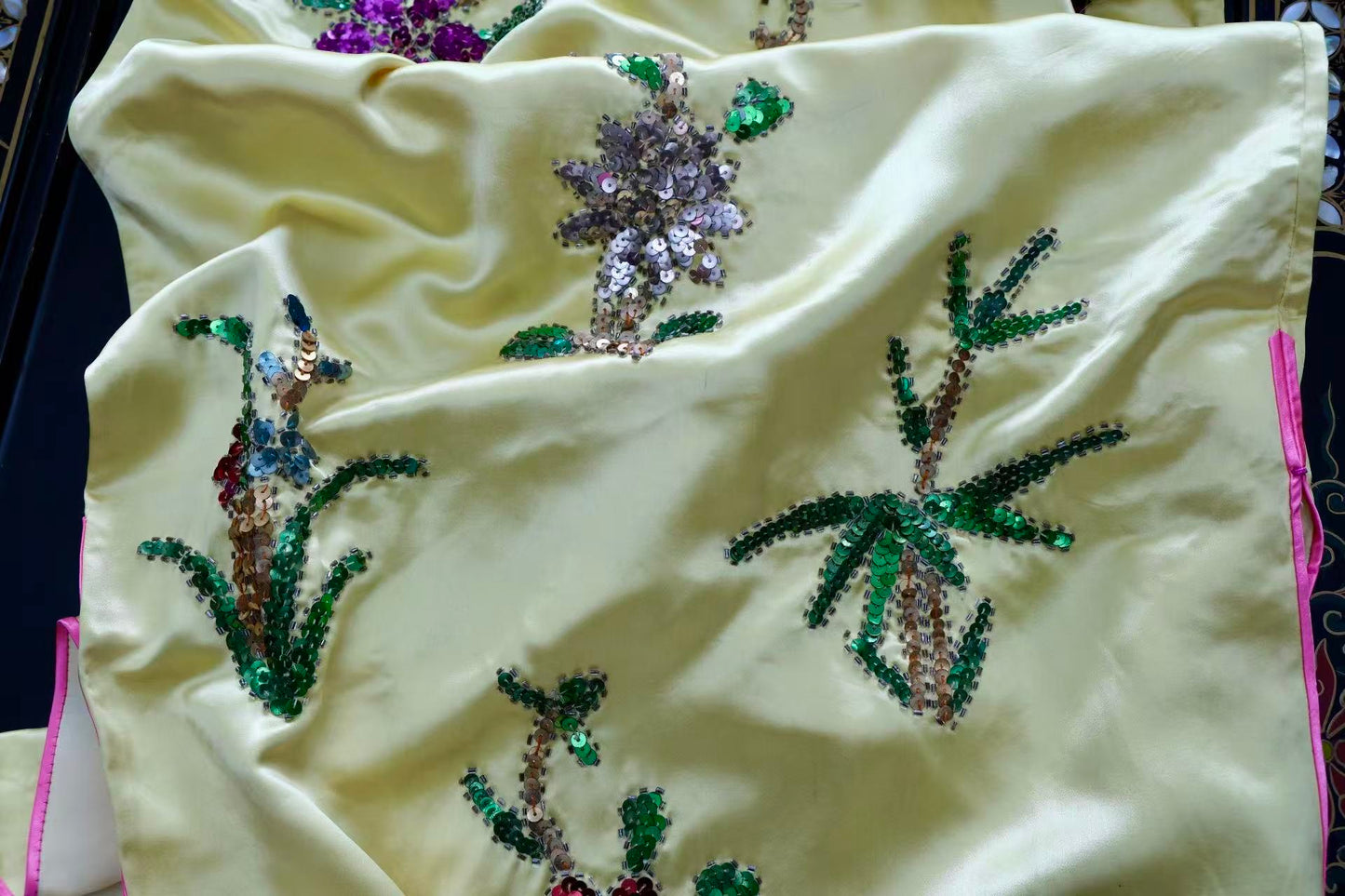
黄色旗袍则以真丝素缎为基,运用潮绣亮片工艺绣制百花图案。潮绣以“垫、浮、勾、勒”见长,此件旗袍上花朵以各色亮片层层叠缀,绿叶以金线勾边,色彩斑斓如春日盛景,熠熠生辉。其工艺繁复,需手工将数万枚亮片逐一枚钉、缝缀,每一朵花皆如立体浮雕,行走间光影流转,尽显舞台华彩。这种工艺在民国时期多用于戏服,既符合粤曲表演的视觉需求,也体现了岭南工艺的富丽堂皇。
May作为当时加州知名的粤曲名伶,其旗袍不仅是演出服饰,更是文化身份的象征。在1930年代,海外华人通过粤曲与旗袍维系故土情感,这两件旗袍融合苏绣的文人雅趣与潮绣的民间华美,正是“南派”艺术在异域绽放的见证。其真丝素缎材质、手工刺绣工艺与时代背景,共同构筑了极高的艺术价值与稀缺性——在今日,如此完整保存、工艺精湛且有明确传承脉络的民国旗袍,已属凤毛麟角。
它们不仅是服饰,更是历史的载体:一针一线,绣出的是东方美学的千年传承;一花一叶,绽放的是海外游子的文化乡愁。
Pearls of the Opera Stage: Late 1930s Republic-Era Antique Qipaos
These two antique Qipaos, belonging to the renowned 1930s California-based Cantonese Opera singer May, are artistic echoes of trans-oceanic culture. They represent a rare intersection of refined Oriental aesthetics and the vibrant stage presence of a celebrated performer.
I. The Pink Qipao: Literati Elegance in Suzhou Embroidery
Crafted from pure silk satin, this piece features the orchid—one of the "Four Gentlemen" of Chinese art, symbolizing nobility and integrity. As stated in the Confucius Family Records: "The orchid grows in the deep forest and radiates its fragrance even if there is no one to appreciate it." * Craftsmanship: Using the quintessential Suzhou Embroidery (Su Xiu), the artisan used pale green threads to capture the flowing elegance of orchid leaves and reddish-brown tones for the delicate buds. It embodies the eight core tenets of Su Xiu: evenness, neatness, fineness, tightness, harmony, smoothness, unity, and luster.
-
The Silhouette: Paired with a matching scalloped-edge slip, the ensemble accentuates a soft, feminine silhouette, perfectly capturing the understated grace of a Republic-era lady.
II. The Yellow Qipao: Cantonal Splendor in Chaozhou Sequin Work
The yellow silk satin Qipao utilizes the bold Chaozhou Embroidery (Chao Xiu) technique, specifically featuring intricate sequin work.
-
Artistry: Chao Xiu is famous for its relief-like, three-dimensional textures. Thousands of colorful sequins are hand-stitched layer by layer to form blossoms, while green leaves are outlined with shimmering gold threads.
-
Stage Presence: This labor-intensive craft was traditionally reserved for operatic costumes. The sequins create a dazzling "floating relief" effect that captures every beam of light during a performance, reflecting the opulence and grandeur of Lingnan (Cantonese) folk art.
III. Cultural Legacy: A Symbol of Identity
As a prominent Cantonese Opera star in California, May’s Qipaos were more than costumes; they were symbols of cultural identity. In the 1930s, the Chinese diaspora maintained their connection to their ancestral home through opera and traditional dress. These garments, merging the scholarly elegance of the North (Su Xiu) with the folk brilliance of the South (Chao Xiu), witness the blossoming of "Southern School" art on foreign soil.