深圳溯源
40年代 - 翠漪凝香:一件四十年代真丝提花旗袍的流光絮语 | 1940s - Emerald Ripples and Lingering Fragrance: Whispers of a 1940s Silk Jacquard Qipao
40年代 - 翠漪凝香:一件四十年代真丝提花旗袍的流光絮语 | 1940s - Emerald Ripples and Lingering Fragrance: Whispers of a 1940s Silk Jacquard Qipao
无法加载取货服务可用情况
翠漪凝香:一件四十年代真丝提花旗袍的流光絮语
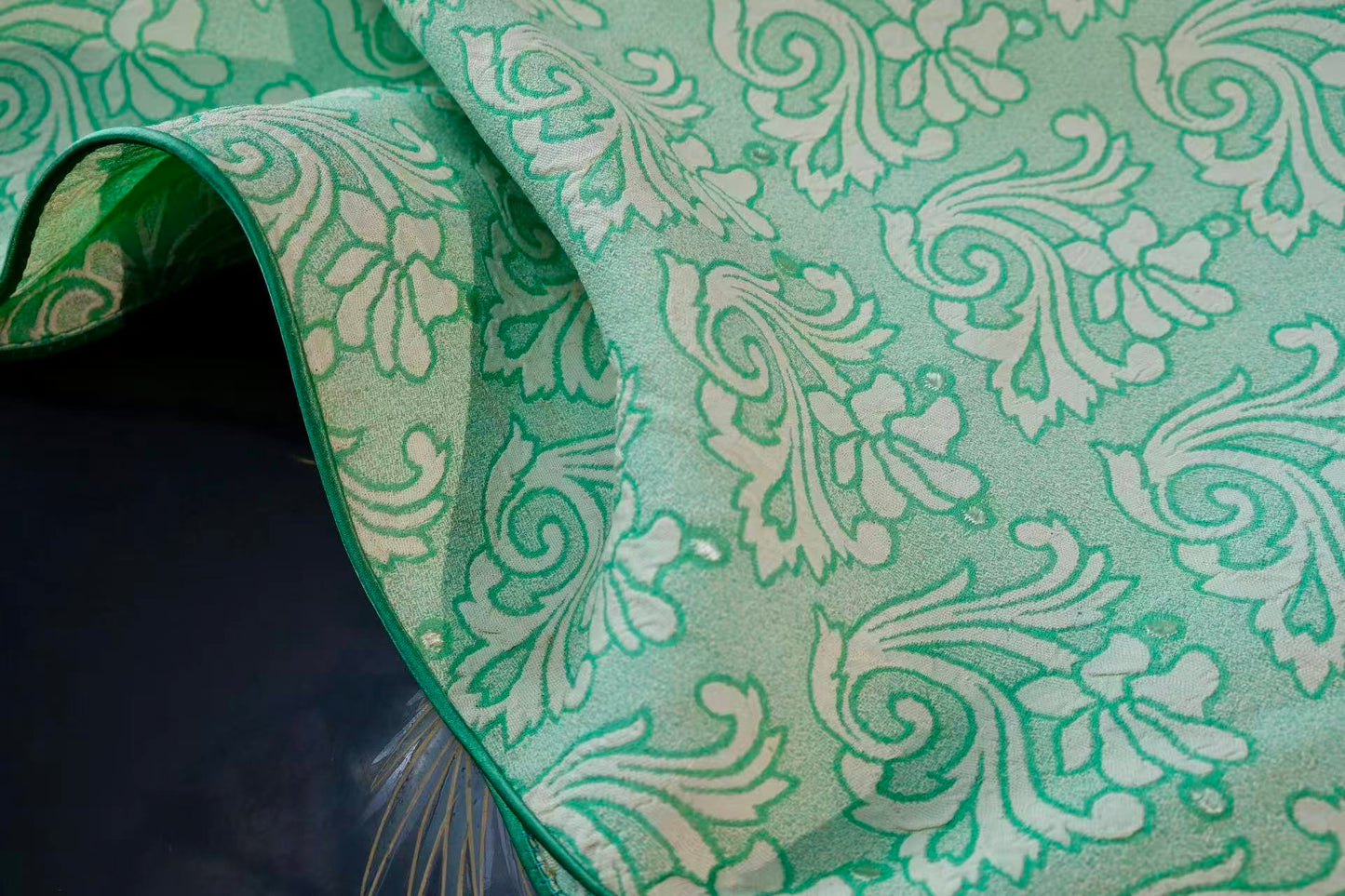
一、织纹里的“海派”风华
这件诞生于1940年代的真丝提花绸旗袍,是“海派”
二、旗袍的“摩登”叙事
这件旗袍的立领高度适中,既保留传统端庄,
三、真丝提花绸的工艺绝响
面料选用的真丝提花绸,是民国时期江南织造的巅峰之作。
四、时光里的女性物语
它或许曾属于一位上海弄堂里的知识女性:晨起时,
五、稀缺性与艺术价值
存世的1940年代真丝提花旗袍本就稀少,而此件作品兼具“
六、结语
当指尖抚过这件旗袍的提花纹理,
Emerald Ripples and Lingering Fragrance: Whispers of a 1940s Silk Jacquard Qipao
I. The "Haipai" Elegance Within the Weave
This silk jacquard Qipao, born in the 1940s, is a microcosm of "Haipai" (Shanghai-style) fashion aesthetics. The fabric utilizes advanced jacquard techniques of the era, weaving sprawling floral motifs from natural mulberry silk. The leaves unfurl like rolling clouds, and the petals surge like waves—their winding lines echo the rhythmic "scrolling grass" patterns of ancient Chinese architecture, while the layout reflects the geometric order influenced by Western Art Deco. The pale green base resembles spring water, with white jacquard textures appearing and disappearing like moonlight—perfectly capturing the atmosphere described by Eileen Chang: "A moon-white gauze Qipao embroidered with entwined lotuses, shimmering silver under the moon."
II. A "Modern" Narrative of the Qipao
With a moderate standing collar, fluid shoulder lines, and a body-contoured cut, this piece balances tradition with allure. The sleeveless design—a bold choice for the time—aligns with the spirit of the "Modern Girl" seeking freedom and liberation. The Pankou (frog buttons) at the collar, meticulously crafted from matching silk, are as delicate as flower stamens, embodying the craftsmanship praised in 1940s fashion journals: "The buttons are like buds, the lapels like lotus stems; ingenuity found in every square inch."
III. The Lost Art of Silk Jacquard
The material is a pinnacle of Jiangnan weaving from the Republican era. After degumming, the mulberry silk possesses a luster as soft as cream and a touch as smooth as flowing water. This "silk light" and "fine texture" represent the perfection of the "Ti Hua" (jacquard) craft, where dozens of warp and weft threads interlace in every square centimeter—a feat of labor-intensive luxury rarely seen today.
IV. A Woman’s Story Through Time
One can imagine its original owner: an intellectual woman in a Shanghai Lilong (alleyway). Perhaps she fastened these buttons before a bronze mirror before heading to St. John's University to lecture; or perhaps she sat in a café on Avenue Joffre discussing poetry. As Eileen Chang wrote in Chronicle of Changing Clothes: "The function of the Qipao is nothing more than to faithfully trace the contours of the human body." This garment is a witness to a generation of women embracing modernity.
V. Rarity and Artistic Value
Surviving 1940s silk jacquard pieces are rare "living fossils" of fashion history. This piece is particularly precious for its intact patterns and proportions that still align with contemporary beauty standards. It is, as scholars say, "History worn on the body; civilization in motion."
分享