五十年代织金线香绲旗袍:香江霓虹里的锦绣诗篇
“衣裳锦绣,焜焜荣荣。”——《东京梦华录》
当西方NewLook以束腰蓬裙重构战后美学,香江之畔的裁缝师傅正以指尖经纬,织就东方霓虹。这件上世纪五十年代中期的织金中国红线香绲旗袍,恰似从张爱玲笔下走来的“华丽冒险”,将海派遗风与港式摩登凝于一袭。
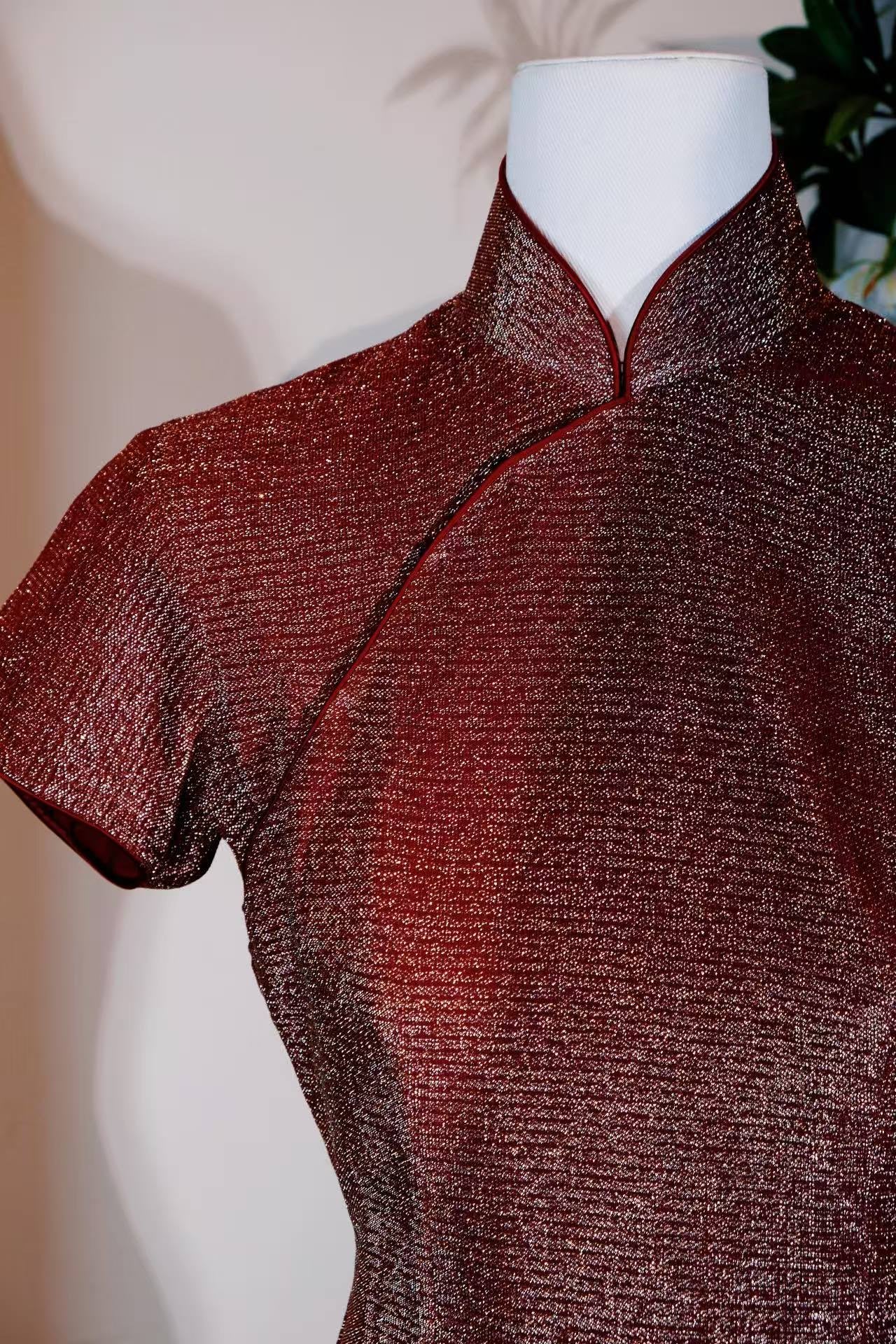
整件旗袍以中国红为底,采用意大利“织金”工艺,在丝线中混织金线,使面料呈现出流动的鎏金光泽。细观纹路,无数细小的金点如星子般散落,在光线流转中幻化出繁复的暗纹,仿佛将唐宋“销金纱”的奢靡与民国“亮片锦”的摩登熔铸一体。
旗袍的领口、袖口与开衩处,可见标志性的“线香绲”工艺。这种宽仅3-5毫米的滚边,需将面料裁成细条,手工搓捻成线香般纤细的绳状,再以 invisible stitch 密密缝合。
作为五十年代香港出口加工的代表性工艺,织金旗袍曾是东方审美的“国际名片”。这件旗袍的内衬选用正红色素绉缎,在针脚处仍保留着手工锁边的痕迹。当西方时尚界还在争论“迪奥套装”的廓形时,香江裁缝已用一针一线,在东方美学的“形神之辩”中写下了注脚。
历经七十余载岁月,这件旗袍的织金面料仍保持着惊人的光泽度,仅领口内侧可见轻微的氧化斑痕,恰似“古董级”织金工艺的“身份证”。它不仅是一件旗袍,更是一枚凝结着东方美学的“时间琥珀”:当指尖抚过鎏金暗纹,仿佛能听见五十年代香港裁缝铺里的剪刀声,看见张爱玲在《更衣记》中描绘的“繁华与苍凉”,感受到东方美学在时代洪流中“破茧成蝶”的永恒生命力。
1950s Gold-Woven Cheongsam with "Incense-Stick" Piping: A Brocade Poem Amidst Hong Kong Neon
"The garments are of magnificent brocade, resplendent and flourishing." — The Eastern Capital: A Record of the Dream of Splendor (Dongjing Meng Hua Lu)
The "New Look" of the Orient While Western fashion was reconstructing post-war aesthetics with Dior’s cinched waists and voluminous skirts, master tailors on the shores of the Fragrant River were weaving an Oriental neon dream with their fingertips. This mid-1950s Chinese-red cheongsam, featuring gold-woven fabric and "incense-stick" piping, feels like a "magnificent adventure" straight out of an Eileen Chang novel, condensing the heritage of the Shanghai school and the modernity of Hong Kong into a single silhouette.
The Flow of Gilded Light The entire gown is crafted on a base of "Chinese Red" using an Italian-influenced gold-weaving (Zhijin) technique, where metallic threads are interlaced with silk to create a fluid, gilded luster. A close inspection reveals countless tiny gold specks scattered like stardust, which transform into complex hidden motifs as the light shifts. It merges the decadence of Tang and Song Dynasty "gold-dusted gauze" (Xiaojin Sha) with the glamour of the Republican era’s "sequined brocade."
The Art of "Incense-Stick" Piping (Xianxiang Gun) The collar, cuffs, and side slits feature the signature "Incense-Stick Piping." This ultra-fine border, measuring only 3 to 5 millimeters wide, requires the fabric to be cut into thin strips, hand-twisted into a cord as slender as a stick of incense, and then meticulously attached with an invisible stitch. This labor-intensive detail serves as a masterclass in the "beauty of restraint."
A Global Ambassador of Eastern Aesthetics As a representative craft of Hong Kong’s export industry in the 1950s, the gold-woven cheongsam was an international "calling card" for Oriental style. The lining of this piece is made of scarlet silk crepe satin, with hand-stitched overlock traces still visible at the seams. While the Western fashion world was debating the silhouette of the "Bar Suit," Hong Kong tailors were defining the dialogue between "form and spirit" in Eastern aesthetics, one stitch at a time.
An "Amber of Time" After seventy years, the gold-woven fabric retains a startling brilliance, with only slight oxidation marks on the inner collar—a "birthmark" of authentic antique craftsmanship. It is more than a garment; it is an "Amber of Time." To touch its gilded patterns is to hear the snip of scissors in a 1950s tailor shop, to see the "splendor and desolation" described by Eileen Chang, and to feel the eternal vitality of Oriental aesthetics as it emerges from its cocoon.