深圳溯源
50年代 - 繁花入梦:万象时装的童趣诗篇 | 1950s - Blooms Entering a Dream: A Childlike Poetic Chapter of Wann Shaing Fashion
50年代 - 繁花入梦:万象时装的童趣诗篇 | 1950s - Blooms Entering a Dream: A Childlike Poetic Chapter of Wann Shaing Fashion
无法加载取货服务可用情况
繁花入梦:万象时装的童趣诗篇
衣服尺寸:
胸围/腰围/臀围:90/68/94 厘米
衣长:94 厘米
细节描述:
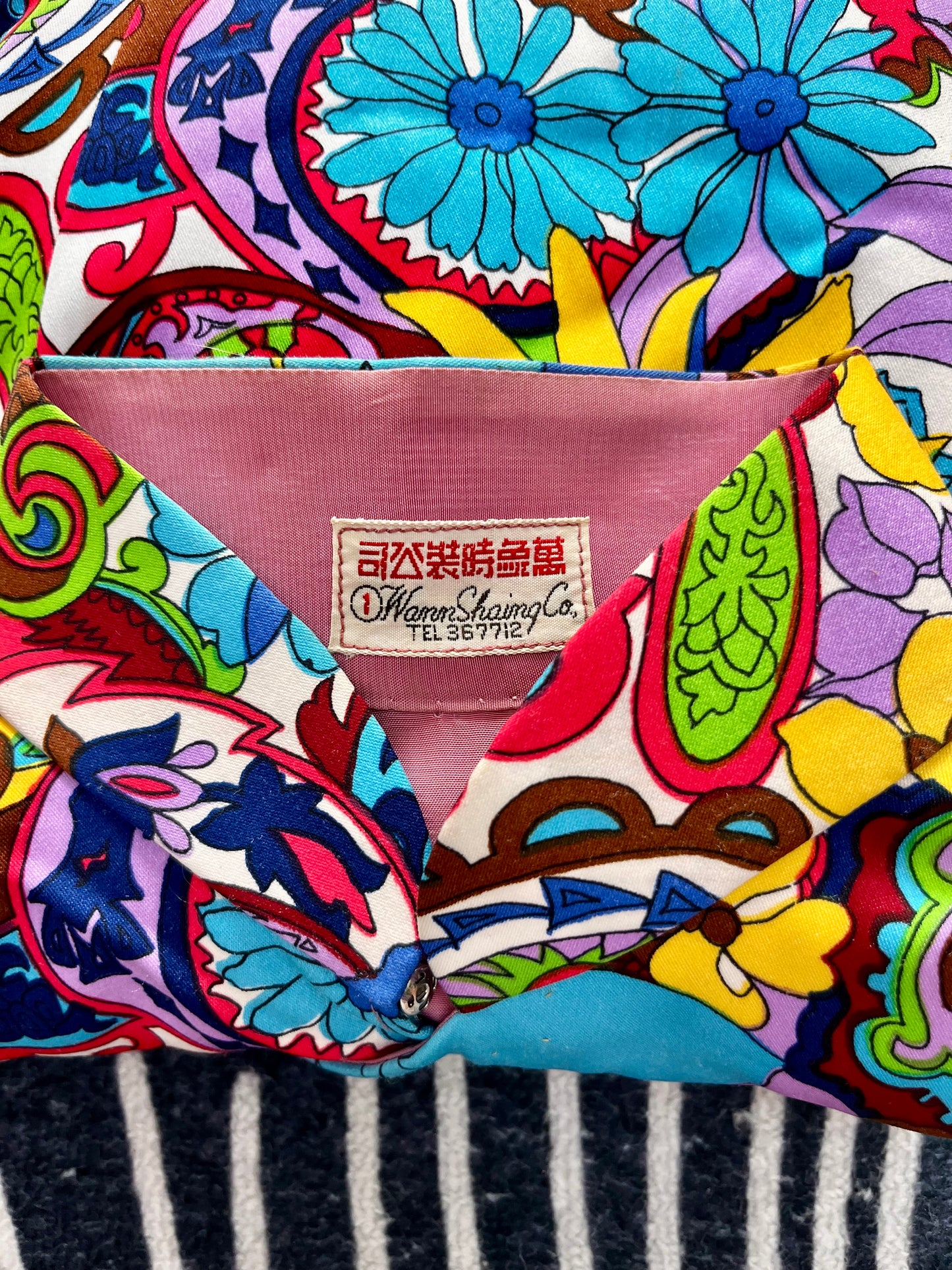
当指尖抚过这袭旗袍的领口,丝绸的微凉里藏着半个世纪前的阳光。万象时装公司(Wann Shaing Co.)的标签在颈后静卧,像一枚褪色的邮戳,寄自1950年代的香港——那个旗袍从传统长袍走向现代时装的转折年代。
衣身的图案是一场色彩的狂欢:宝蓝与明黄的花瓣肆意舒展,淡紫与青绿的藤蔓缠绕成趣,抽象的几何纹样如孩童笔下的涂鸦,却又在留白处暗藏章法。这不是传统旗袍的工笔花鸟,而是西方抽象艺术与中国民间印花的奇妙共振。彼时香港作为东西方文化的交汇口,设计师们大胆将毕加索的立体主义、马蒂斯的野兽派色彩,揉进旗袍的细腻针脚里。
“万象”二字,取自《周易》“万象更新”之意。1950年代的香港,旗袍不再是深闺里的华服,而是都市女性的日常战袍。万象时装公司的匠人们,用进口印染技术将这种“新中式美学”推向极致:衣摆的抽象花纹,恰如那个时代的精神隐喻——在传统的根系上,绽放出前所未有的自由之花。
如今,这样一件古董旗袍已成孤品。它见证过中环写字楼里的商务洽谈,也摇曳过兰桂坊的霓虹夜色;或许曾被某位女作家穿去参加文学沙龙,也可能在某个夏日的舞会上,让某个青年才俊的目光久久停留。衣料上的每一处褶皱,都是时光的批注;每一道褪色,都是岁月的包浆。
当我们在博物馆的玻璃柜前凝视它,看到的不仅是旗袍,更是一个时代的呼吸——那是东方与西方、传统与现代、童真与成熟,在丝绸上跳的一支探戈。而这支舞,再也不会重来。
(注:万象时装公司作为1950年代香港知名旗袍品牌,其作品以“中西合璧”为特色,现存世量不足百件,尤以抽象印花款最为稀有。)
Blooms Entering a Dream: A Childlike Poetic Chapter of Wann Shaing Fashion
Measurements / Size Guide:
Bust / Waist / Hips: 90/68/94 cm
Total Length: 94 cm
Detailed Description:
When your fingertips brush across the collar of this qipao, the slight coolness of the silk conceals the sunlight of half a century ago. The label of Wann Shaing Fashion Co. rests quietly at the nape of the neck, like a faded postmark sent from 1950s Hong Kong—that transitional era when the qipao evolved from traditional robes into modern high fashion.
The pattern on the body is a carnival of color: royal blue and bright yellow petals stretch out wantonly, while pale purple and verdant vines intertwine with charm. The abstract geometric motifs resemble a child’s graffiti, yet hidden within the negative space is a deliberate sense of order. This is not the traditional fine-brush (Gongbi) flora and fauna of classic qipaos; rather, it is a marvelous resonance between Western abstract art and Chinese folk printing. At that time, Hong Kong served as the intersection of Eastern and Western cultures, and designers boldly wove Picasso’s Cubism and Matisse’s Fauvist colors into the delicate stitches of the qipao.
The name "Wann Shaing" (万象) is derived from the I Ching phrase "Wann Xiang Geng Xin," meaning "all things are renewed." In 1950s Hong Kong, the qipao was no longer a lavish garment restricted to the inner chambers but the daily "battle armor" of urban women. The craftsmen of Wann Shaing Fashion Co. pushed this "New Chinese Aesthetic" to its limit using imported printing and dyeing technologies: the abstract floral patterns at the hem serve as a spiritual metaphor for that era—blooming with an unprecedented flower of freedom upon the roots of tradition.
Today, such an antique qipao has become a unique specimen (Gupin). It witnessed business negotiations in the office buildings of Central and swayed through the neon nights of Lan Kwai Fong; perhaps it was worn by a female writer to a literary salon, or perhaps at a summer ball, it held the gaze of a talented young man for a long time. Every wrinkle in the fabric is a footnote of time; every bit of fading is the patina of the years.
As we gaze upon it before a museum display case, what we see is not just a qipao, but the breath of an era—it is the East and the West, tradition and modernity, innocence and maturity, dancing a tango upon silk. And this dance will never happen again.
(Note: As a renowned Hong Kong qipao brand of the 1950s, Wann Shaing Fashion Co. is characterized by its "East-meets-West" style. Fewer than a hundred pieces are known to exist today, with abstract print models being the most rare.)
分享