深圳溯源
无法加载取货服务可用情况
衣服尺寸:
胸围/腰围/臀围:98/78/110 厘米
衣长:108 厘米
细节描述:
一、纹样解构:金鳞破云,珠绣成纹
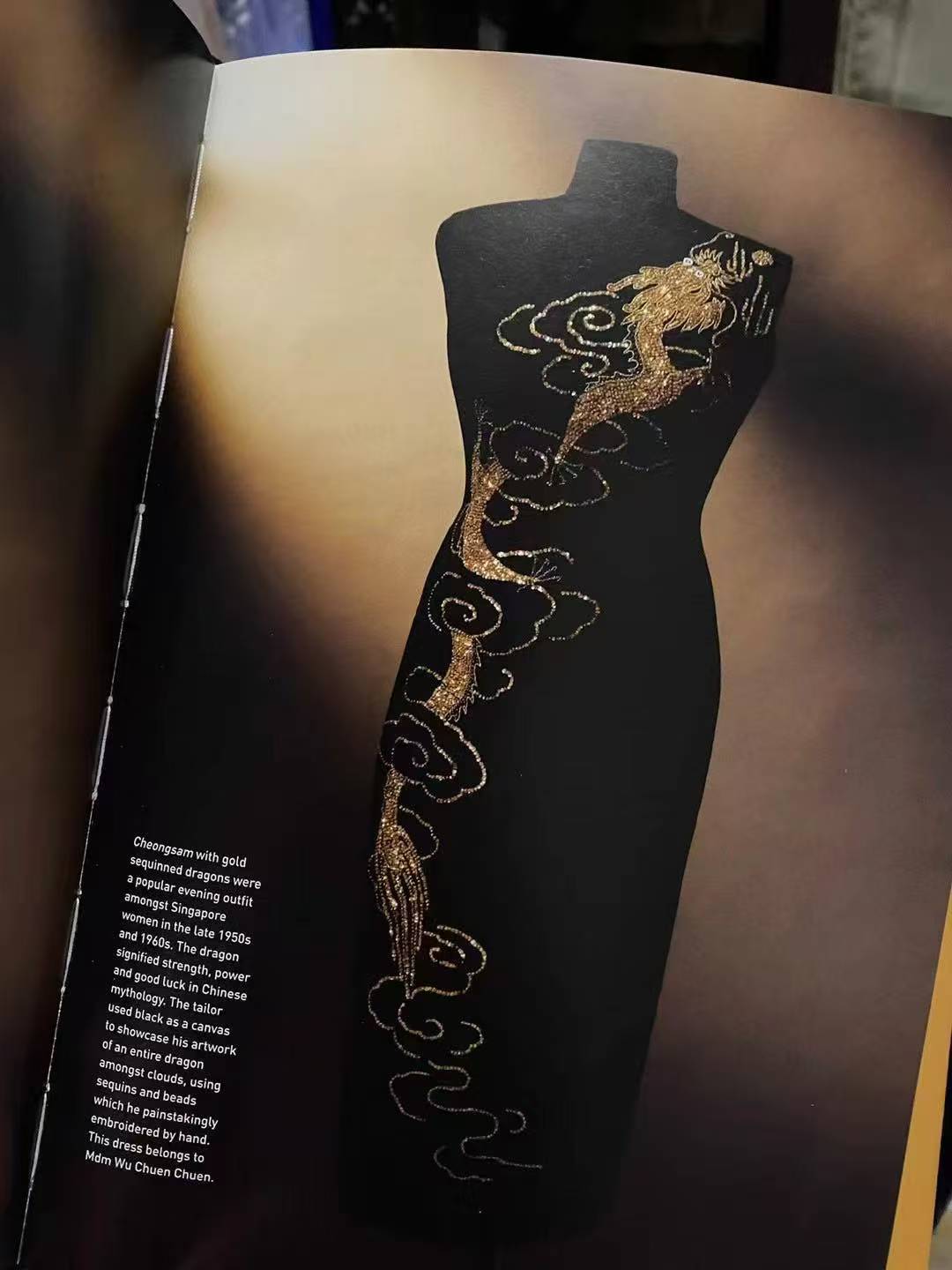
此件黑绸旗袍的视觉核心,在于一条自右肩斜贯至下摆的鎏金祥云龙纹。其构图暗合传统“升龙”意象,却以更具张力的S型曲线破壁而出,龙首昂扬处,须发以细密钉珠盘绕,双目嵌以米珠点睛,龙角与龙须则以棕红钉珠勾勒,在亮片主调中增添层次。龙身以金色亮片密缀而成,每片亮片皆经手工打磨,随光线流转呈现“金鳞耀日”之效,仿若龙游云海时鳞甲折射的天光。
云纹以同色系珠绣勾勒,卷曲的云头如传统“如意云”,却以更灵动的弧线呼应龙身动态,形成“龙戏云涛”的生动图景。尤为精妙的是龙爪设计——三趾微张,以金线绣出筋骨,既保留传统龙纹的威仪,又因旗袍的女性穿着语境,柔化了“五爪为尊”的皇权象征,转而指向“祥龙献瑞”的民间祈愿。
二、工艺溯源:粤绣亮片技法的南洋变奏
作为1950年代香港制造的典型代表,此袍工艺深植于粤绣传统,却因南洋华人社群的审美需求发生嬗变。粤绣素以“铺针细于毫芒,下笔不忘规矩”著称,而此件作品更将“钉金绣”与亮片、珠饰结合,形成独特的“珠绣亮片粤绣”技法:
- 亮片铺陈:龙身亮片并非平铺,而是依龙体起伏呈“鱼鳞式”叠压,每片间隔以细金线固定,既保证光泽流动,又避免厚重感;
- 珠绣点睛:云纹边缘、龙须末端皆以米珠串缀,形成“珠走盘”的灵动质感,此法常见于粤剧戏服,后融入日常礼服,彰显南洋华人“以戏服之华美入生活”的审美趣味;
- 黑绸为底:选用重磅黑绸,其哑光质地与亮片形成强烈对比,正如《天工开物》所言“黑为玄,玄为天色”,以黑为画布,更凸显金纹的璀璨,亦暗合1950年代新加坡女性晚宴着装的“暗夜鎏金”风尚。
三、历史叙事:南洋华人的身份图腾
1950-60年代的新加坡,正处于去殖民化与华人文化认同重构的关键期。新加坡国立博物馆中的这件同款原主吴娟娟夫人(Madam Wu Chuen Chuen)的收藏背景,恰是这一时代的缩影:
- 文化符号的转译:龙在中国传统中为皇权象征,但南洋华人将其转化为“族群力量”的图腾。旗袍上的祥龙不再局限于“帝王专属”,而是成为海外华人“慎终追远”的精神载体——龙身的金,是故土的荣光;云纹的卷,是漂泊的乡愁;黑缎的沉,是扎根的坚韧。
- 晚宴礼服的社会功能:据新加坡国立博物馆档案,此类亮片龙纹旗袍是当时华人精英女性出席婚宴、节庆的“战袍”。其设计兼顾传统与现代:立领、斜襟保留中式形制,而收腰、短袖则融入西方剪裁,恰如南洋华人“中西合璧”的生存智慧。
- 稀缺性的双重维度:
- 工艺稀缺:全手工钉珠亮片需匠人耗时数月,1950年代香港虽为成衣重镇,但如此高规格的粤绣亮片旗袍多属定制,存世极少;
- 历史稀缺:作为新加坡国立博物馆同款藏品,此袍与馆藏文物形成互文,是研究南洋华人服饰史的“活化石”,其 provenance(流传记录)更添学术价值。
四、艺术风格:在传统与现代间游走的“鎏金诗学”
此袍的艺术价值,在于其对传统纹样的现代性重构:
- 色彩的张力:黑与金的极致对比,打破传统旗袍“素雅为美”的范式,以戏剧化的视觉冲击呼应1950年代好莱坞电影的华丽美学;
- 纹样的叙事:祥云龙纹不再是静态的装饰,而是通过S型构图与动态曲线,形成“龙游于云,云随龙动”的时空流动感,暗合旗袍穿着者行走时的身姿摇曳;
- 材质的对话:黑缎的柔滑、亮片的冷冽、珠饰的温润,三种材质在指尖触碰时形成丰富的肌理层次,使服饰从“视觉艺术”升华为“触觉艺术”。
五、结语:一件旗袍,半部南洋华人史
这件黑缎鎏金龙纹旗袍,不仅是1950年代香港制衣工艺的巅峰之作,更是南洋华人文化认同的物质载体。它以粤绣为骨,以亮片为衣,以祥龙为魂,在每一片金鳞、每一颗珠饰中,封存着那个时代海外华人对故土的眷恋、对身份的坚守,以及对“美”的极致追求。
今日观之,其稀缺性不仅在于存世量的稀少,更在于它承载的历史温度与文化密码——当指尖拂过那些历经半世纪仍熠熠生辉的亮片,我们触摸到的,是一段鎏金岁月里,华人女性以衣为史、以美为刃的生命叙事。
Measurements / Size Guide:
Bust / Waist / Hips: 98/78/110 cm
Total Length: 108 cm
Detailed Description:
The visual core of this black silk cheongsam (qipao) is a gilded auspicious cloud and dragon motif that sweeps diagonally from the right shoulder to the hem. The composition draws from the traditional "Rising Dragon" imagery but bursts forth with a dynamic S-curve. At the dragon's head, the mane is coiled with dense beadwork, the eyes are brought to life with seed pearls, and the horns and whiskers are outlined with brownish-red beads, adding depth to the sequined palette. The body is encrusted with golden sequins, each hand-polished to create a "golden scales shimmering in the sun" effect, mimicking the celestial light reflected off scales as a dragon swims through a sea of clouds.
The cloud motifs are outlined in tonal bead embroidery. The curled cloud heads resemble traditional Ruyi clouds but use more fluid arcs to echo the dragon's movement, creating a vivid tableau of "A Dragon Playing in Cloudy Waves." Particularly exquisite are the claws—three toes slightly spread, with gold thread defining the skeletal structure. This preserves the majesty of traditional dragon motifs while softening the imperial symbolism of "five claws for the sovereign" in favor of a folk blessing: "The Auspicious Dragon Presents Prosperity."
As a quintessential representative of 1950s Hong Kong manufacturing, the craftsmanship of this gown is deeply rooted in Cantonese embroidery (Yue Xiu) but evolved to meet the aesthetic demands of the Nanyang (Southeast Asian) Chinese community. Cantonese embroidery is renowned for "stitches finer than a hair and adherence to strict rules." This piece further combines "Gilded Couching" (Ding Jin Xiu) with sequins and beads, forming a unique "Beaded Sequin Cantonese Embroidery" technique:
Sequin Layering: The sequins are not laid flat but overlapped in a "fish-scale" fashion following the dragon's contours. Each is secured with fine gold thread, ensuring a fluid luster while avoiding bulkiness.
Beaded Accents: The edges of clouds and tips of whiskers are adorned with seed pearls, creating a "pearls rolling on a tray" texture. This method, common in Cantonese Opera costumes, was integrated into daily formal wear, reflecting the Nanyang Chinese aesthetic of "bringing the splendor of the stage into life."
Black Silk Base: The choice of heavy-weight black silk provides a matte contrast to the sequins. As The Exploitation of the Works of Nature states, "Black is profound (Xuan), the color of the heavens." Using black as a canvas accentuates the brilliance of the gold, echoing the "Midnight Gilt" fashion favored by Singaporean women for evening galas in the 1950s.
Singapore in the 1950s and 60s was at a critical juncture of decolonization and the reconstruction of Chinese cultural identity. The context of this gown, shared by the collection of Madam Wu Chuen Chuen in the National Museum of Singapore, serves as a microcosm of this era:
Translation of Cultural Symbols: While the dragon was an imperial symbol in China, Nanyang Chinese transformed it into a totem of "community strength." The dragon on the qipao became a spiritual vessel for overseas Chinese to "honor their ancestors"—the gold of the body represents the glory of the ancestral land; the curls of the clouds, the nostalgia of the diaspora; and the depth of the black satin, the resilience of taking root.
Social Function of Gala Attire: According to archives from the National Museum of Singapore, such sequined dragon qipaos were the "battle robes" for elite Chinese women attending weddings and festivals. The design balances tradition and modernity: the standing collar and diagonal bodice retain Chinese forms, while the cinched waist and short sleeves incorporate Western tailoring—a reflection of the Nanyang Chinese wisdom of "fusing East and West."
Dual Dimensions of Scarcity:
Craft Scarcity: Hand-applying thousands of beads and sequins required months of labor. While 1950s Hong Kong was a garment hub, such high-specification Cantonese-embroidered qipaos were mostly bespoke and are now extremely rare.
Historical Scarcity: As a counterpart to the National Museum of Singapore's collection, this gown is a "living fossil" of Nanyang Chinese costume history, with its provenance adding significant academic value.
The artistic value of this gown lies in its modern reconstruction of traditional patterns:
Tension of Color: The extreme contrast between black and gold breaks the "simple and elegant" paradigm of traditional qipaos, echoing the glamorous aesthetics of 1950s Hollywood cinema through dramatic visual impact.
Narrative of Pattern: The dragon is no longer a static decoration; through the S-shaped composition and dynamic curves, it creates a sense of temporal flow—"the dragon swims in the clouds, and the clouds follow the dragon"—matching the swaying silhouette of the wearer.
Dialogue of Materials: The smoothness of black satin, the cold shimmer of sequins, and the warmth of beads create rich textural layers, elevating the garment from "visual art" to "tactile art."
This black satin gilded dragon qipao is not only a peak of 1950s Hong Kong tailoring but also a material carrier of Nanyang Chinese cultural identity. With Cantonese embroidery as its bone, sequins as its skin, and the auspicious dragon as its soul, it seals within every golden scale and bead the era's longing for the homeland, the persistence of identity, and the ultimate pursuit of beauty.
Today, its scarcity lies not just in its numbers, but in the historical temperature and cultural codes it carries. When fingertips brush over those sequins that still shine after half a century, we touch a life narrative of Chinese women in a gilded age—using clothing as history and beauty as their blade.