深圳溯源
无法加载取货服务可用情况
衣服尺寸:
胸围/腰围/臀围:84/76/96 厘米
衣长:110 厘米
细节描述:
图案:异域纹样的东方转译
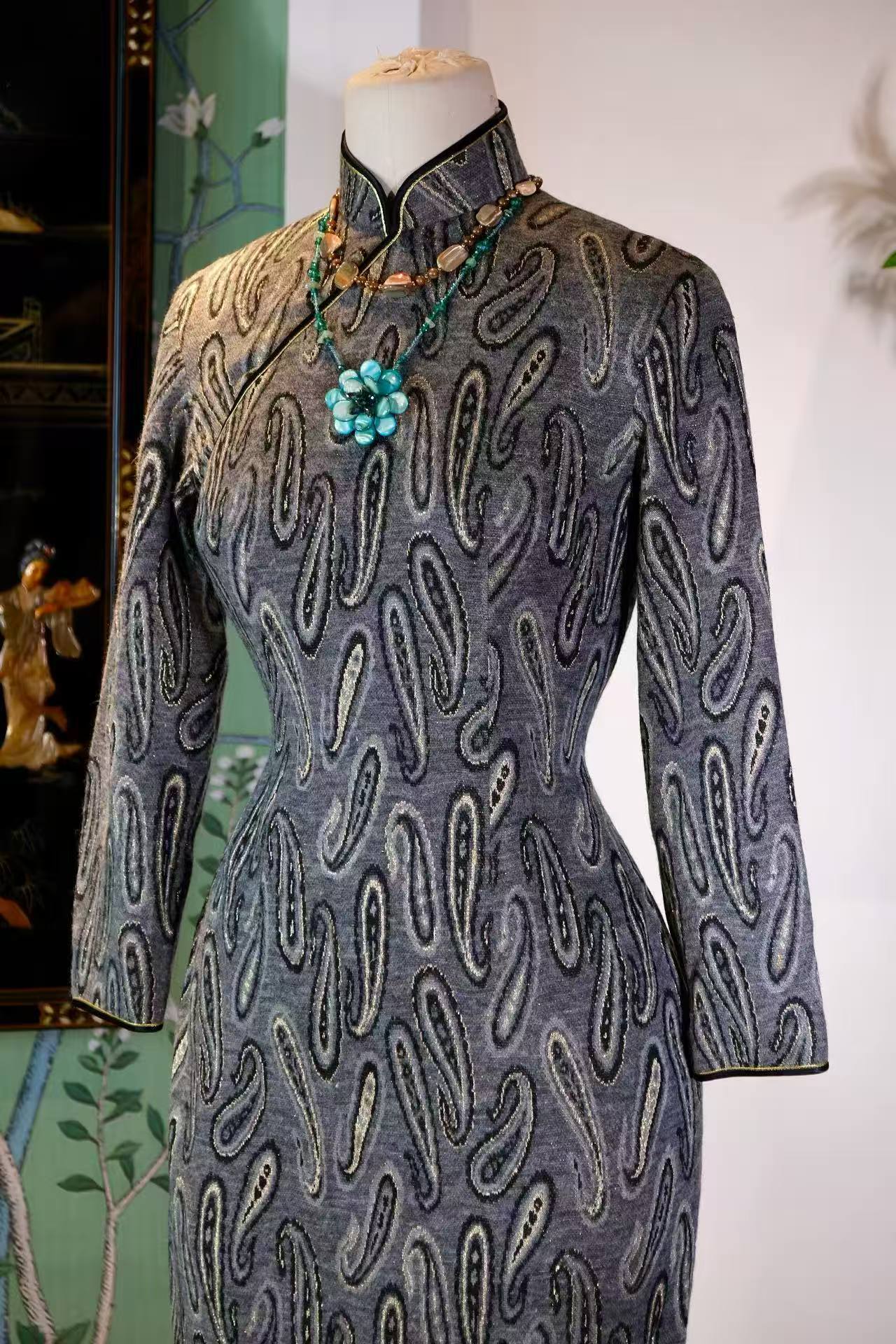
此旗袍以花灰色羊绒为基底,满铺的佩斯利纹(Paisley)如流动的藤蔓缠绕衣身。这一源自波斯“生命之树”的纹样,经克什米尔披肩传入欧洲后,在20世纪60年代被香港设计师巧妙融入旗袍设计——纹样以黑、金双色勾勒轮廓,内部填充细密的织金线,既保留了佩斯利纹“曲卷如云”的异域风情,又通过金属光泽与羊绒的哑光质感形成对比,暗合中国传统“错彩镂金”的美学理念。领口、袖口及开衩处的黑金绲边,如书法中的“飞白”,以简洁线条平衡了纹样的繁复,尽显东方含蓄之美。
故事:香江裁缝的黄金时代
20世纪60年代的香港,是东西方文化碰撞的熔炉。彼时上海裁缝南迁,将海派旗袍的精致工艺与西方立体剪裁结合,催生了“港派旗袍”的黄金时代。这件旗袍的羊绒材质,在当时属昂贵进口面料,其柔软的垂坠感与佩斯利纹的现代感,精准捕捉了都市女性对“摩登”与“传统”的双重追求。衣身侧面的隐形拉链(而非传统盘扣),正是港派旗袍“改良”的缩影——既保留立领、斜襟的东方神韵,又引入西方服饰的实用主义,成为彼时香港上流社会社交场合的“战袍”。
艺术风格:复古与现代的交响
从艺术史视角看,此旗袍是“装饰艺术”(Art Deco)与东方美学的混血儿。佩斯利纹的几何化曲线,呼应了Art Deco对“流线型”的推崇;而花灰底色的低饱和度,又暗合宋代瓷器“雨过天青”的雅致。羊绒的保暖性与纹样的华丽感,使其既适合秋冬社交场合,又通过“低调的奢华”区别于同时期欧美的张扬风格。正如张爱玲在《更衣记》中所言:“香港是中西文化交汇的港口,旗袍在这里完成了从‘传统符号’到‘现代时装’的蜕变。”
稀缺性:时光淬炼的孤品
羊绒面料的娇贵与佩斯利纹的复杂刺绣,决定了此类旗袍在当年即属“高定”范畴。历经六十载岁月,羊绒仍保持柔软光泽,刺绣未显褪色,足见当年工艺的精湛。据香港服饰史学者考证,20世纪60年代采用进口羊绒制作旗袍的工坊不足十家,且多服务于少数精英阶层,存世量极为稀少。此旗袍不仅是服饰,更是“穿在身上的历史”——它见证了香港作为“东方之珠”的文化自信,也承载着东西方审美对话的永恒魅力。
结语
当指尖抚过花灰羊绒上的佩斯利纹,仿佛触摸到1960年代香港的霓虹与海风。这件旗袍,是时光的遗珠,更是艺术的活化石——它以针线为笔,以面料为纸,书写了一曲跨越文明的时尚史诗。
Measurements / Size Guide:
Bust / Waist / Hips: 84/76/96 cm
Total Length: 110 cm
Detailed Description:
Set against a salt-and-pepper (heather gray) cashmere base, the all-over Paisley patterns entwine the garment like flowing vines. This motif, originating from the Persian "Tree of Life" and introduced to Europe via Kashmir shawls, was ingeniously integrated into cheongsam (qipao) design by Hong Kong designers in the 1960s. Outlined in black and gold with intricate metallic gold-thread fillings, the pattern retains the "cloud-like curling" exoticism of Paisley while creating a stark contrast between the metallic luster and the matte texture of cashmere. This aligns with the traditional Chinese aesthetic of "Cuocai Loujin" (staggered colors and inlaid gold). The black-and-gold piping at the collar, cuffs, and slits acts like the "Feibai" (flying white) stroke in calligraphy, using concise lines to balance the pattern's complexity, manifesting the subtle beauty of the East.
The 1960s in Hong Kong was a melting pot of Eastern and Western cultures. As Shanghainese tailors migrated south, they merged the exquisite craftsmanship of the "Haipai" (Shanghai style) with Western three-dimensional tailoring, catalyzing the golden age of the "Hong Kong-style qipao." The cashmere material was an expensive imported fabric at the time; its soft drape and the modern flair of the Paisley print precisely captured the urban woman’s dual pursuit of "modernity" and "tradition." The invisible side zipper (replacing traditional frog buttons) is a microcosm of this Hong Kong-style "reform"—preserving the Eastern soul of the standing collar and diagonal bodice while introducing Western utilitarianism, making it the "armor" for the upper-class social scenes of old Hong Kong.
From an art history perspective, this qipao is a "hybrid" of Art Deco and Eastern aesthetics. The stylized curves of the Paisley pattern echo Art Deco's adoration for "streamlining," while the low-saturation gray base mirrors the refined elegance of Song Dynasty "Ru Ware" (celestial blue-gray). The warmth of cashmere combined with the opulence of the pattern makes it suitable for autumn and winter social gatherings, distinguishing itself from the flamboyant Western styles of the era through "understated luxury." As Eileen Chang noted in A Chronicle of Changing Clothes: "Hong Kong is a port where East meets West; it is here that the qipao completed its metamorphosis from a 'traditional symbol' to 'modern fashion'."
The delicate nature of cashmere and the complexity of Paisley embroidery meant that such qipaos fell into the category of "Haute Couture" even then. After sixty years, the cashmere remains soft and lustrous, and the embroidery shows no signs of fading—a testament to the superb craftsmanship of the era. According to Hong Kong costume historians, fewer than ten ateliers used imported cashmere for qipaos in the 1960s, primarily serving an elite clientele. This qipao is more than a garment; it is "history worn on the body," witnessing the cultural confidence of Hong Kong as the "Pearl of the Orient."
As your fingertips brush over the Paisley patterns on the heather gray cashmere, you can almost feel the neon lights and sea breezes of 1960s Hong Kong. This cheongsam is a lost pearl of time and a living fossil of art—it uses needle and thread as a pen and fabric as paper to compose a fashion epic that transcends civilizations.