深圳溯源
无法加载取货服务可用情况
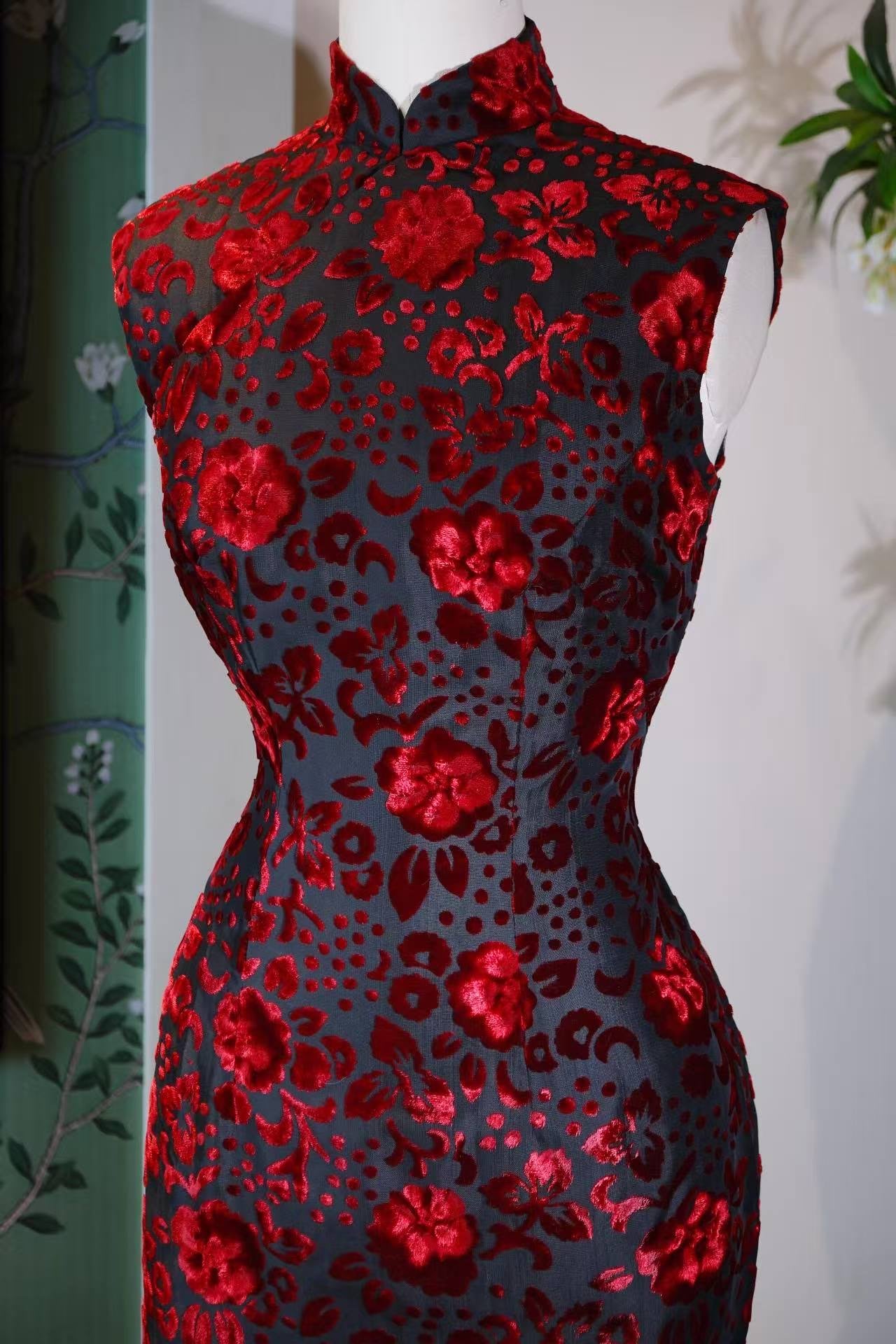
This antique qipao, crafted in Taiwan during the 1960s, features a black base adorned with red floral patterns across the entire garment. The interplay of red and black exudes a sense of mysterious nobility combined with passionate vibrancy. The floral patterns are intricate and exquisite, with full, three-dimensional blossoms and naturally extending branches. Interspersed with dotted and arched motifs, the design creates a rhythmic visual effect, fully showcasing the delicacy and ingenuity of traditional craftsmanship.
The Story of Antique Clothing: The Heritage and Epochal Mark of Velvet Burn-out Craftsmanship
Taiwan in the 1960s was in a unique period of fusion between tradition and modernity. As a classic representative of women’s attire, the qipao carried the essence of Oriental aesthetics while integrating the social trends of the time. The velvet burn-out (Devoré) technique originates from traditional Chinese weaving arts, using chemical etching or carving methods on the velvet surface to create recessed and raised patterns. This makes the motifs lively and three-dimensional with a rich tactile feel. During that era, this process was mostly reserved for high-end formal wear; due to its high difficulty and the long production time required, finished pieces were extremely precious.
The red-and-black color scheme of this qipao was highly representative of Taiwanese society in the 1960s. Red symbolizes celebration and vitality, while black represents mystery and nobility. Their combination aligns with traditional aesthetics while meeting the dressing needs of women in public settings at the time. The tailoring fits the silhouette perfectly, showcasing the soft curves of Oriental women while remaining dignified and elegant—a symbol of female independence and grace in that era.
Allusions and Classics: The Poetic Expression of the Qipao and Oriental Aesthetics
The beauty of the qipao lies not only in its form but also in the cultural connotations it carries. As Eileen Chang wrote in Chronicle of Changing Clothes: "The patterns and tailoring of a qipao are closely linked to the pulse of the era." This 1960s velvet burn-out qipao is a microcosm of the aesthetics and craftsmanship of its time. The floral patterns seem like a poetic reappearance of "The peach tree is young and elegant; brilliant are its flowers" from the Classic of Poetry, possessing both natural beauty and humanistic charm.
From a technical perspective, velvet burn-out technology can be traced back to the "Jian Rong" (cut velvet) craft of the Song Dynasty, with related records also found in the Ming Dynasty’s Tiangong Kaiwu. This qipao combines traditional craftsmanship with modern design, preserving classical elegance while incorporating 1960s fashion elements, making it a "living cultural relic."
Artistic Style and Scarcity
The artistic style of this qipao is unique; the velvet material grants it a noble luster, while the burn-out process makes the patterns vivid and three-dimensional. The red-and-black palette is classic and timeless. Its sophisticated tailoring and fluid lines showcase the softness of Oriental women alongside the simplicity of modern design. Because the velvet burn-out process is complex and most 1960s Taiwanese qipaos were handmade, very few have survived, giving this piece immense collectible and artistic value.
It is not merely a garment, but a witness to history and a heritage of culture. As stated in the Kao Gong Ji: "Heaven has its seasons, Earth has its Qi, materials have their beauty, and craftsmen have their skill; only when these four are combined can a 'fine work' be made." This qipao is a definitive example of "beautiful materials and skillful work," worthy of preservation and appreciation.