深圳溯源
无法加载取货服务可用情况
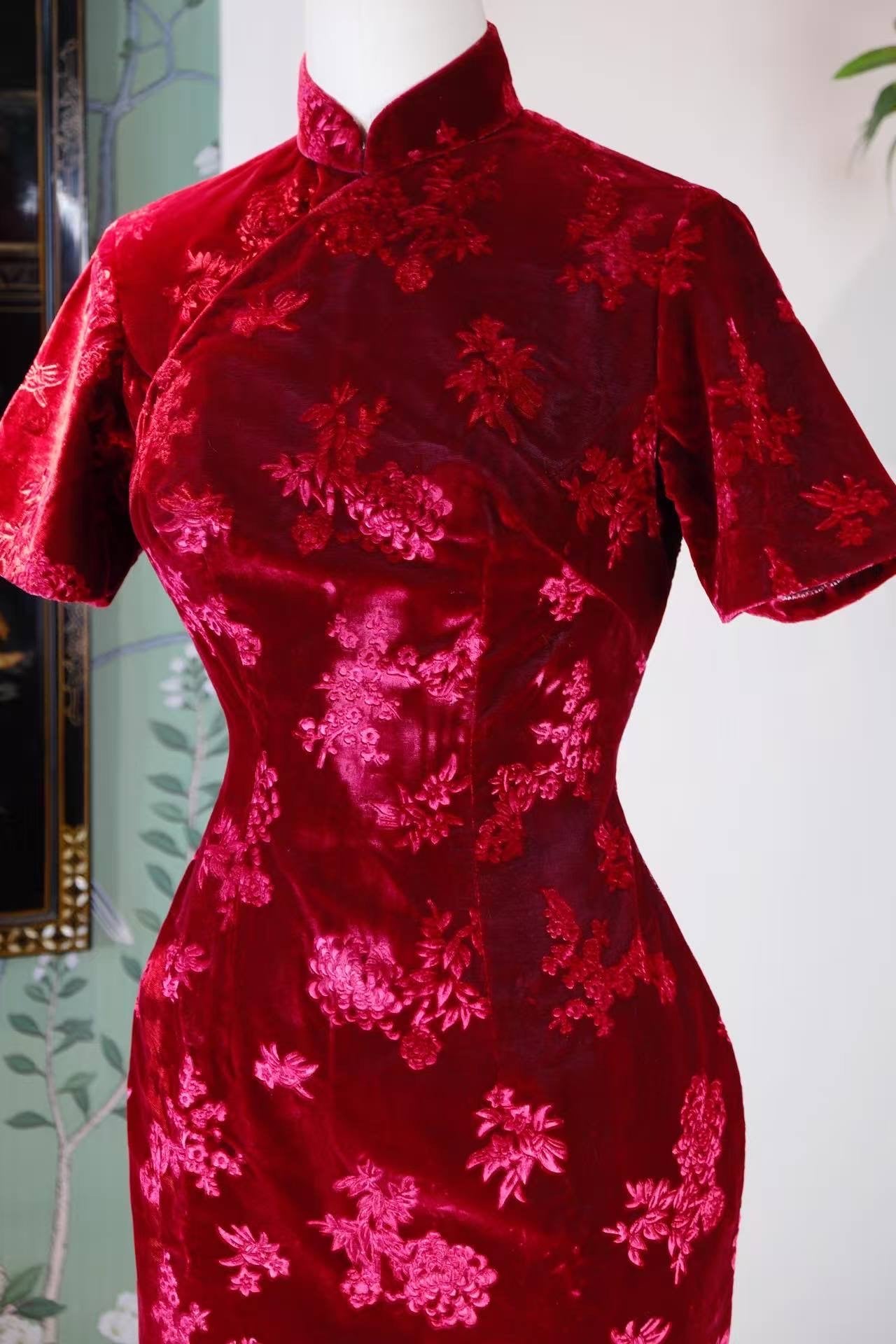
六十年代台湾产压花丝绒古董旗袍:时光雕琢的东方美学
上世纪六十年代的台湾,正处于传统与现代交融的文化转型期,
旗袍通体以深红色丝绒为底,
这种以花卉象征吉祥、以自然入纹饰的设计,承袭了《诗经》中“
丝绒材质在上世纪六十年代的台湾旗袍中已属上乘,
更难得的是,这件旗袍历经六十余年,丝绒仍保持着温润的光泽,
六十年代的台湾旗袍,在保留传统立领、斜襟、
这件六十年代台湾产压花丝绒旗袍,不仅是一件服饰,
In 1960s Taiwan, a period defined by the cultural fusion of tradition and modernity, the Qipao emerged as an elegant symbol of Oriental womanhood, showcasing unique technical innovations and aesthetic charms. This Taiwanese embossed velvet Qipao is a microcosm of that era’s splendor. With its exquisite embossing and the warm, lustrous texture of velvet, it perfectly blends classical grace with contemporary flair, standing as a true gem among antique garments.
The Qipao features a deep crimson velvet base, adorned with richly layered floral motifs created through an embossing process. A close inspection reveals traditional auspicious flowers such as the peony and plum blossom. The petals unfold in elegant layers, and the vines intertwine naturally, capturing both the opulence of the line "Only the peony is truly a national beauty; its blooming moves the entire capital" and the refined spirit of "The plum blossom must yield to the snow in whiteness, yet the snow loses to the plum in fragrance." The embossing creates a subtle relief texture on the velvet surface; as light shifts, the blossoms seem to float upon the fabric, condensing the classical poetic mood of "Deep, deep is the courtyard, where willows are shrouded in mist and curtains hang in countless layers" into the garment itself.
This design—using flowers as symbols of luck and nature as decoration—inherits the bi-xing (metaphorical) tradition of The Classic of Poetry and echoes the Song Dynasty literati’s philosophy of "likening humans to flowers." The peony represents wealth, while the plum blossom symbolizes resilience. Their intertwining represents the "soft outside, firm inside" character of the Oriental woman, serving as a sophisticated expression of traditional auspicious culture in sartorial art.
Velvet was already considered a premium material for Taiwanese Qipaos in the 1960s, and the embossing technique pushed this beauty to its zenith. Embossing requires using specialized molds under high temperature and pressure after the velvet is woven, carving patterns with distinct depths and clear outlines. This process preserves the smooth touch of the velvet while granting it a three-dimensional artistic expression. It demands extreme precision in controlling temperature and pressure; the slightest error could ruin the integrity of the pile, resulting in a very low yield and making surviving pieces exceedingly rare.
Remarkably, after more than sixty years, the velvet still retains a gentle luster, and the embossed patterns show no significant wear—a testament to the superb craftsmanship of the era. In an age before advanced textile technology, this challenging combination of craft and material makes the piece a vital physical specimen for studying the development of Qipao artistry in Taiwan, holding immense collector value and academic significance.
The 1960s Taiwanese Qipao retained classic elements like the standing collar, diagonal bodice, and side slits while incorporating the fluid lines of modern tailoring. This piece features a silhouette that fits the female form perfectly, with short sleeves that reflect the aesthetic trends of the time while adding a sense of lightness. The heavy texture of the embossed velvet complements the soft lines of the floral motifs, achieving a harmony between the "unity of heaven and man" in Oriental dress and the Western pursuit of linear beauty.
Conclusion: A Treasure of Aesthetics This 1960s Taiwanese embossed velvet Qipao is more than just a garment; it is a solidified history. It uses velvet as paper and embossing as ink to write of the elegance and resilience of Oriental women. With flowers as symbols and craftsmanship as its soul, it carries forward a millennium of auspicious culture and aesthetic philosophy. Within the long river of time, it stands silent like a riddle, yet tells the tale of an era's splendor through its unique artistic charm—a true treasure of Oriental aesthetics.