深圳溯源
无法加载取货服务可用情况
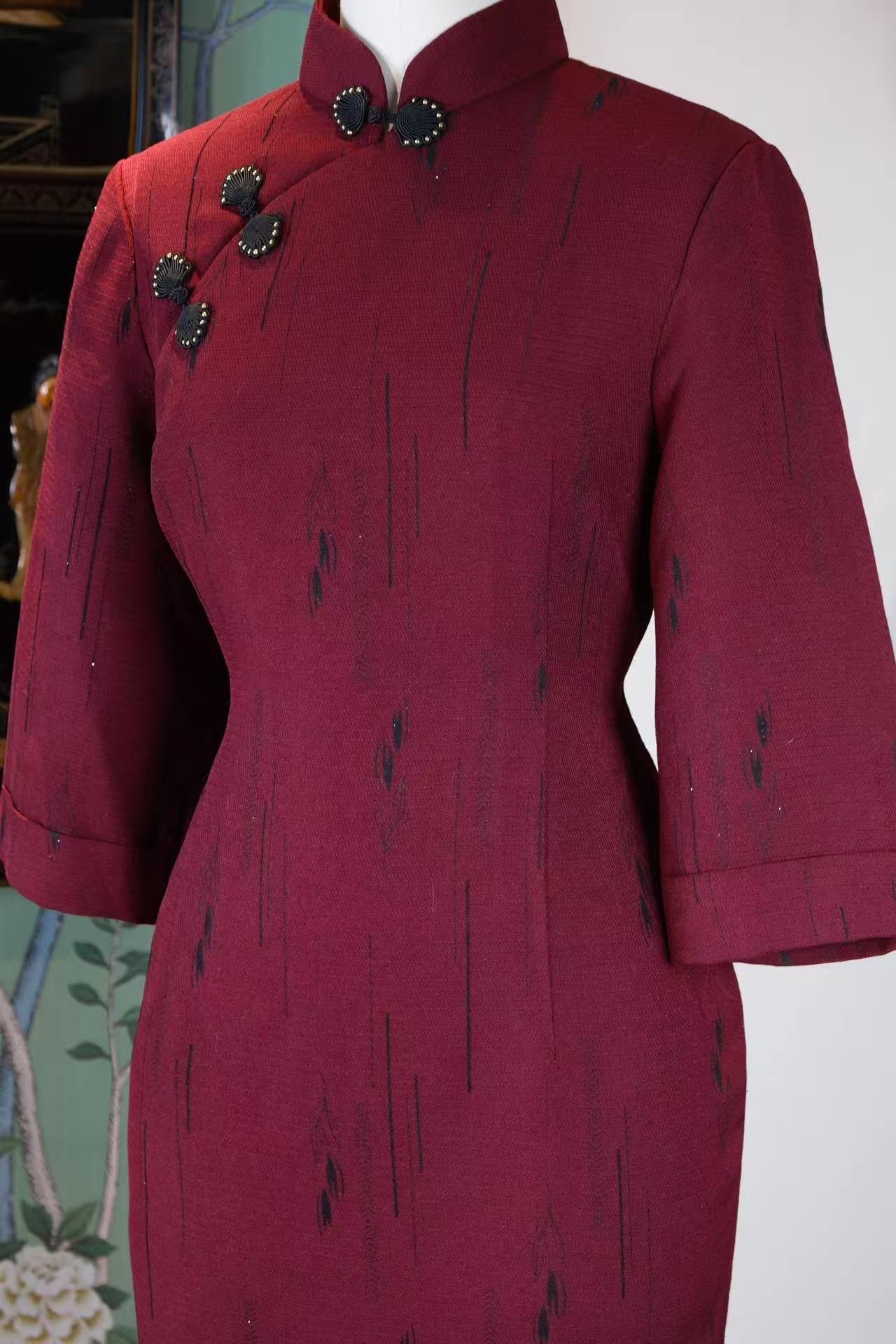
这件上世纪六十年代的羊毛混纺印花台湾产古董旗袍,
旗袍上的图案以竹叶为主题,竹在中国文化中有着特殊的地位,
此外,旗袍的盘扣设计也是一大亮点。盘扣,又称为“纽襻”,
旗袍的羊毛混纺材质,既保证了穿着的舒适性,
这件古董旗袍不仅是一件服饰,
(Lee, 2015) 在其研究中提到,服饰不仅是个人身份和地位的象征,
综上所述,这件上世纪六十年代的羊毛混纺印花台湾产古董旗袍,
This antique Qipao from 1960s Taiwan is more than a garment; it is a work of art steeped in profound cultural heritage and historical value. Its design and craftsmanship reflect the superb levels of apparel artistry in Taiwan during that era, while embodying the quintessential aesthetic philosophies of Chinese culture.
The central motif of the Qipao is the bamboo leaf. In Chinese culture, bamboo holds a prestigious status, often regarded as a symbol of nobility, resilience, and humility. The Classic of Poetry (Shijing) captures this in the line: "Look at those banks of the Qi, where the green bamboos are luxuriant," praising its lushness and beauty. The bamboo leaves on this Qipao are sketched with concise, vivid black lines, forming a striking contrast against the red base. This design captures the freshness and elegance of bamboo with remarkable clarity.
The Pankou (Chinese frog fasteners) design is a standout feature. Also known as Niupan, these decorative buttons are a staple of traditional Chinese attire, possessing both practical function and high artistic value. The Pankou on this piece utilize a black and silver color scheme that echoes the bamboo motif, adding an air of opulence and solemnity. Inspired by ancient Chinese knot-tying for record-keeping, the design symbolizes the inheritance of history and the accumulation of culture.
The wool-blend fabric ensures comfort while providing warmth. In the 1960s, such a choice reflected the societal pursuit of balancing utility with beauty. Furthermore, the use of wool blends demonstrates the innovation and progress of Taiwan’s textile technology during that period.
As a vessel of historical memory, the Qipao represents a microcosm of the social culture and aesthetic tastes of its time. Due to its age and exquisite craftsmanship, it possesses immense scarcity and collector value, serving as vital physical evidence for researching 1960s Taiwanese fashion history.
Lee (2015) notes in his research that clothing is not only a symbol of personal identity and status but also a witness to social culture and historical change. This antique Qipao vividly embodies this perspective, offering a glimpse into the era's spirit and aesthetic pursuits. Furthermore, Chen et al. (2020) emphasize the importance of traditional attire in modern fashion design, viewing them as sources of innovation. The bamboo leaf patterns and Pankou designs undoubtedly provide rich inspiration and reference for contemporary designers.
Conclusion In summary, this 1960s Taiwanese printed wool-blend antique Qipao has become a precious object for research and collection due to its unique artistic style and deep cultural connotations. It not only demonstrates the pinnacle of apparel craft in Taiwan at the time but also reflects the enduring aesthetic ideals and values of Chinese culture.