深圳溯源
无法加载取货服务可用情况
六十年代台湾制羊毛印花古董旗袍:时光织就的东方诗篇
“衣裳博带知礼意,锦锈华章见精神。”
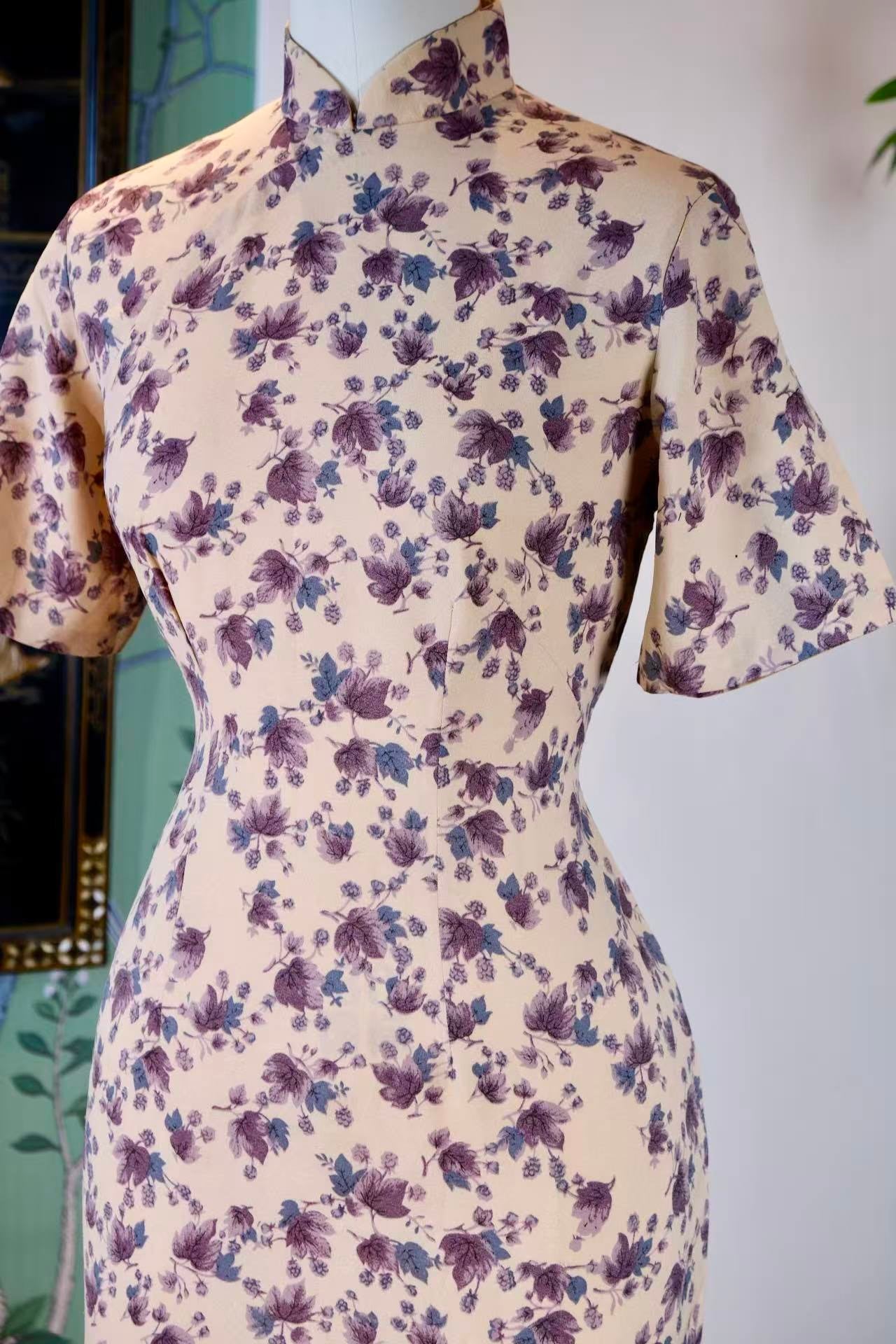
米色素底如宣纸铺陈,其上紫藤与叶片以套色印花工艺错落晕染,
羊毛面料的选择,更彰显其稀缺与匠心。彼时台湾纺织业初兴,
立领斜襟勾勒婉约曲线,短袖设计平衡端庄与灵动,
它不仅是一件衣裳,更是一枚凝固时光的文化印章。紫藤寓意“
藏此一袭,便藏住了时光里的花开花落,
"Garments define etiquette; splendid patterns manifest the spirit."
This 1960s antique Qipao from Taiwan resembles a scroll of Gongbi (fine-brush) bird-and-flower painting steeped in time, condensing the elegance and craftsmanship of mid-century Oriental aesthetics into a single piece of fabric.
The cream-colored base is laid out like Xuan paper, upon which wisteria and leaves are intricately rendered using multi-color overprinting. The wisteria clusters hang like silken tassels, their petals layered with ink-wash gradients transitioning from deep purple to pale crimson. The foliage is outlined in varying shades of indigo and mouse-grey, with veins as clear as reality. The composition, described as "ten thousand blossoms blooming at once," inherits the meticulous realism of the Song Dynasty Academic Style (Yuanti) while echoing the Ming Dynasty literati sentiment: "Every branch and leaf carries emotion." It is, quite literally, a "handscroll among flowers" in motion.
The choice of wool fabric further highlights its scarcity and ingenuity. During the early days of Taiwan's textile industry, printed wool required a dozen complex processes—including shrink-resistance treatment, high-temperature dyeing, and precision pressing—to ensure the material remained warm and soft while the colors stayed vibrant and fluid. In an era when synthetic fibers were beginning to emerge, this insistence on natural wool and realistic botanical patterns makes the garment a "precious fragment of the past" (Ji Guang Pian Yu)—a physical specimen of traditional textile techniques at a historical turning point.
The standing collar and diagonal closure outline a graceful silhouette, while the short sleeves balance dignity with agility. The tailoring conforms to the body without restriction, aligning with the philosophy from the Book of Rites: "The most valuable function of etiquette is harmony." Gaping at the wisteria patterns, one can almost touch the warmth of that era: Taiwanese artisans, inspired by the "Satin Stitch" of traditional Suzhou embroidery, translated the layered texture of needlework into the color gradients of printing. This garment carries the persistence of traditional culture after the southward migration and reflects the innovative spirit of the island’s textile industry.
This is more than a garment; it is a cultural seal frozen in time. The wisteria symbolizes longevity and fortune, the cream base represents the "temperate gentleman," and the wool signifies "warm steadfastness." Together, they embody the Oriental aesthetic of "Vessels carrying the Way." To behold this robe today is to hear the inner thoughts of a craftsman from half a century ago: staying true to natural beauty through handcrafted precision amidst the tide of mechanization.
To possess this piece is to capture the blossoming and fading of flowers within history, the sentiment of craftsmanship at the crossroads of tradition and modernity, and a generation’s most tender balance between beauty and utility.