深圳溯源
无法加载取货服务可用情况
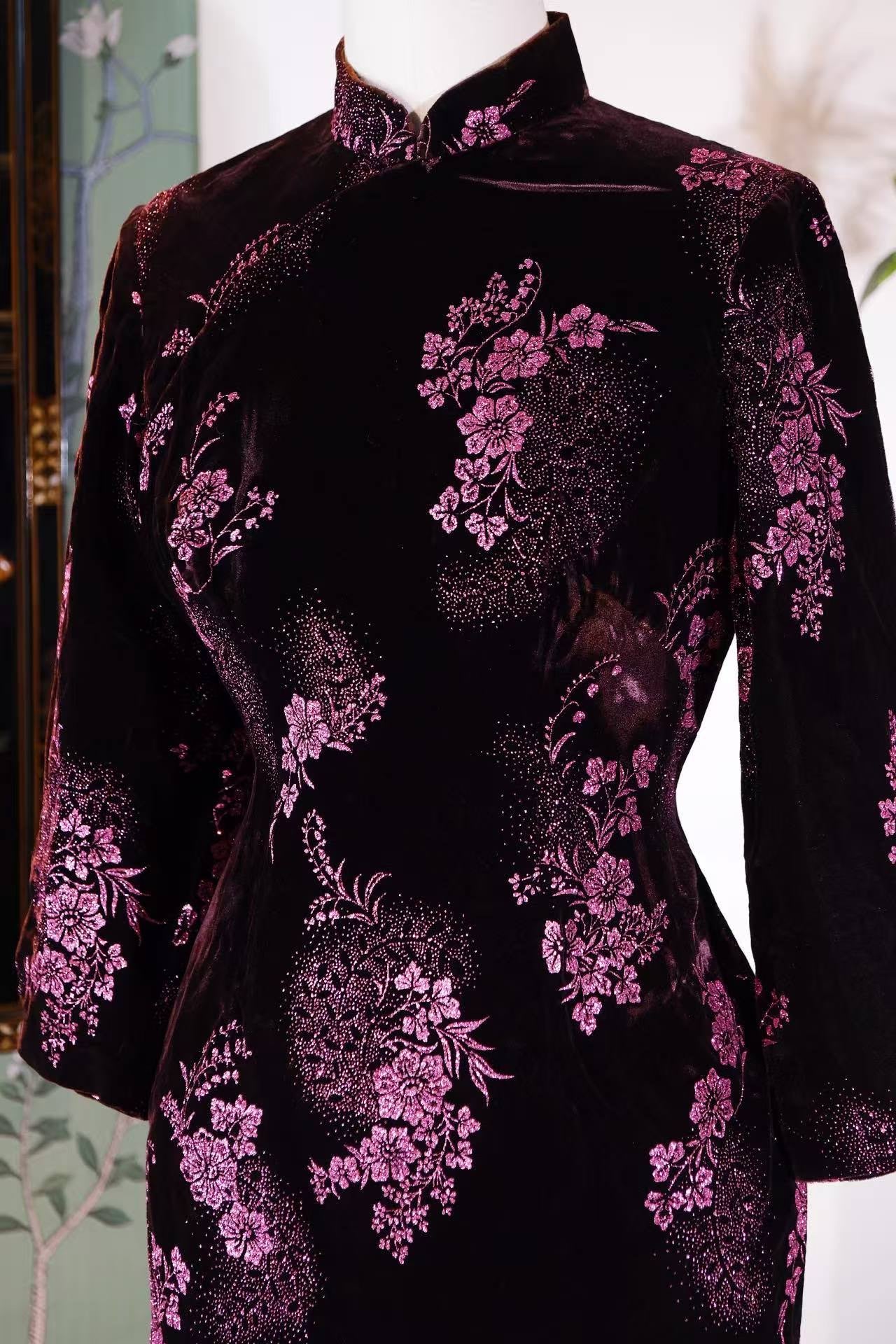
这是一件极为罕见的六十年代台湾手绘闪片金丝绒旗袍,
一、图案描述:手绘闪片,流动的繁花
这件旗袍的图案设计,仿佛将一幅工笔花鸟画“穿”在了身上。
- 工艺技法:不同于普通的印花或刺绣,这件作品采用了“手绘闪片”
- 图案主题:图案以缠枝花卉为主,枝蔓蜿蜒,花朵饱满。
- 色彩搭配:深紫色的金丝绒底料,沉稳而高贵,如同夜幕;而粉色、
二、古董衣的故事:六十年代台湾的时尚记忆
这件旗袍诞生于1960年代的台湾,那是一个传统与现代交织、
- 时代背景:六十年代的台湾,经济开始起飞,社会风气逐渐开放。
- 工艺价值:手绘闪片工艺,是当时台湾服饰工艺的巅峰之作。
- 文化意义:这件旗袍不仅是一件衣服,更是一个时代的文化符号。
三、引经据典:艺术风格与稀缺性的佐证
- 艺术风格:正如中国著名服装史学家沈从文先生在《
- 稀缺性:根据《台湾服饰史》的记载,
四、结语
这件六十年代台湾手绘闪片金丝绒旗袍,是一件集工艺、历史、
This is an exceptionally rare antique qipao from 1960s Taiwan. Its craftsmanship is so exquisite that it is truly "wearable art."
The pattern design of this qipao makes one feel as if they are wearing a traditional Gongbi (fine-brush) flower-and-bird painting.
Technique: Departing from ordinary printing or embroidery, this piece employs the "Hand-Painted Sequin" technique. With meticulous precision, artisans "painted" countless tiny sequins onto the deep purple golden velvet base one by one. Under the light, these sequins refract a brilliance akin to a galaxy, transforming the stars of the night sky into clusters of blooming flowers.
Thematic Motif: The pattern features intertwining floral motifs with winding vines and full blossoms. Every flower is composed of stacked sequins; the layering of petals and the delicacy of the stamens are all rendered through variations in sequin arrangement. The veins of the leaves are clearly visible, conveying a vibrant sense of botanical vitality.
Color Palette: The deep purple golden velvet base is steady and noble, like the curtain of night, while the pink and purple sequined flowers resemble fireworks blooming in the dark—dazzling and magnificent. This palette achieves a balance of classical elegance and modern opulence, serving as a quintessential representative of the "East meets West" style in 1960s Taiwanese fashion.
This qipao was born in 1960s Taiwan, a unique era where tradition intertwined with modernity and East collided with West.
Historical Context: In the 1960s, Taiwan's economy began to take off, and social atmosphere gradually became more open. As a representative of traditional Chinese attire, the qipao underwent a significant "modernization." Designers began experimenting by integrating Western fashion elements—such as sequins, lace, and synthetic fabrics—into qipao designs, creating a new style that retained traditional charm while suiting modern aesthetics.
Artisanal Value: The hand-painted sequin craft represented the pinnacle of Taiwanese garment artistry at the time. This process required extreme patience and skill; the position, angle, and orientation of every single sequin had to be meticulously planned and adjusted. A single qipao often took weeks or even months to complete, resulting in extremely low production and making surviving pieces incredibly scarce.
Cultural Significance: This qipao is not just a garment but a cultural symbol of an era. It stands as a witness to the pursuit of beauty, the exploration of fashion, and the inheritance and innovation of traditional culture by Taiwanese women in the sixties. It carries the romance, elegance, and vitality unique to that period.
Artistic Style: As the renowned Chinese costume historian Shen Congwen noted in Researches on Ancient Chinese Costumes: "Clothing is the carrier of culture and the mirror of an era." The artistic style of this qipao is a microcosm of 1960s Taiwanese culture. It possesses both the "reserved beauty" of traditional Chinese dress and the "extroverted beauty" of modern Western fashion—a unique "mix-and-match" aesthetic.
Scarcity: According to records in the History of Taiwanese Fashion, hand-painted sequined qipaos of the 1960s were primarily produced by high-end tailor shops in Taipei and Taichung, custom-made for socialites, stars, and the upper class. Due to the complex craftsmanship and exorbitant costs, production was minimal, and those that have survived to this day are as rare as "phoenix feathers and unicorn horns." Much like the description in the Classic of Poetry: "Her fingers were like the grass and her skin like virgin's cream... what sweet smiles and dimples... the lovely looks of her eyes," this qipao displays a vivid beauty that no modern machine could ever replicate.
This 1960s Taiwan-made hand-painted sequined golden velvet qipao is a treasure that integrates craftsmanship, history, and culture. It is more than a garment; it is a work of art, a segment of history, and a heritage of culture. To possess it is to own a romantic memory belonging to that golden era.