深圳溯源
60年代 - 六十年代香港产手工嵌丝硬花扣旗袍:时光里的东方美学密码 | 1960s - 1960s Hong Kong Handmade Inlaid-Silk and Stiffened Floral-Button Qipao: The Oriental Aesthetic Code Within Time
60年代 - 六十年代香港产手工嵌丝硬花扣旗袍:时光里的东方美学密码 | 1960s - 1960s Hong Kong Handmade Inlaid-Silk and Stiffened Floral-Button Qipao: The Oriental Aesthetic Code Within Time
无法加载取货服务可用情况
六十年代香港产手工嵌丝硬花扣旗袍:时光里的东方美学密码
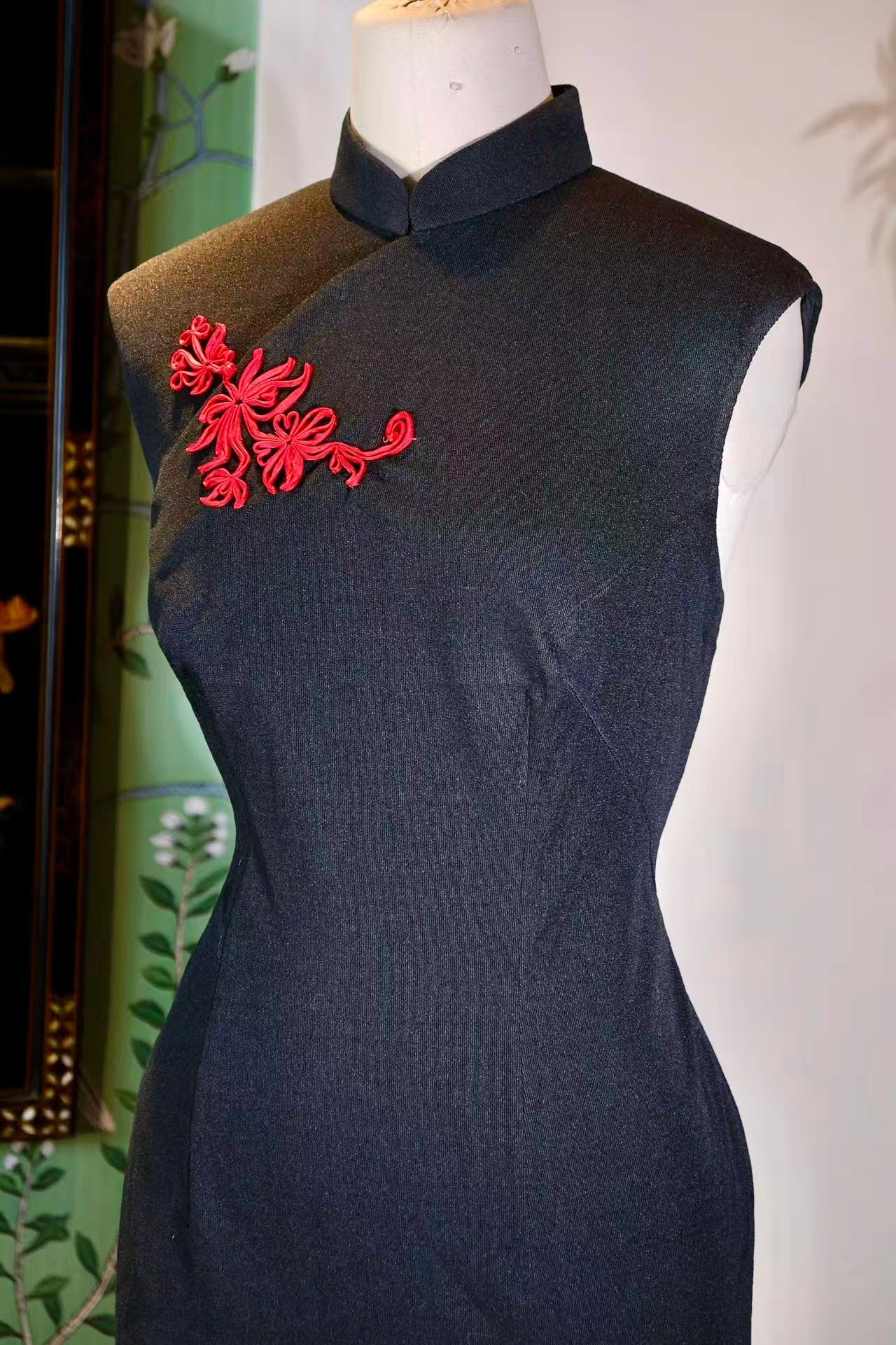
深黑的面料上,斜襟处的红色丝线如一笔写意的丹青,
在六十年代的香港,旗袍是东方女性的“第二层肌肤”。
旗袍上的红色嵌丝花卉,是典型的“缠枝纹”变体。
这件旗袍的稀缺性,还在于它承载着香港旗袍的“黄金时代”。
如今,这件旗袍静静躺在时光里,面料光泽已略显暗淡,
这便是古董旗袍的魅力——它不仅是衣服,更是一段凝固的历史,
1960s Hong Kong Handmade Inlaid-Silk and Stiffened Floral-Button Qipao: The Oriental Aesthetic Code Within Time
Upon the deep black fabric, the red silk threads along the diagonal placket resemble a stroke of freehand Shan Shui ink, outlining the contours of intertwining floral motifs. This is an antique qipao crafted in 1960s Hong Kong; every stitch of the inlaid silk carries the warmth of manual labor, and every stiffened floral button serves as a keepsake of time.
In 1960s Hong Kong, the qipao was considered a "second skin" for Oriental women. The fabric of this piece is a premium import, with a touch as delicate as silk and a deep charcoal base that is steady and restrained. It perfectly mirrors the "gentle exterior, resilient interior" character of Hong Kong women from that era—growing within the crevices of tradition and modernity, they preserved Oriental grace while immersing themselves in Western chic.
The red inlaid floral motifs on the qipao are a classic variation of the "Intertwining Branch Pattern" (Chanzhi-wen). Originating from Song Dynasty ceramics, this pattern symbolizes "endless life." The flowers on this garment have petals spreading like soaring swallows and vines winding like flowing water, merging the auspicious meanings of traditional motifs with the minimalist aesthetic of the sixties. Most exquisite is the craftsmanship of the "Stiffened Floral Buttons" (Ying-huakou): fine copper wire is wrapped in silk thread and hand-woven into the shapes of petals and leaves before being sewn onto the qipao. This process is incredibly labor-intensive; a single floral button could take hours to complete, and today, the skill has nearly become a lost art.
The scarcity of this qipao also lies in its embodiment of the "Golden Age" of Hong Kong qipaos. In the 1960s, Hong Kong was the "last fortress" of the Oriental qipao. Master tailors from Shanghai migrated south, opening shops in the alleys of Hong Kong and fusing the refinement of Shanghainese style with the vibrancy of Lingnan culture. The tailoring of this piece is a quintessential "Modified Shanghainese Style"—high collar, slim fit, with a waistline cinched just right and a subtle side slit. It balances feminine curves with the practicality needed for daily movement. This was not a "costume" for the stage, but a real-life "armor" for the women rising in the workplaces and social circles of Hong Kong.
Today, this qipao rests quietly in the embrace of time. Though the fabric's luster has mellowed, the red inlaid flowers remain as vivid as ever. It is like an open book, documenting the bustling life of 1960s Hong Kong, the elegance and resilience of Oriental women, and the stubborn persistence of traditional craftsmanship through the years. When you touch it, you can almost hear the clanging of the trams in Causeway Bay and see a woman in a qipao walking out of a corner tea restaurant with a bamboo basket, her hem swaying and catching the breeze.
This is the charm of an antique qipao—it is not merely a garment, but a solidified segment of history and an eternal expression of Oriental aesthetics.
分享