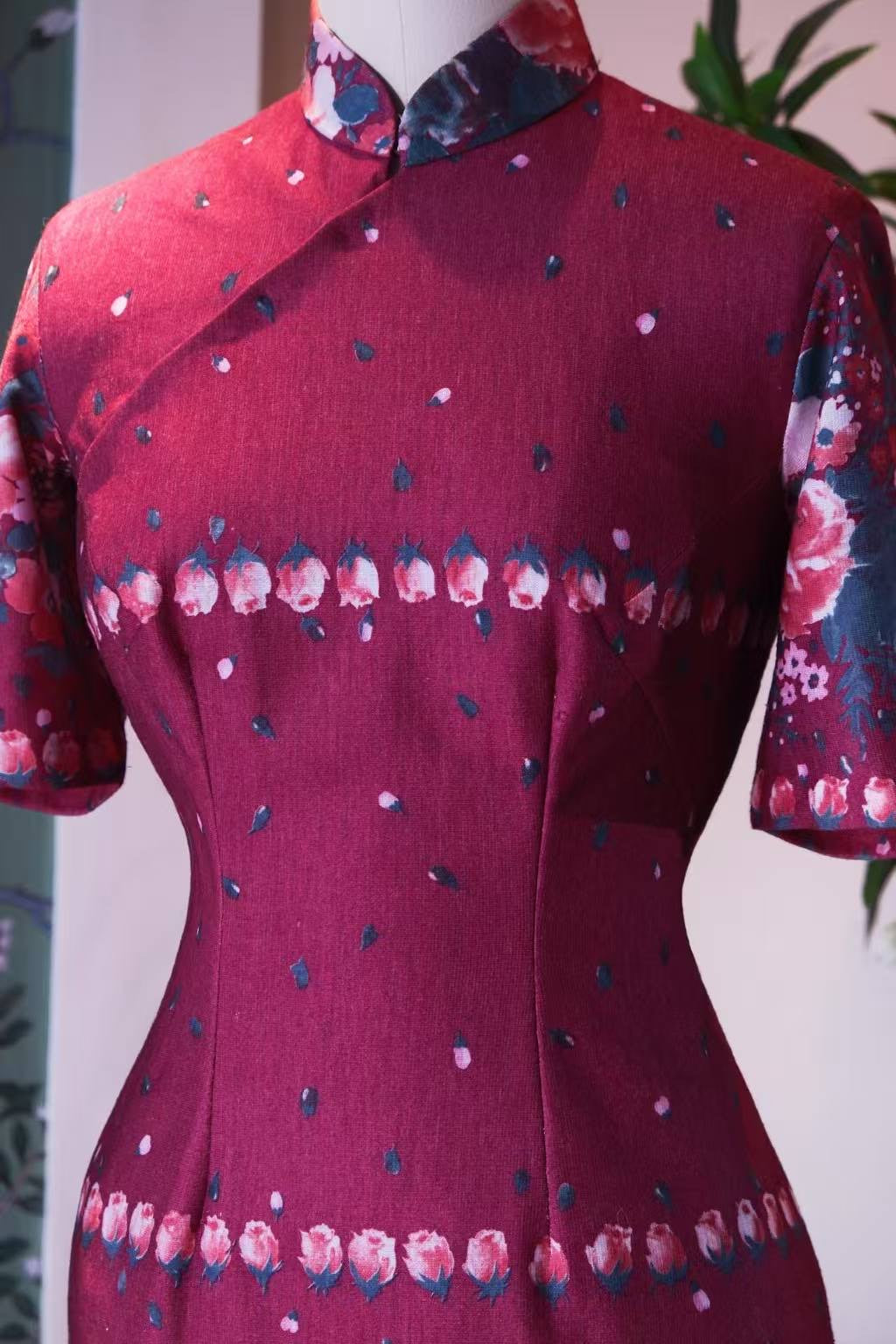
分享一件上世纪六十年代台湾产玫瑰色针织精仿羊毛印花玫瑰古董旗袍。
玫瑰红针织羊毛为底,繁花在经纬间肆意绽放——这件产自上世纪六十年代的台湾古董旗袍,宛如一首凝固的春日诗篇。玫瑰红底色如《楚辞·招魂》“红璧沙版,玄玉梁些”的华贵,又带着针织羊毛特有的温柔肌理,行走时裙摆轻摇,恰似《红楼梦》“胭脂红裙映桃花”的灵动,将台湾六十年代的摩登风韵,绣进了每一针每一线里。
衣身满布手绘风印花,腰际与下摆的玫瑰花丛,则采用散点式构图,花瓣大小错落,疏密相间,暗合《园冶》“疏密有致,曲折入画”的章法。针脚间散落的蓝白小花,如《诗经·小雅·采薇》“采薇采薇,薇亦作止”的野趣,与玫瑰的浓烈形成冷暖碰撞,恰是六十年代台湾“传统与现代交融”的视觉缩影。
六十年代的台湾,正经历传统与现代的剧烈碰撞:西门町的爵士乐与庙口的歌仔戏交织,西方立体剪裁与东方平面裁剪在旗袍上达成和解。此袍的玫瑰红象征东方的热烈,针织羊毛则吸纳西方时装的舒适理念,繁花印花在霓虹灯影下流转,恰似《牡丹亭》“姹紫嫣红”与“西方摩登”的完美交融。它不仅是衣物,更是台湾黄金年代的文化标本——既有针织的雅致,又有丝绸的灵动,在时间的洪流中,永远绽放着独一无二的春日光芒。
当玫瑰在针织羊毛上绽放,当繁花在经纬间蔓延,这件旗袍早已超越物质本身,成为时代精神与匠人智慧的双重见证。它在针脚间镌刻着台湾匠人的创新,在纹样中封存着六十年代的浮华与沧桑,更在花团锦簇的吉意里,诉说着东方美学永不褪色的传奇。每一寸光影流转,都是对“织物有魂,图案有灵”的最好诠释。
🌸 The Rose Tapestry: A Vintage 1960s Taiwanese Cheongsam in Rose-Red Knitted Fine Wool with Rose Print
Set on a base of rose-red knitted wool, vibrant flowers bloom freely within the warp and weft. This vintage cheongsam, originating from Taiwan in the 1960s, is like a solidified poem of spring. The rose-red base is as lavish as the "red jade tablet, dark jade beam" described in the Songs of Chu: Summoning the Soul, yet it possesses the unique gentle texture of knitted wool. As the skirt gently sways when walking, it evokes the agility of the "rouge-red skirt reflecting peach blossoms" from Dream of the Red Chamber, stitching the modern charm of 1960s Taiwan into every thread and stitch.
The body is covered with a hand-painted style print. The rose clusters at the waist and hem employ a scattered compositional style (散点式构图), with flowers varying in size, interspersed densely and sparsely. This subtly aligns with the compositional rule from the Yuan Ye (The Craft of Gardens): "Dense and sparse with artful arrangement, twists and turns that enter the painting." Small blue and white flowers scattered among the stitches, like the natural wild charm of "Gathering vetch, gathering vetch, the vetch begins to grow" from the Classic of Poetry: Lesser Odes: Cai Wei, create a cool-and-warm contrast with the intensity of the roses, serving as a visual microcosm of "the fusion of tradition and modernity" in 1960s Taiwan.
The 1960s in Taiwan were marked by a fierce collision between tradition and modernity: the jazz of Ximending interwove with the Gezai Opera (Taiwanese opera) at the temple gates, and Western three-dimensional cutting achieved a reconciliation with Eastern flat cutting on the cheongsam. The rose-red color of this robe symbolizes Oriental passion, while the knitted wool absorbs the concept of comfort from Western fashion. The vibrant floral print, shimmering under the neon lights, perfectly embodies the fusion of the "brilliant purples and reds" (姹紫嫣红) from The Peony Pavilion and "Western Modernity." It is more than mere clothing; it is a cultural specimen of Taiwan's Golden Age—possessing both the elegance of knitting and the vibrancy of silk, forever radiating a unique spring brilliance in the torrent of time.
When roses bloom on the knitted wool, and vibrant flowers spread across the warp and weft, this cheongsam transcends the material itself, becoming a dual witness to the spirit of the era and the wisdom of the artisan. It inscribes the innovation of Taiwanese craftsmanship in its stitches, seals the glamour and vicissitudes of the sixties in its motifs, and, through the auspicious meaning of the luxuriant floral clusters, narrates the never-fading legend of Oriental aesthetics. Every shift in light and shadow is the best interpretation of "the fabric has a soul, and the pattern has a spirit."