深圳溯源
无法加载取货服务可用情况
衣服尺寸:
胸围/腰围/臀围:96/88/106 厘米
衣长:124 厘米
细节描述:
这件旗袍,本身就是一首无声的诗。它静默地伫立,却诉说着一个关于时代、审美与匠心的悠长故事。
裙裾上的几何诗篇:图案的艺术解构
这件旗袍最引人入胜的,莫过于其通体铺陈的几何印花。它摒弃了传统旗袍中常见的缠枝牡丹、龙凤呈祥等具象纹样,转而拥抱一种极具现代感的抽象美学。
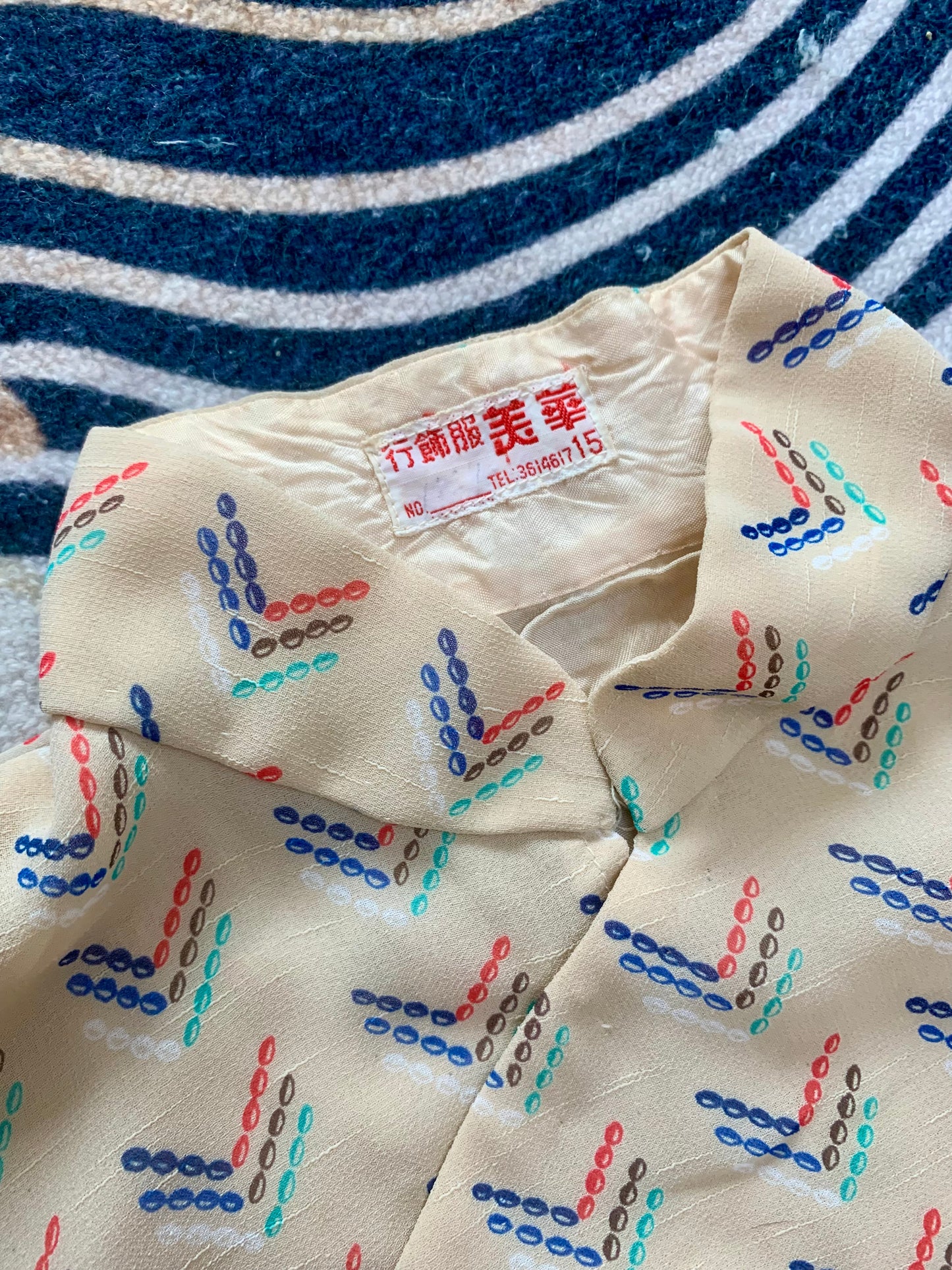
- 母题分析:图案由无数个微小的、色彩斑斓的“L”形或勾状符号构成。这些符号并非杂乱无章,而是以严谨的阵列式排列,形成一种视觉上的韵律与节奏。每一个“L”形单元,又由红、蓝、青、赭等色的微小圆点或短线串联而成,宛如一串被解构的珠链,既有东方的含蓄,又带西方的构成主义色彩。
- 色彩美学:底色为温润的米白,如同宣纸,为上方的多彩几何图案提供了绝佳的舞台。色彩的运用克制而精妙,既有冷色调的蓝与青,又有暖色调的红与赭,在素雅的底布上跳跃,形成一种活泼而不失端庄的视觉效果。这种配色方案,正是六十年代“太空时代”美学影响下的产物,充满了对未来的乐观想象。
- 面料与光影:从质感上看,这应是轻盈的雪纺或类似丝质面料。这种面料的特性在于其微透的质感与柔和的光泽。当穿着者行走时,光线穿透面料,会使这些几何图案产生微妙的流动感,仿佛水中的倒影,虚实相生,意境深远。
穿越时光的信物:古董衣的故事
这件旗袍不仅仅是一件衣物,更是一段凝固的历史。
- 时代印记:六十年代的台湾,正处于经济起飞与社会转型的前夜。西方文化思潮涌入,与本土的中华传统相互碰撞、融合。这件旗袍便是这一时代的缩影。它保留了旗袍最经典的立领、右衽、收腰、开衩的形制,这是对自身文化根脉的坚守;而其图案与剪裁,却又大胆地拥抱了现代主义的设计语言,展现出一种开放、自信的新女性形象。
- 匠心独运:从领口内侧的“华美服饰行”标签来看,这并非流水线上的工业品,而是出自一家定制裁缝店的匠心之作。那个年代的裁缝,不仅是手艺人,更是审美顾问。他们根据客人的身形、气质与需求,一针一线地打造出独一无二的“第二层肌肤”。这件旗袍流畅的线条、精准的剪裁,无不彰显着当年师傅的高超技艺。那串模糊的电话号码,更是一个时代的注脚,将我们带回那个通讯尚不发达,人与人之间联系更为质朴的年代。
引经据典:在艺术史坐标中的定位
这件旗袍的艺术价值,可以从多个维度进行审视。
- 装饰艺术的回响:其几何图案的运用,让人联想到上世纪二三十年代的装饰艺术运动。装饰艺术运动强调几何形态、对称构图与机械美学。这件六十年代的旗袍,可以看作是装饰艺术风格在东方服饰上的一次隔代回响与在地化演变。
- 海派文化的延续:旗袍的鼎盛时期在二三十年代的上海,形成了独特的“海派文化”。而六十年代的台湾,在很大程度上继承并发展了海派文化。这件旗袍,便是海派旗袍美学在海峡对岸的延续与新生。它既有老上海的摩登与精致,又融入了宝岛特有的清新与活力。
- 稀缺性的论证:在服装史研究中,我们常说“幸存者偏差”。能够完好保存至今的六十年代日常服饰,尤其是如此设计精良、工艺考究的定制旗袍,实属凤毛麟角。大多数同时代的衣物,或因日常穿着而磨损,或因时代变迁而被遗弃。因此,这件旗袍的存世,本身就是一项奇迹。它为我们提供了一个珍贵的实物样本,让我们得以触摸和感受那个特定时代的审美脉搏与生活气息。
总而言之,这件六十年代的台湾产印花雪纺古董旗袍,是一件集时代性、艺术性与稀缺性于一身的珍品。它不仅是一件可供穿着的艺术品,更是一份值得被珍藏与研究的文化遗产。它静静地讲述着关于美、关于时间、关于一个时代的故事,等待着有缘人去倾听,去续写。
Measurements / Size Guide:
Bust / Waist / Hips: 96/88/106 cm
Total Length: 124 cm
Detailed Description:
This qipao is, in itself, a silent poem. Standing in stillness, it narrates a long story of an era, its aesthetics, and the ingenuity of craftsmanship.
The most captivating feature of this qipao is the all-over geometric print, which embraces a modern abstract aesthetic over traditional motifs like peonies or dragons.
Motif Analysis: The pattern consists of countless tiny, colorful "L-shaped" or hooked symbols arranged in a rigorous array, creating a visual rhythm. Each unit is composed of micro-dots or short lines in red, blue, cyan, and ochre—resembling a deconstructed bead chain that blends Oriental reserve with Western Constructivist flair.
Color Aesthetics: The warm ivory base acts as a canvas of "Xuan paper," providing a perfect stage for the multi-colored geometry. The palette is restrained yet sophisticated, featuring the "Space Age" optimism of the 1960s through its balanced cool and warm tones.
Fabric and Light: Likely crafted from lightweight chiffon or a similar silk-like fabric, the material offers a semi-translucent texture. As the wearer moves, light penetrates the fabric, giving the geometric patterns a fluid, shimmering quality akin to reflections in water.
This qipao is more than a garment; it is a frozen segment of history.
Mark of an Era: 1960s Taiwan stood on the precipice of economic takeoff. This piece is a microcosm of that transition, retaining the classic standing collar and cinched waist (loyalty to cultural roots) while boldly embracing modernist design (the image of the confident "New Woman").
The Master's Touch: The inner label from "Hua Mei Boutique" (华美服饰行) signifies this was a bespoke creation rather than a mass-produced item. The precise tailoring and the blurred vintage phone number on the tag serve as emotional footnotes to an era of craftsmanship and personal connection.
Echoes of Art Deco: The geometric repetition recalls the Art Deco movement of the 1920s and 30s, representing a localized, mid-century evolution of that aesthetic in the East.
Continuation of Haipai Culture: While the qipao peaked in old Shanghai, 1960s Taiwan inherited and revitalized this "Haipai" (Shanghai-style) culture. This piece carries the sophistication of old Shanghai infused with the fresh vitality of the island.
Argument for Scarcity: Given the "survivor bias" in fashion history, well-preserved daily wear from the 1960s—especially bespoke pieces with such refined design—is exceptionally rare. Most garments of that era were worn out or discarded, making this specimen a "miracle" for researchers and collectors alike.
In conclusion, this 1960s Taiwanese printed chiffon antique qipao is a rare treasure that harmonizes historical significance, artistic brilliance, and extreme scarcity. It is not merely a piece of wearable art, but a cultural heritage worthy of meticulous preservation and scholarly study. It stands in quiet elegance, narrating a long-standing tale of beauty, time, and an entire era—waiting for a kindred spirit to listen, to cherish, and to continue its unfinished story.