深圳溯源
无法加载取货服务可用情况
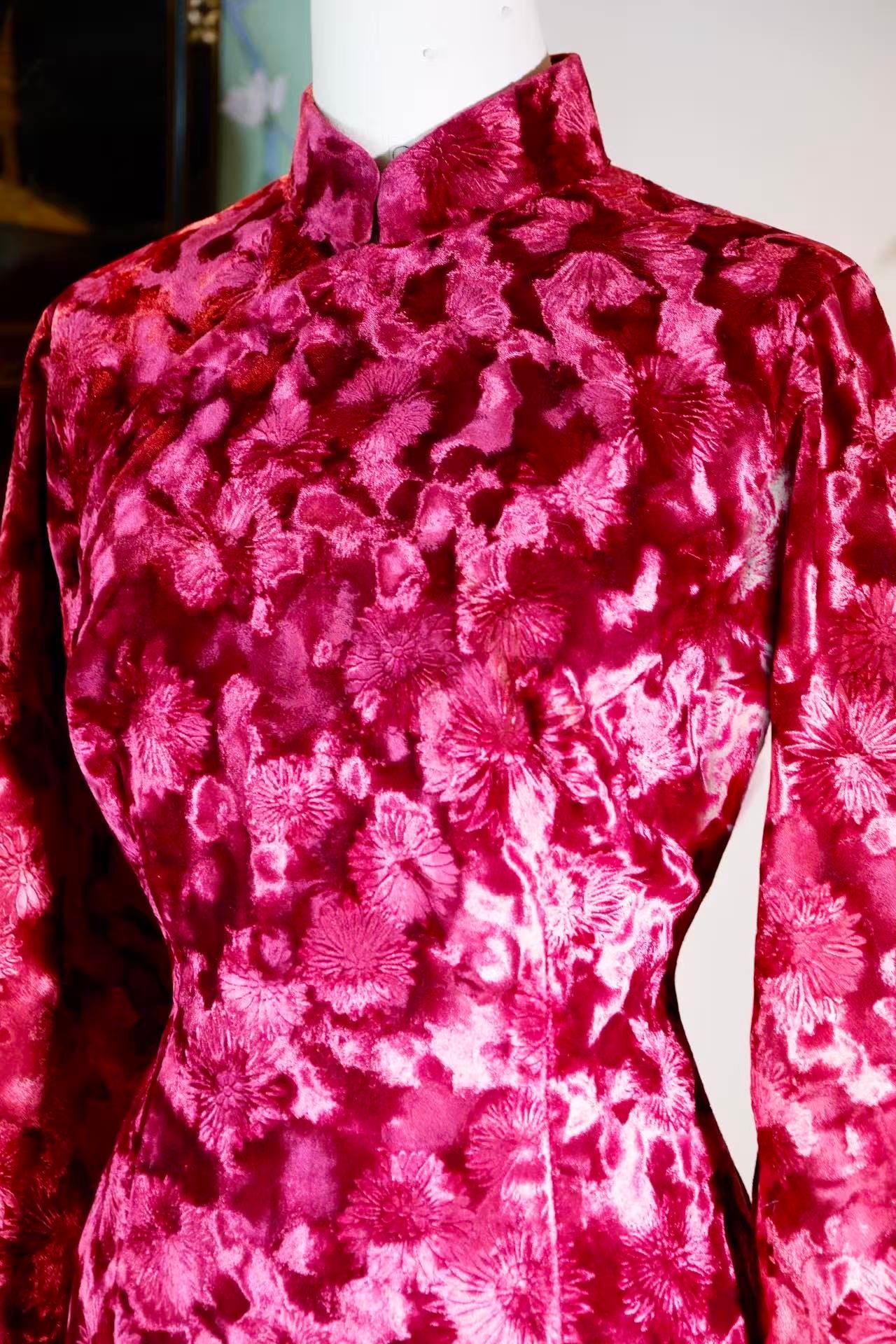
这是一件极具时代韵味与工艺价值的六十年代绞染丝绒压花古董旗袍 面料与图案:如云霞般流动的肌理
这件旗袍最迷人的地方,在于其面料独特的“绞染”
- 绞染(Shibori)工艺:这是一种古老的扎染技法。
- 丝绒压花肌理:丝绒的特性在于对光线的反射极不均匀。
- 花卉图案:仔细观察,这些花朵并非具象的写实花卉, 古董衣的故事:台海彼岸的摩登记忆
这件旗袍产自上世纪六十年代的台湾,那个年代正是旗袍从“
- 时代背景:五、六十年代的台湾,承接了上海旗袍的余韵,
- 工艺传承:台湾在这一时期,纺织工业蓬勃发展,
- 穿着场景:这样一件色泽浓烈、面料华丽的旗袍, 引经据典:衣香鬓影间的美学
这件旗袍的美学,可以用张爱玲在《更衣记》中的描述来形容:
“对于不会说话的人,衣服是一种言语,随身带着一种袖珍戏剧。”
这件绞染丝绒旗袍,正是这样一部“袖珍戏剧”。
- 色彩的张力:张爱玲曾痴迷于“桃红配翠绿”的大胆配色,
- 材质的隐喻:丝绒这种材质,自带一种“暗夜”的属性。 艺术风格与稀缺性
- 艺术风格:这件旗袍是“东方意象”与“西方现代主义”
- 稀缺性:历经六十余年的岁月,这种化学纤维的丝绒极易老化、
总结:这不仅是一件衣服,更是一段凝固的历史。
This is an antique qipao from the 1960s, possessing immense epochal charm and artisanal value through its combination of tie-dyeing and embossed velvet.
The most captivating aspect of this qipao lies in the unique integration of "Shibori" (tie-dye) craftsmanship with luxurious velvet fabric.
Shibori Craftsmanship: This is an ancient tie-dyeing technique. Unlike straightforward printing, Shibori creates natural gradients and blurred boundaries through binding, stitching, and folding. On this qipao, we see floral patterns that seem to "burst" across the deep crimson base rather than static, rigid designs.
Embossed Velvet Texture: Velvet naturally reflects light unevenly. Under varying angles, this Shibori velvet displays a rich palette of purplish-red, wine, and mauve, resembling flowing rosy clouds. During that era, this was often called "burn-out" or "chameleon" fabric—notoriously difficult to maintain but exceptionally luxurious.
Floral Motifs: Upon closer inspection, these are not realistic depictions of flowers but abstracted "medallion" or chrysanthemum-like patterns. The petals radiate outward with a natural diffused effect, akin to ink spreading on rice paper or blooming fireworks. This design preserves the imagery of traditional Chinese aesthetics while embracing the abstraction of 1960s modern fashion.
Produced in Taiwan during the 1960s, this qipao hails from a critical transition period when the garment evolved from "everyday wear" to "ceremonial haute couture."
Historical Background: In the 1950s and 60s, Taiwan inherited the lingering charm of the "Shanghai School" while being influenced by American culture. Women of that era sought a fusion of "Western-style fit" and "qipao-style elegance." This piece features a slender silhouette with meticulous darting that perfectly outlines the waist and hips—a hallmark of the "Modern Qipao" of the sixties.
Artisanal Heritage: Taiwan’s textile industry flourished during this period, specializing in synthetic or blended velvets with unique visual effects. The embossing on this qipao required high temperature and pressure to stamp patterns onto the velvet surface, creating a three-dimensional, relief-like tactile experience.
Wearing Context: A qipao with such intense color and opulent fabric was never intended for daily labor. It belonged to banquets, weddings, or high-profile social events. The woman wearing it was surely a socialite or a lady of a prestigious family; with every movement, the interplay of red and purple would sway with mesmerizing grace.
The aesthetic of this qipao can be described using Eileen Chang’s words from Chronicle of Changing Clothes:
"To those who cannot speak, clothes are a language; what one carries with them is a pocket drama."
This Shibori velvet qipao is exactly such a "pocket drama."
Visual Tension: Chang was once obsessed with the bold pairing of "peach red and emerald green"; the red-to-purple gradient of this qipao possesses a similar visual impact. This deep, hallucinatory color scheme exuded nobility and a hint of mysterious sensuality in the nightscapes of the 1960s.
Material Metaphor: Velvet inherently possesses the attributes of "the deep night." Unlike the clear brightness of silk, it is introverted and profound—a psychological reflection of the 1960s woman: gentle as jade on the outside, yet harboring a passionate longing for modern life within.
Artistic Style: This qipao is a perfect fusion of "Oriental Imagery" and "Western Modernism." Its tailoring utilizes Western 3D cutting to pursue the beauty of the human form, while the Shibori texture reflects Oriental freehand ink styles, pursuing the beauty of artistic conception.
Scarcity: After sixty years, synthetic velvet is prone to aging and brittleness. Furthermore, the Shibori process is complex with a low yield. Finding a 1960s Shibori velvet qipao that is well-preserved, with full color and intact texture, is a true rarity—as rare as "phoenix feathers or unicorn horns."
Summary: This is more than a garment; it is a segment of solidified history. It carries the pinnacle of 1960s Taiwanese textile craftsmanship and stands as a witness to the elegance and character of women in a changing era.